US-Iran Deal Hope: Oil Prices & Global Economic Outlook
Recent signs of thawing US-Iran relations, with market expectations of a potential agreement, have triggered significant volatility in global oil prices. This article deeply analyzes the profound impact of this geopolitical shift on the international crude oil market, global stock markets, and the Australian economy, and explores possible future scenarios.
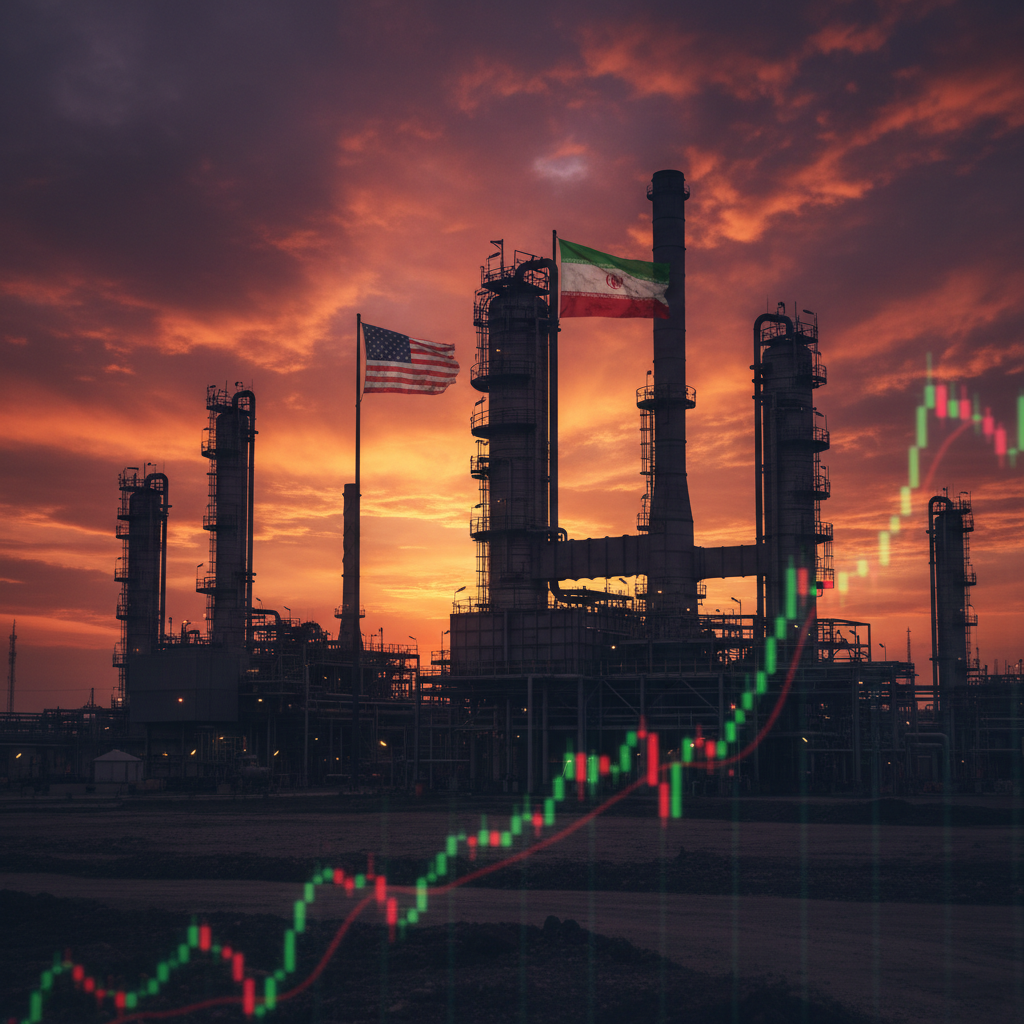
US-Iran Agreement曙光: Oil Price Volatility and Global Economic Outlook

The international geopolitical landscape has once again rattled global economic nerves. Signs of easing tensions between the United States and Iran have emerged, with market consensus anticipating some form of agreement. This has immediately sent ripples through the global crude oil market and triggered a chain reaction in international stock markets. For Australia, far away in the Southern Hemisphere, this development is equally significant. According to the Australian Broadcasting Corporation (ABC) on April 13, 2026, the potential US-Iran agreement has become a focal point of current global economic discussions.
Oil Price Fluctuations Under Agreement Expectations
The core of the US-Iran agreement lies in lifting sanctions on Iranian oil exports. Once sanctions are removed, Iran, a country with the world's fourth-largest crude oil reserves, will see its oil supply re-enter the international market. This will directly lead to an increase in global crude oil supply, thereby exerting downward pressure on oil prices.
Market Data and Historical Comparison:
Following the news, international benchmark Brent crude futures prices fell in response, briefly dropping below US$80 per barrel, a decline of over 5% from previous highs. US West Texas Intermediate (WTI) showed a similar decline. Historically, after the 2015 Iran nuclear deal, international oil prices fell by approximately 20% in the subsequent months, although other macroeconomic factors were also at play then. This time, market expectations of Iran rapidly increasing its crude oil exports by 1 to 1.5 million barrels per day are the main driver of the oil price decline.
However, oil price fluctuations are not unidirectional. Geopolitical uncertainties, the production cut strategies of OPEC+ (Organization of the Petroleum Exporting Countries and its allies), and demand growth driven by global economic recovery could all provide short-term support for oil prices. For example, if OPEC+ further cuts production to offset Iran's increased output, the decline in oil prices might be limited.
Global Stock Market Reaction and Impact Chain
Significant oil price volatility has had a complex impact on global stock markets. For the energy sector, falling oil prices typically mean squeezed profit margins, putting pressure on the share prices of related companies. For instance, major global oil companies such as ExxonMobil and Shell saw their share prices pull back after the news broke.
However, from a macroeconomic perspective, falling oil prices are often good news for the global economy. They reduce operating costs for businesses (especially in transport and manufacturing) and ease fuel expenses for consumers, which can stimulate consumption and investment, boosting overall economic growth. Therefore, sectors sensitive to energy costs, such as aviation, logistics, and manufacturing, may benefit from higher share prices. Major global stock indices, such as the Dow Jones Industrial Average, S&P 500, and Euro Stoxx 50, might experience minor fluctuations initially due to energy stock drag in the context of falling oil prices, but in the long run, if oil prices stabilise at lower levels, it will provide impetus for economic recovery, thereby supporting stock market gains.
Impact Chain Analysis:
US-Iran Agreement → Increased Iranian Oil Exports → Increased Global Crude Oil Supply → Falling International Oil Prices → Reduced Transport and Production Costs → Improved Corporate Profitability / Increased Consumer Purchasing Power → Increased Economic Growth Potential → Stock Market (Non-Energy Sectors) Benefits.
Whither the Australian Economy?
As a significant energy exporter and importer, the US-Iran agreement and the resulting oil price volatility have complex and far-reaching effects on Australia's economy.
- Inflationary Pressure Relief: Australia is a net oil importer. Falling oil prices will directly reduce petrol prices, easing the burden of transport costs on Australian households, thereby helping to alleviate inflationary pressures. The Reserve Bank of Australia considers energy prices a crucial factor when formulating monetary policy, and declining oil prices could provide more scope for future interest rate cuts, or at least slow the need for rate hikes.
- Consumer Confidence and Spending: Lower fuel costs mean an increase in household disposable income, which is expected to boost consumer confidence and retail spending, supporting Australia's domestic demand-driven growth.
- Export Revenue Impact: Australia is also a major exporter of liquefied natural gas (LNG). While gas prices are not entirely synchronous with crude oil prices, there is some linkage between the two. Prolonged low oil prices could put some pressure on Australia's energy export revenues.
- Mining and Commodities: Australia's mining sector is a pillar of its economy. Falling oil prices reduce operating costs for mining companies, such as transport and equipment fuel expenses, thereby increasing their profitability. However, if the global economy slows due to other factors, leading to an overall decline in commodity demand, this benefit could be offset.
Future Forecasts and Potential Scenarios
The conclusion of a US-Iran agreement is not a foregone conclusion, and its implementation process may be full of variables. We can envisage the following scenarios:
- Scenario 1: Agreement successfully reached and implemented. Iranian crude oil consistently flows into the market, and oil prices remain low within a controllable range. Global inflationary pressures further ease, and central banks of major economies gain more policy space. The Australian economy benefits from lower energy costs, and consumer confidence and domestic demand are boosted.
- Scenario 2: Agreement reached but implementation hindered. For example, geopolitical tensions escalate again, or Iran's production increase is slower than expected. Oil prices might rebound quickly after a short-term decline, potentially even surpassing previous highs. The global economy would face higher inflation risks and growth uncertainties, and Australia would also bear imported inflationary pressures.
- Scenario 3: Agreement ultimately collapses. If US-Iran negotiations break down, sanctions are maintained or even intensified, Iranian oil supply will remain restricted, and new instability in the Middle East could even be triggered. Oil prices would skyrocket, the global economy would face stagflation risks, and Australia's inflationary pressures would significantly increase, potentially slowing economic growth.
Impact on the Australian Property and Construction Market
For Australia's property and construction market, oil price volatility has an indirect but significant impact.
Firstly, the inflation relief brought by falling oil prices may lead the Reserve Bank of Australia to adopt a more cautious stance on interest rate hikes in the future, or even create conditions for rate cuts. A lower interest rate environment will directly reduce mortgage costs, improving housing affordability for buyers, thereby supporting the real estate market. Furthermore, reduced transport costs also mean lower transportation fees for building materials, which can, to some extent, alleviate cost pressures in the construction industry.
However, if prolonged low oil prices lead to an overall slowdown in Australia's economic growth, or a significant reduction in energy export revenues, it could indirectly affect investor confidence and the job market, thereby negatively impacting property demand. Therefore, the construction and property markets need to closely monitor macroeconomic trends, especially changes in interest rates and consumer confidence.
EASOVA, an Australian prefabricated housing company based in Sydney, understands the importance of material and transport costs in construction projects. We are consistently committed to reducing the site construction costs, which are highly susceptible to energy price fluctuations in traditional building, through efficient factory-based construction models. This allows us to provide clients with more cost-effective and time-efficient high-quality prefabricated housing solutions. In the current global economic climate filled with uncertainties, the cost controllability and efficiency advantages of prefabricated construction will become increasingly prominent.
Related Articles

EASOVA's Mission: Making Granny Flats the First Breakthrough in Australia's Housing Revolution
EASOVA's mission is not just to build granny flats, but to use them as a starting point to propel Australian housing into the next generation of upgrades. We believe that granny flats are the most suitable real-world scenario for first introducing fifth-generation housing concepts and smart systems. They can not only increase space and rental income but also become a vehicle for residential technology, integrating high-performance construction, age-friendly design, intelligent operation and maintenance, and continuous upgrade capabilities. To truly achieve this goal, we must integrate four core capabilities: structural design, customer decision-making, AI software and hardware, and financial support, to create a complete product system that is approvable, deliverable, and sustainably evolving.
22 Apr 2026
2026 Australia Electric Pickup Market Outlook: Tech Innovation & Mobility Shift
Australia's electric vehicle market is poised for a major transformation as Mazda considers introducing several electric pickups, including the Deepal E07. This article provides an in-depth analysis of the technical trends and market competitive landscape for electric pickups in 2026, and their impact on Australia's future mobility, logistics, and construction sectors.
2 May 2026
May Day General Strike: Global Labor Movement's Impact on Australia
On May 1, 2026, a nationwide general strike initiated by the "May Day Strong" organisation is brewing in the United States and other regions. This article provides an in-depth analysis of the background and demands of this global labour movement, and explores its potential profound impacts on Australia's economy, labour market, and social structure, including supply chain disruptions, inflationary pressures, and the evolution of industrial relations.
2 May 2026