Western Sydney Airport Project Stalled: Police Intervention and Deeper Considerations
The development projects surrounding Western Sydney Airport have stalled, leading to police intervention and raising widespread concerns about the management of major infrastructure projects, land speculation, and regional economic impact. This article delves into the complex factors behind the incident and looks ahead to future developments.
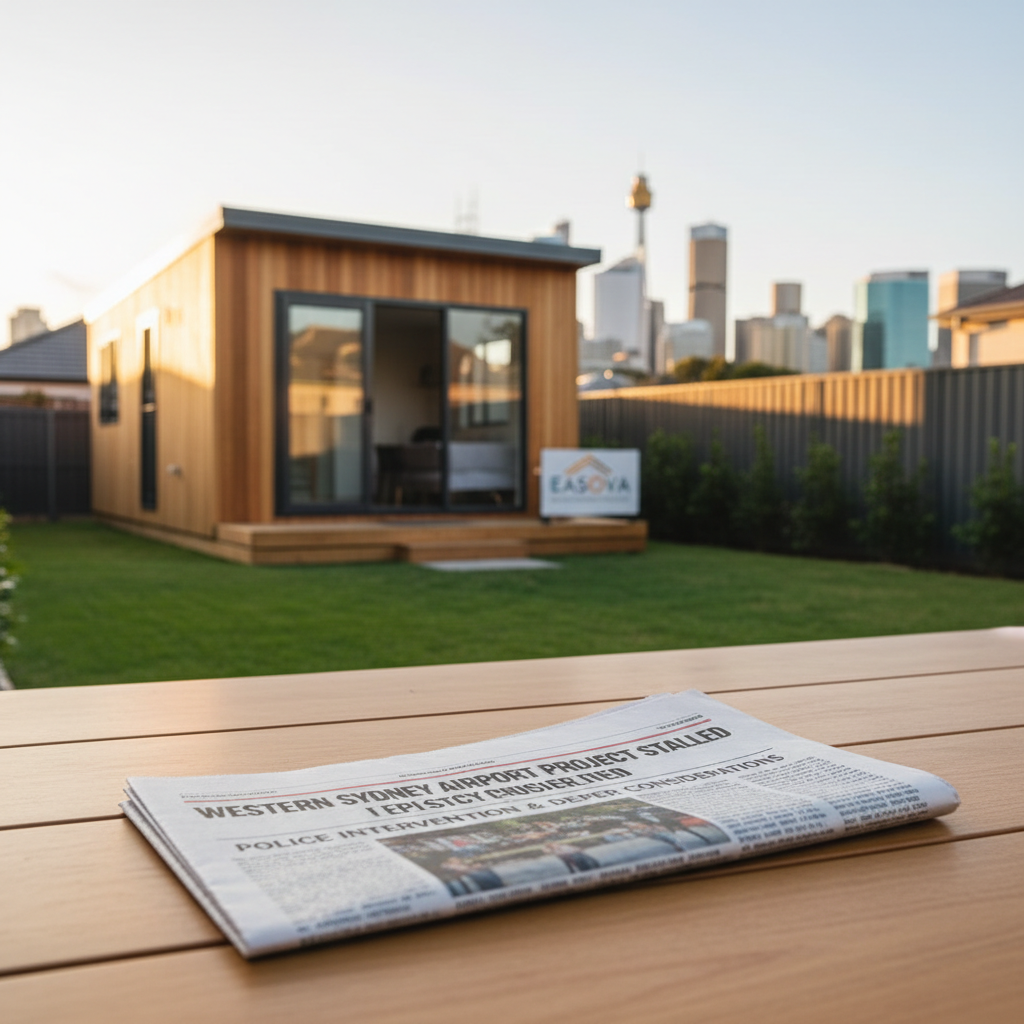
Western Sydney Airport Project Stalled: Police Intervention and Deeper Considerations
Western Sydney, a region once brimming with high hopes, is currently undergoing a complex test. As one of Australia's largest infrastructure projects, the construction of Western Sydney Airport (WSA) is proceeding rapidly, with an expected operational date in 2026. However, the promises of land development around the airport have not materialized; instead, they have stalled, even leading to police intervention. This incident not only exposes potential issues in the management of large-scale infrastructure projects but also has profound implications for Australia's, particularly Sydney's, regional economic development and property market.
Recalling the Incident: From Land Boom to Police Intervention
The planning of Western Sydney Airport was once seen as a catalyst for the region's economic boom. Since the federal government confirmed the airport's location in 2014, land values in surrounding areas, especially within the planned "Aerotropolis" zone, have soared. Investors and developers flocked in, hoping to catch this "development express." However, as time progressed, many promised development projects, particularly those intended to support the Aerotropolis with commercial and industrial parks, have yet to commence.
Recently, New South Wales Police confirmed they have launched an investigation into potential fraudulent activities involving land transactions around WSA. According to reports by The Sydney Morning Herald and The Age in April 2024, the investigation primarily focuses on whether there was inflated valuation, conflicts of interest, or undue enrichment in certain land deals. Previously, a 2020 report by the Australian National Audit Office (ANAO) pointed out that the federal government had paid an exorbitant A$29.8 million for a parcel of land known as "Leppington Triangle" near the airport, while its valuation a year later was only A$3 million, an overpayment of more than 900%. This "sky-high land price" incident undoubtedly set the stage for the current investigation.
In-depth Analysis: A Confluence of Factors Leading to Stagnation
1. Land Speculation and Planning Imbalance:
At the outset of the WSA project, government planning and control over surrounding land appeared insufficient. Extensive land speculation drove up land prices, making subsequent actual development costs prohibitively high. Many investors purchased land not for immediate development but to await appreciation and resale, leading to idle land resources and fragmented planning. When actual development costs failed to align with expected returns, project stagnation became inevitable.
2. Lagging Infrastructure Support:
The realization of the Aerotropolis concept requires comprehensive infrastructure, including transportation, water, electricity, and communication. While the airport's construction itself is progressing smoothly, the pace of developing surrounding road upgrades, public transport networks (such as the Western Sydney Metro), and other municipal facilities has not kept up with land development demands. The lack of necessary support makes it difficult for developers to initiate large-scale projects.
3. Economic Environment and Financing Challenges:
In recent years, the global economy has faced multiple uncertainties, and Australia has also been affected by inflation and rising interest rates. Increased construction costs and greater difficulty in securing financing have put immense financial pressure on many large development projects. According to data from the Australian Bureau of Statistics (ABS), the Construction Cost Index rose by approximately 5-7% year-on-year in 2023, further squeezing developers' profit margins.
4. Complex Regulatory and Approval Processes:
Australia's land development and construction approval processes are typically lengthy and complex. In projects like WSA, which involve multiple stakeholders and extensive planning, coordination among federal, state, and local governments, as well as environmental assessments and community consultations, can all delay project progress.
Historical Comparison and Future Predictions
Looking back, development challenges for land surrounding major infrastructure projects are not new. For example, Sydney Olympic Park faced similar challenges after the 2000 Olympics, with commercial and residential development in its surrounding areas taking several years to mature. The key lies in the government's sustained and effective planning, investment, and guidance.
For the future of the WSA surrounding area, several scenarios are possible:
- Scenario One: Strong Government Intervention, Accelerated Infrastructure Construction. If the NSW government and federal government can strengthen coordination, invest more resources to accelerate infrastructure construction, and streamline approval processes, development projects may restart within the next 3-5 years. The outcome of the police investigation will also influence government decisions.
- Scenario Two: Market Self-Correction, but Slow Progress. Without strong government intervention, the market will self-correct through land price adjustments, developer restructuring, and other means. However, this process could be very lengthy, leading to long-term regional development stagnation.
- Scenario Three: Project Transformation, Reduced Development Density. Facing high costs and complex environments, some developers might adjust project positioning, for example, shifting from high-density commercial to lower-density industrial or logistics warehousing, to adapt to market demand and reduce risks.
Impact on the Australian Property Market
The stagnation of development projects around Western Sydney Airport has complex implications for the Australian, particularly Sydney, property market:
- In the short term, regional property confidence is shaken. Investor expectations for the area may decline, leading to reduced land and property transaction activity, and slower price growth or even corrections. For early investors who banked on rapid Aerotropolis development, this is undoubtedly a blow.
- In the long term, demand structure may adjust. Despite setbacks to the Aerotropolis concept, WSA's status as a transport hub remains unchanged, still bringing job opportunities and population inflow. However, these populations may choose to reside more in already developed mature areas rather than the Aerotropolis core, thereby altering the regional property demand distribution.
- Impact on the construction industry. Stalled development projects mean fewer construction contracts, potentially affecting the business volume and employment of local construction companies. This, combined with current challenges in Sydney's construction industry such as labor shortages and rising material costs, makes the market environment even more complex.
EASOVA's Perspective
In the current market environment where large-scale development projects face uncertainty, the construction industry needs more flexible and efficient solutions. Prefabricated construction demonstrates unique advantages in responding to market fluctuations due to its controllable costs, shorter construction times, and standardized quality. For example, EASOVA, as a local Sydney prefabricated housing company, has extensive experience in providing high-quality, high-efficiency prefabricated housing solutions. When traditional development projects are stalled, prefabricated construction can offer investors and owner-occupiers a faster, more economical alternative, especially when rapid deployment of residential or commercial space is needed. Through factory production, many uncertainties in on-site construction can be effectively avoided, thereby better controlling project risks and costs.
The case of Western Sydney Airport reminds us that the development of major infrastructure projects is not always smooth sailing, and the economic and property markets in their surrounding areas are full of variables. Investors and residents need to fully consider these complex factors and seek stable and reliable solutions when making decisions.
Related Articles

EASOVA's Mission: Making Granny Flats the First Breakthrough in Australia's Housing Revolution
EASOVA's mission is not just to build granny flats, but to use them as a starting point to propel Australian housing into the next generation of upgrades. We believe that granny flats are the most suitable real-world scenario for first introducing fifth-generation housing concepts and smart systems. They can not only increase space and rental income but also become a vehicle for residential technology, integrating high-performance construction, age-friendly design, intelligent operation and maintenance, and continuous upgrade capabilities. To truly achieve this goal, we must integrate four core capabilities: structural design, customer decision-making, AI software and hardware, and financial support, to create a complete product system that is approvable, deliverable, and sustainably evolving.
22 Apr 2026
Australian Labor Budget: Can Cutting Red Tape Fix the Housing Crisis?
The Australian Labor Government's latest budget aims to revive the dream of home ownership by cutting red tape and adjusting investor tax concessions. This article delves into whether these measures can effectively alleviate Australia's escalating housing crisis.
8 May 2026
Farrer's Political Shift: One Nation's Rise and Australia's Immigration Future
The recent dramatic shift in the political landscape of Australia's Farrer electorate, marked by the rise of One Nation, has sparked widespread concern regarding the future direction of national immigration policy. This article delves into the socioeconomic drivers behind this phenomenon and explores its potential profound impacts on Australia's multicultural society, labour market, and housing demand.
8 May 2026