Stagflation Looms: How Australian Households Can Cope
As global economic uncertainty intensifies, Australia is facing a growing risk of stagflation. This article delves into the causes of stagflation, its impact on ordinary households, and provides practical strategies to help Australian families maintain financial stability under the dual pressures of rising prices and economic stagnation.

Stagflation Risk Looms: How Australian Households Can Navigate Rising Prices and Economic Stagnation
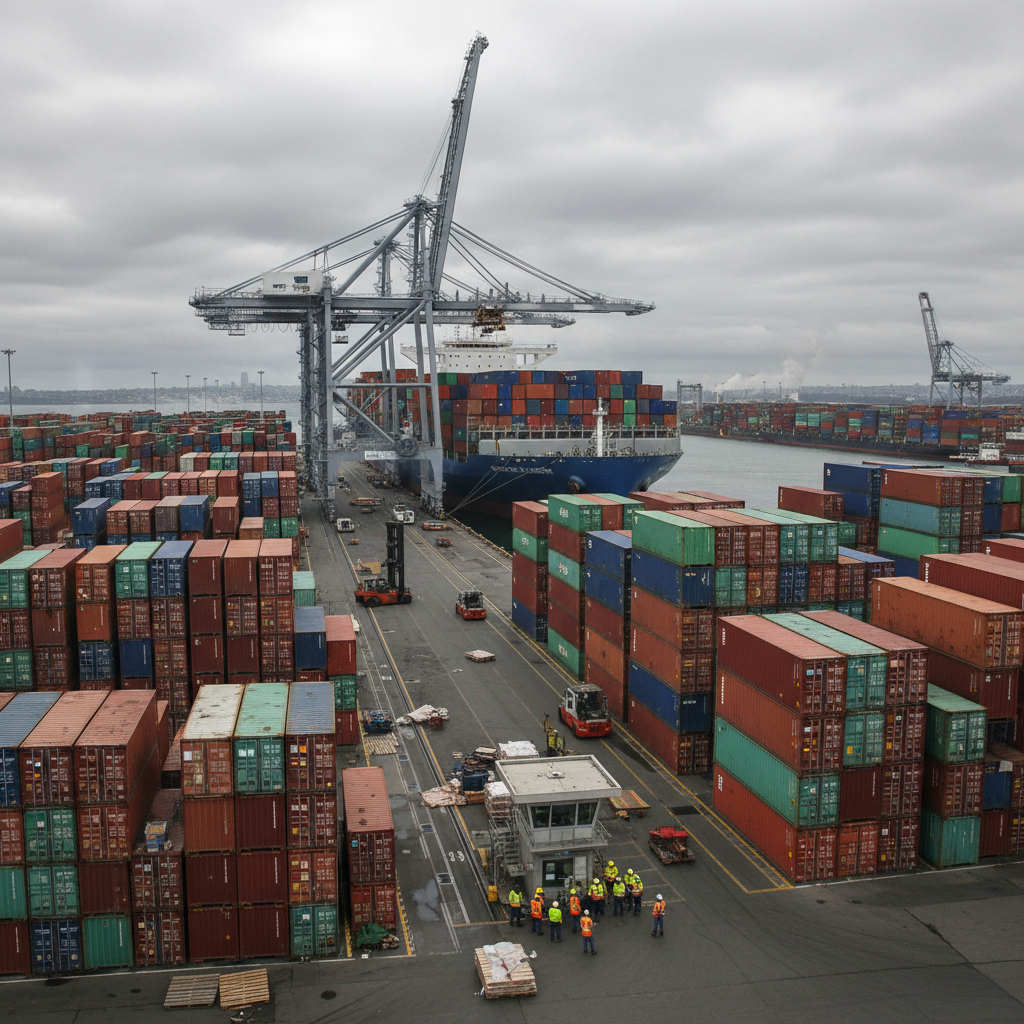

The global economy is currently navigating a challenging period, and Australia is no exception. Recently, on 16 April 2026, the Australian Broadcasting Corporation (ABC) reported that the complex global economic landscape, particularly the risk of stagflation – high inflation coupled with slowing economic growth – is increasingly becoming a focal point for Australian households. So, what exactly does stagflation mean? How will it impact our daily lives? And how can ordinary Australian households prepare for what lies ahead?
What is Stagflation?
Stagflation is an economic term, a portmanteau of "stagnation" and "inflation," specifically referring to an economic phenomenon characterised by stagnant or negative economic growth, rising unemployment, and persistently increasing prices. This contradicts traditional economic cycle theories, as economic slowdowns typically curb inflation. Stagflation often arises from external shocks (such as energy crises, supply chain disruptions), inappropriate monetary or fiscal policies, and structural issues.
Causes of Stagflation and Current Challenges Facing Australia
The current risk of stagflation facing Australia is the result of multiple intertwined factors:
- Global Supply Chain Disruptions and Geopolitical Conflicts: Ongoing geopolitical events such as the Russia-Ukraine conflict and Middle East tensions have led to soaring global energy and raw material prices. For instance, crude oil price fluctuations directly push up transport costs, subsequently affecting the prices of almost all goods. Furthermore, trade barriers and tariff policies on certain key commodities have exacerbated supply chain vulnerabilities.
- Soaring Energy Prices: Although Australia is a major energy exporter, domestic electricity and fuel prices are still influenced by international markets. Rising natural gas and coal prices directly increase business production costs, which are ultimately passed on to consumers.
- Tight Labour Market: Despite slowing economic growth, labour shortages persist in some Australian industries, leading to upward wage pressure. Businesses are compelled to increase remuneration to retain talent, further pushing up production costs.
- Post-Pandemic Aftermath: The ultra-loose monetary policies and fiscal stimulus during the pandemic injected vast amounts of liquidity into the market, laying the groundwork for current inflation. Concurrently, the long-term impact of the pandemic on global productivity has yet to be fully resolved.
Historical data shows that the oil crisis of the 1970s plunged Western countries into widespread stagflation. At that time, crude oil prices quadrupled in a short period, triggering global price surges and economic recession. Similar to that era, Australia currently faces the dual challenges of high energy prices and sluggish global economic growth.
Impact of Stagflation on Ordinary Australian Households
For ordinary households, stagflation means a double blow of "money losing value" and "difficulty finding work":
- Decreased Purchasing Power: Rising prices (e.g., food, energy, rent) lead to a reduction in the real purchasing power of household disposable income. Data from the Australian Bureau of Statistics (ABS) shows a continuous increase in the food price index in recent years; for example, meat and seafood prices alone rose by approximately 6.5% in 2023.
- Job Market Pressure: Stagnant economic growth may lead businesses to cut expenses, slow hiring, or even lay off staff, resulting in rising unemployment and increased difficulty in finding jobs.
- Erosion of Savings: The real return on bank deposits may be eroded by inflation, potentially even resulting in negative growth.
- Increased Debt Burden: If the central bank raises interest rates to curb inflation, the repayment pressure on variable-rate loans such as home loans and car loans will significantly increase.
Navigating Stagflation: Practical Strategies for Australian Households
In the face of stagflation risk, Australian households should actively take measures to enhance financial resilience:
- Budget Wisely, Optimise Spending: Carefully review household expenses, distinguishing between "necessities" and "non-essentials." Effectively control daily consumption by buying in bulk, utilising supermarket discounts, and reducing dining out. For example, research shows that households that create and strictly adhere to a budget can save an average of 10-15% on monthly expenses.
- Increase Income Streams: Consider part-time work, developing side hustles, or upskilling to increase household income. Diversified income sources provide better security during times of economic uncertainty.
- Prudent Investment, Diversify Risk: Avoid concentrating all funds in a single asset. In an inflationary environment, real assets (such as property, gold) and inflation-resistant stocks (such as consumer staples, utilities) may perform relatively well. However, always consult a professional financial advisor.
- Manage Debt, Prioritise High-Interest Loans: During stagflation, interest rates may rise, so it's advisable to prioritise paying off high-interest debts like credit card debt and personal loans to reduce the interest burden. For home loans, consider negotiating a fixed rate with your bank to lock in repayment costs.
- Build an Emergency Fund: Establish an emergency savings fund covering at least 3-6 months of household expenses to cope with uncertainties such as unemployment or unexpected illness.
Impact of Stagflation on Australia's Property and Construction Market
Stagflation also brings complex impacts to Australia's property and construction market. On one hand, building material costs (such as steel, timber, cement) have soared due to rising raw material and transport prices, and labour costs remain high. This directly increases the cost of new homes. Builders' profit margins are squeezed, and some projects may face delays or even suspension.
On the other hand, while rising interest rates may curb some homebuying demand, under inflationary expectations, some investors might view property as a hedge against inflation. However, economic stagnation and rising unemployment will diminish residents' ability to purchase homes. Therefore, the Australian property market may become bifurcated in the future, with high-quality properties in scarce locations retaining resilience, while the general residential market faces greater volatility.
For Australian households seeking stability and cost-effectiveness, prefabricated buildings may offer a strategic solution. As their production process is completed in a factory, they are less affected by weather and on-site labour shortages. Through economies of scale and material optimisation, they can, to some extent, control construction costs and timelines. For example, Sydney-based prefabricated housing companies like EASOVA are dedicated to providing cost-effective housing solutions for Australian families through efficient production models, helping them achieve their homeownership dreams in a challenging economic environment.
Future Outlook
The global economic outlook remains highly uncertain in the coming years. Organisations such as the International Monetary Fund (IMF) generally predict that global economic growth will continue to slow, and inflationary pressures are unlikely to fully dissipate in the short term. For Australia, the Reserve Bank will face a difficult balancing act between curbing inflation and stimulating economic growth. Ordinary households should closely monitor economic data and policy directions, flexibly adjust financial strategies, and prepare for potential challenges.
In summary, stagflation is not insurmountable. Through prudent financial planning, diversified income streams, and rational investment strategies, Australian households can certainly maintain financial health during this unique period and even seize new development opportunities.
Related Articles

EASOVA's Mission: Making Granny Flats the First Breakthrough in Australia's Housing Revolution
EASOVA's mission is not just to build granny flats, but to use them as a starting point to propel Australian housing into the next generation of upgrades. We believe that granny flats are the most suitable real-world scenario for first introducing fifth-generation housing concepts and smart systems. They can not only increase space and rental income but also become a vehicle for residential technology, integrating high-performance construction, age-friendly design, intelligent operation and maintenance, and continuous upgrade capabilities. To truly achieve this goal, we must integrate four core capabilities: structural design, customer decision-making, AI software and hardware, and financial support, to create a complete product system that is approvable, deliverable, and sustainably evolving.
22 Apr 2026
Canavan's Anti-Immigration Rally: Australia's Population Debate
Recent anti-immigration rallies initiated by Senator Matt Canavan have once again pushed Australia's population policy into the spotlight. This article deeply analyses the economic and social drivers behind these rallies, and explores their profound impact on Australia's future demographic structure, economic development, and social cohesion.
27 Apr 2026
Neighborhood Heroes in Fire: Community Aid & Home Safety
Recent fire incidents in Sydney have highlighted the powerful role of community assistance and the critical importance of residential safety measures. This article delves into fire risks, community response mechanisms, and how to enhance home safety in daily life to protect lives and property.
27 Apr 2026