Social Media Scrutiny: Australia's New Visa Rules & Migrant Labor Market
Australia's visa policy has undergone significant adjustments, with social media scrutiny becoming increasingly strict. This article provides an in-depth analysis of the profound impacts this new policy may have on potential immigrants, international students, and the Australian labour market, and offers strategies for adaptation.

Social Media Scrutiny Escalates: New Australian Visa Policies and the Migrant Labour Market

In recent years, countries worldwide have increasingly prioritised border security and the scrutiny of immigrant backgrounds. As a popular immigration destination, Australia's visa policies have continuously evolved in response. Recently, the Australian government has significantly intensified its social media background checks for visa applicants, a change that is profoundly impacting potential migrants, international students, and Australia's labour market.
New Policy Background: Increasingly Strict Scrutiny Standards
According to a report by the Australian Broadcasting Corporation (ABC) on April 13, 2026, the Australian Department of Home Affairs is strengthening its review of visa applicants' social media activity. This measure aims to more comprehensively assess applicants' character, intentions, and potential impact on the Australian community. This means that statements, images, videos, and interactions on platforms such as Facebook, X (formerly Twitter), Instagram, LinkedIn, as well as WeChat and Weibo, could all become grounds for assessment by visa officers.
This policy is not an isolated incident but part of a global trend. For example, countries like the United States and Canada have also incorporated social media into their visa review processes to varying degrees. Australia's move reflects its determination to maintain national security, social harmony, and the integrity of its immigration program.
Impact on Potential Migrants and International Students
-
Increased Application Difficulty and Longer Processing Times: The inclusion of social media scrutiny undoubtedly adds complexity to visa applications. Visa officers will need to dedicate more time to background checks, potentially leading to extended processing periods. For applicants who have posted sensitive remarks, extreme content, or information related to criminal activities on social media, the risk of visa refusal will significantly increase.
-
Highlighting the Importance of "Digital Footprint": Applicants need to be aware that their past "digital footprint" will be a crucial assessment criterion. This includes, but is not limited to:
- Content of Remarks: Are there any remarks inciting hatred, discrimination, violence, or supporting terrorism?
- Social Network: Are there close ties with known criminals or members of extremist organisations?
- Lifestyle: Does the lifestyle displayed on social media align with the purpose of the visa application (e.g., study, work)?
-
Impact on International Students: Australia is the third-largest destination for international students globally, attracting a large number of international students annually. The new policy's impact on international students is particularly significant. Some young students may inadvertently post inappropriate content on social media due to careless remarks or a lack of understanding of cultural differences, thereby affecting their visa application or even renewal. Schools and educational institutions may also need to strengthen guidance for international students on social media use.
-
Psychological Pressure and Privacy Concerns: This comprehensive scrutiny could impose additional psychological pressure on applicants and raise concerns about personal privacy. How to protect personal information under the premise of legality and compliance becomes a new challenge.
Impact on the Australian Labour Market
-
Talent Attraction: A Double-Edged Sword: Australia has always relied on skilled migration to fill labour shortages in key industries. While strict social media screening can help select high-calibre, good-character migrants and maintain social stability, overly stringent screening standards could also lead to some excellent talents being rejected due to minor flaws in their "digital footprint," thereby affecting Australia's attractiveness to global talent.
-
Specific Industries Affected: For industries requiring high security clearances or involving sensitive information (e.g., defence, government, finance), the escalation of background checks will make them more cautious when recruiting international talent. For labour-shortage industries such as construction, healthcare, and education, if potential migrants are hindered by social media issues, it could exacerbate labour supply tensions.
-
Employer Responsibility and Risk: Employers hiring overseas workers may need to pay closer attention to their social media background to avoid business disruptions or reputational damage caused by employee visa issues. Some employers might even consider adding unofficial social media screening to their recruitment processes.
Historical Comparison and Future Predictions
Looking back, tightening visa policies is not unprecedented. For example, after the "9/11" incident, border security checks intensified globally. Each policy adjustment is accompanied by an adaptation period for immigration procedures and a short-term impact on the labour market. However, in the long run, policy stability and transparency are key to attracting talent.
Future Predictions:
- Scenario One: Policy Normalisation. Social media screening will become a normalised part of Australian visa applications, and applicants will generally place greater emphasis on their "digital footprint."
- Scenario Two: Technology-Assisted Scrutiny. The Australian Department of Home Affairs may introduce more artificial intelligence and big data technologies to improve the efficiency and accuracy of social media screening, but this could also spark more discussions about algorithmic bias and privacy protection.
- Scenario Three: International Cooperation and Standardisation. As countries generally strengthen scrutiny, future international cooperation in immigration background checks and information sharing may emerge, potentially leading to some degree of standardisation in screening.
Impact on Australian Residents and the Property Market
While social media scrutiny may seem unrelated to the property market, from a macro perspective, changes in immigration policy indirectly affect population growth and housing demand.
If the new policy leads to a reduction in migrant intake, it could alleviate housing pressure in major cities like Sydney in the long term, but it might also weaken demand for new home construction. Conversely, if the policy successfully screens for high-calibre, highly skilled migrants, their demand for housing will remain strong, especially in the rental and first-home buyer markets. Furthermore, the construction industry's high reliance on labour means that any changes in immigration policy could affect construction costs and project timelines.
For Australian residents, understanding these policy changes can help better plan personal development and investment decisions. For overseas individuals hoping to settle and own property in Australia, maintaining good personal character and responsible social media behaviour will be a crucial step towards successfully achieving immigration goals.
EASOVA's Perspective
As an Australian prefabricated housing company rooted in Sydney, EASOVA deeply understands the dynamic changes in Australia's social and economic environment and their impact on the construction industry. We constantly monitor policy trends and are committed to providing efficient, high-quality building solutions that meet market demands. Regardless of external environmental changes, EASOVA will continue to contribute to Australia's housing market with its innovative prefabricated technology, meeting the residential needs of diverse communities.
References:
- Australian Broadcasting Corporation (ABC), reported on April 13, 2026. URL:
https://news.google.com/rss/articles/CBMipgFBVV95cUxNNkt6VmxORHNEWEJFeHhLZ2pqWk1jMjY3aGQzNmhLTlk5R0p2Z1R1Q2VsLTVWZmpIOE1zQWIyeTNFY3dBMkdTNy1yM3ZKUXR6dHg5STFlQjdFYW5nWEFEb1AyeEo1UEFmcU1BdkJXeklaenVZVUFmWVA4Q0JGcVplRm83TUJhRDRGWUNqU2Rib19tdnFuT2F5WHpqWjhobVJRRTJjZjN3?oc=5
Related Articles

EASOVA's Mission: Making Granny Flats the First Breakthrough in Australia's Housing Revolution
EASOVA's mission is not just to build granny flats, but to use them as a starting point to propel Australian housing into the next generation of upgrades. We believe that granny flats are the most suitable real-world scenario for first introducing fifth-generation housing concepts and smart systems. They can not only increase space and rental income but also become a vehicle for residential technology, integrating high-performance construction, age-friendly design, intelligent operation and maintenance, and continuous upgrade capabilities. To truly achieve this goal, we must integrate four core capabilities: structural design, customer decision-making, AI software and hardware, and financial support, to create a complete product system that is approvable, deliverable, and sustainably evolving.
22 Apr 2026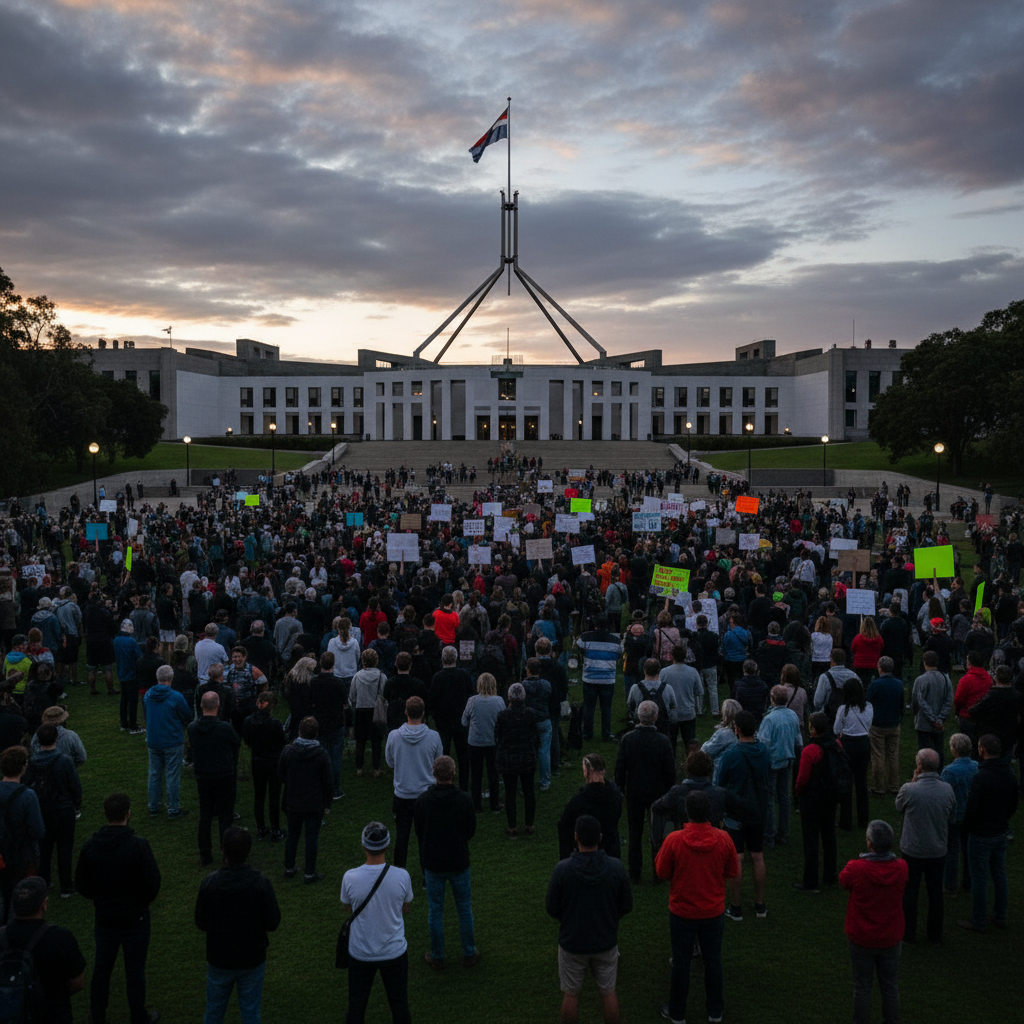
Canavan's Anti-Immigration Rally: Australia's Population Debate
Recent anti-immigration rallies initiated by Senator Matt Canavan have once again pushed Australia's population policy into the spotlight. This article deeply analyses the economic and social drivers behind these rallies, and explores their profound impact on Australia's future demographic structure, economic development, and social cohesion.
27 Apr 2026
Neighborhood Heroes in Fire: Community Aid & Home Safety
Recent fire incidents in Sydney have highlighted the powerful role of community assistance and the critical importance of residential safety measures. This article delves into fire risks, community response mechanisms, and how to enhance home safety in daily life to protect lives and property.
27 Apr 2026