Prefab Backyard Homes: Australia's Property Haven Amidst 2028 Recession Warnings
With the *Courier Mail*'s April 5, 2026 report forecasting an Australian property market downturn in 2028, investors and owner-occupiers face uncertainty. This article delves into how prefabricated backyard homes can offer stable returns and mitigate risk during an economic downturn, exploring their unique value in the Australian property market.
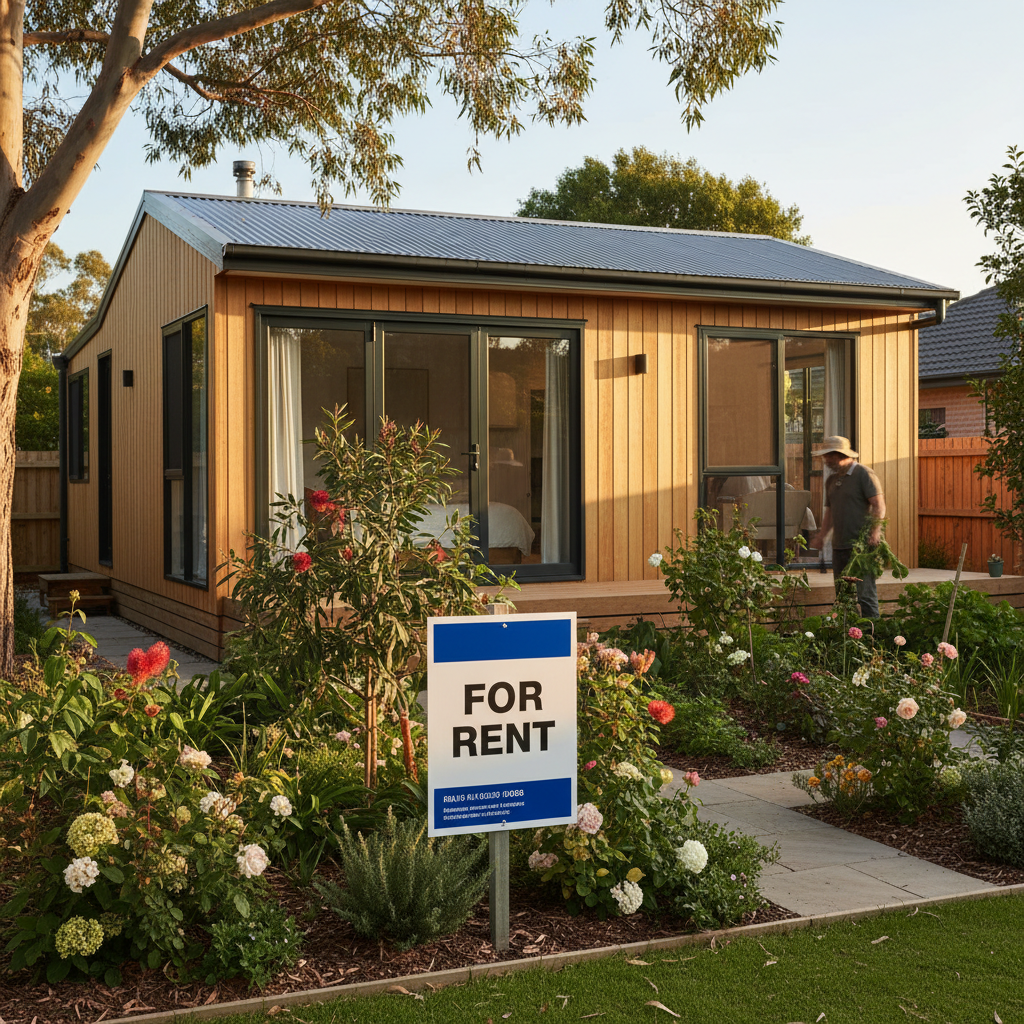
2028 Property Market Downturn Warning: How Prefabricated Granny Flats Become a Safe Haven in Australian Real Estate
Introduction: Storm on the Horizon? 2028 Australian Property Market Downturn Warning
On April 5, 2026, The Courier Mail published a thought-provoking report, warning that the Australian property market could face a significant downturn in 2028. This news undoubtedly sent ripples through the Australian real estate sector, sparking widespread concern among investors and owner-occupiers about the future direction of the market. Against the backdrop of fluctuating economic cycles, finding a safe haven for assets has become the most pressing issue. For prefabricated housing companies like EASOVA, we deeply understand the philosophy that "clothing, food, housing, and transportation are all related to construction" and firmly believe that in uncertain times, prefabricated granny flats will, with their unique advantages, become a stable force in the Australian property market.
Impact Chain Analysis: From Macro Warning to Household Property Strategies
While The Courier Mail's report did not detail the specific reasons for the 2028 downturn, such warnings are typically based on a series of macroeconomic indicators, such as:
- Sustained High or Further Rising Interest Rates: If the Reserve Bank of Australia (RBA) continues to raise interest rates to curb inflation, or maintains high rates for longer, it will directly push up mortgage costs, weaken buyers' affordability, and lead to reduced demand.
- Global Economic Slowdown and Commodity Price Volatility: As a resource-exporting nation, the Australian economy is susceptible to global market influences. If the global economy experiences a recession, reduced demand for commodities could impact the Australian economy, affecting employment and household income.
- Slowing Population Growth or Changes in Immigration Policy: For a long time, the Australian property market has benefited from continuous immigration. If immigration policies tighten or global talent mobility is hindered, it could lead to slower population growth, subsequently affecting housing demand.
- Credit Crunch and Banks Tightening Lending Standards: In anticipation of an economic downturn, banks typically become more cautious, tightening lending conditions, making it harder to obtain home loans, further suppressing market activity.
These factors, acting in concert, could lead to a decline in home sales and stagnation or even a fall in property prices. For ordinary households, this means a depreciation in property value, unstable rental yields, and even increased mortgage repayment pressure. However, in such a context, the safe-haven value of prefabricated granny flats becomes evident.
Historical Comparison: Opportunities and Resilience Amidst Crises
Looking back, the Australian property market has not been without its challenges. During the 2008 Global Financial Crisis (GFC), while the Australian property market was impacted, it showed greater resilience compared to other developed countries, partly due to government economic stimulus packages and a relatively robust banking system. However, post-GFC, demand for "large and comprehensive" housing cooled, and interest in "small and efficient" affordable housing and investment properties began to grow.
A more recent example is the COVID-19 pandemic. Despite initial market panic, government fiscal support and the RBA's ultra-low interest rate policy quickly stabilised the market, even spurring a wave of price increases later on. However, the pandemic also exposed the fragility of global supply chains, leading to soaring construction material costs (e.g., steel prices rose 23% and timber prices 30% in 2021), and labour shortages also pushed up construction costs. This created significant risks of project delays and cost overruns for traditional construction projects.
In these historical events, the advantages of prefabricated construction gradually became apparent:
- Cost Controllability: Factory production reduces on-site construction uncertainties, lowering material waste and labour costs.
- Schedule Stability: Unaffected by weather, assembly-line operations ensure delivery times, avoiding common delays in traditional construction.
- High Efficiency: 90% factory prefabrication significantly shortens on-site installation time.
Data and Evidence: The Unique Value of Prefabricated Granny Flats
In a potential property market downturn, why can prefabricated granny flats be a safe-haven option?
- Essential Demand and Stable Rental Yields: Major cities like Sydney face severe housing shortages and high rental costs. According to CoreLogic data, as of early 2024, Sydney's median weekly rent exceeded $750, with vacancy rates consistently low (typically below 1.5%). Granny flats, as an affordable rental option, have strong market demand and can provide owners with stable cash flow, hedging against some risks through rental income even when property prices fall.
- Lower Initial Investment and High Return on Investment (ROI): Building a granny flat is significantly cheaper than purchasing a second property. A high-quality prefabricated granny flat project typically ranges from $120,000 to $250,000 AUD, while Sydney's median house price has reached $1.4M (Source: Domain, Q1 2024). This means a lower capital threshold and a higher potential rental yield (often 5-8% or even higher, far exceeding bank deposit rates and many traditional investments).
- Increased Property Value: A well-designed and well-built granny flat not only generates rental income but also significantly enhances the overall value of the main property. According to industry experts, a legally compliant granny flat can typically add 10% to 20% to a property's value.
- Cost Certainty and Time Efficiency: EASOVA's prefabricated granny flats use fixed-price quotes, eliminating the common risk of cost overruns in traditional construction. At the same time, factory production and efficient installation ensure a delivery period of approximately 3 months, allowing owners to realise investment returns faster and avoid the time cost associated with market uncertainties.
Future Outlook: 2-3 Possible Scenarios and Their Impact on Homeowners/Investors
Scenario One: Mild Downturn and Market Differentiation
- Forecast: Property prices may experience a moderate decline of 5-10% in 2028, but the market will not collapse entirely. Prime locations and quality properties will remain resilient, while highly leveraged investors and secondary properties may be more significantly impacted.
- Impact: For homeowners with granny flats, rental income can effectively offset paper losses from falling property prices. The low cost and high demand for granny flats keep them competitive in the rental market, potentially even boosting returns if rents rise. Investors can leverage the market downturn to acquire land or existing properties at lower costs and add granny flats to increase cash flow and future appreciation potential.
Scenario Two: Deep Recession and Credit Crunch
- Forecast: If the global or Australian economy faces a more severe shock, property prices could fall by 15-20% or more, bank credit would tighten across the board, and buying and investment activity would significantly decrease.
- Impact: In this scenario, the "safe-haven" attribute of granny flats becomes even more prominent. Due to their short construction period, fixed costs, and ability to generate rental income quickly, they become one of the few investments that can provide stable cash flow during a market downturn. For families facing financial pressure, rental income from a granny flat can even help alleviate mortgage repayment stress on the main home. The factory prefabrication model effectively mitigates risks such as supply chain disruptions and volatile labour costs that traditional construction faces during economic downturns.
Scenario Three: Government Intervention and Market Stabilisation
- Forecast: Faced with a potential downturn, the Australian government and RBA may introduce stimulus policies (such as interest rate cuts, fiscal subsidies, first-home buyer incentives) to stabilise the market and prevent a hard landing.
- Impact: Even with government intervention, market confidence takes time to recover. Granny flats, as a flexible housing solution, will continue to benefit from government focus on housing affordability. For example, the government might introduce policies supporting small-scale residential construction, further stimulating the granny flat market. For investors, this means a more favourable investment environment for granny flats with policy support.
Significance for Homeowners/Investors: EASOVA's Advantages
Facing the potential property market challenges in 2028, homeowners and investors should adopt a prudent yet proactive strategy. Incorporating a granny flat into your property portfolio is a wise move to diversify risk and increase returns.
EASOVA, as a leading prefabricated granny flat expert in Sydney, understands market demands and customer pain points. Our advantages include:
- 90% Factory Prefabrication: Moving most construction work into a controlled factory environment significantly reduces on-site construction time and uncertainties, especially in variable weather conditions or during labour shortages.
- Fixed-Price Quote: We provide transparent fixed-price quotes, allowing you to know the total cost before the project begins, avoiding common budget overrun risks in traditional construction and ensuring cost certainty.
- 3-Month Rapid Delivery: Efficient factory production and a professional installation team ensure your granny flat can be delivered and ready for use in just 3 months, allowing you to generate rental income faster and seize market opportunities.
- No Weather Delays: Factory production is unaffected by adverse weather, and on-site installation time is short, minimising the risk of project delays.
- High Quality and Sustainability: We use premium materials and advanced techniques to ensure the durability and energy efficiency of our homes, complying with strict Australian building standards and meeting the growing demand for sustainable construction.
In an uncertain economic environment, EASOVA's prefabricated granny flats offer you a stable, efficient, and high-return investment option. It is not only a value-adding asset for your property but also a strong fortress against market fluctuations. Act now and prepare your future property investments!
Related Articles

Solving the Difficulty of Local Australian Banks Lending for Prefab/Modular Homes: The Core Lies in Breaking the Security Gap
Solving the difficulty of local Australian banks lending for Prefab/Modular Homes revolves around bridging the **“Security Gap”**. Because the main cost of prefab homes occurs at the factory stage rather than on the land site, traditional banks often refuse to issue progress payments as they cannot conduct on-site inspections and asset mortgages before the modules are installed on the land.
13 Apr 2026Sydney Prefab Backyard Homes Market Research Report V2.0
Based on authoritative sources such as ABS trade data, NCC building codes, and HIA industry surveys, this analysis comprehensively examines the pre-fabricated granny flat market on the cusp of explosion and its breakthrough paths from eight dimensions: supply-side (AUD $278.5 million import value from Chinese factory capacity), demand-side (262,000 housing shortfall), regulatory-side (WaterMark/CodeMark/NATA certification barriers), design blind spots (wind loads/7-star energy efficiency), and the practical constraints of backyard construction in Sydney.
7 Apr 2026
Iran Conflict's Shadow: Global Economy & Australian Households Face Challenges
On April 24, 2026, Under30CEO reported that the conflict in Iran could trigger global economic instability, driving up prices and slowing growth. This article delves into the impact of Middle Eastern geopolitics on global oil prices, inflation, and supply chains, and explores the potential repercussions for the Australian economy and ordinary households.
25 Apr 2026