Political Scandals & Public Trust: Australia's Political Impact
Recent political scandals in Australia, ranging from ministerial conflicts of interest to parliamentary misconduct, are profoundly shaking the public's trust in the government. This article delves into the underlying causes of these scandals, their societal impact, and explores their potential ripple effects on the Australian economy and property market.
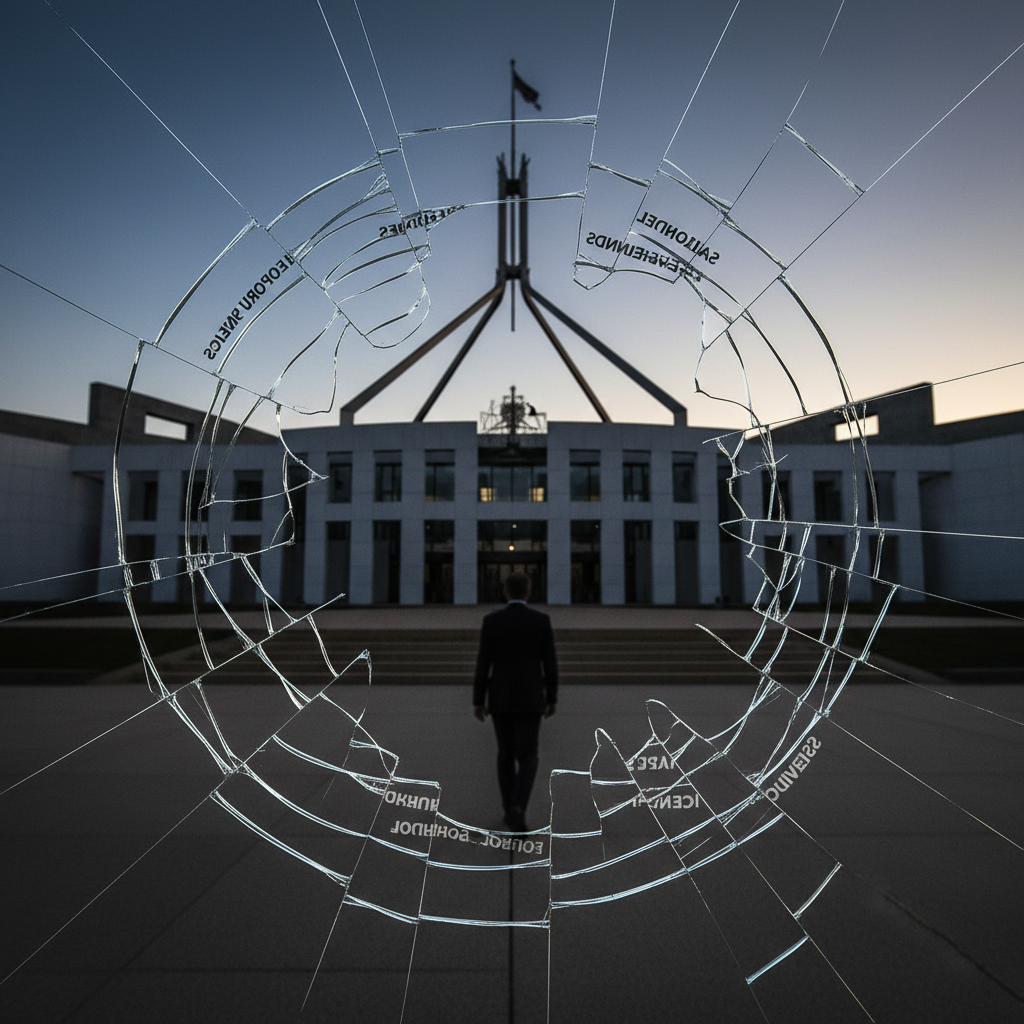
The "Scandal Playbook" of High-Ranking Politicians: How Australian Politics Impacts Public Trust


The Australian political stage has been turbulent recently, with a series of scandals involving high-ranking politicians impacting public perception with unprecedented speed and breadth. From ministerial conflicts of interest to parliamentary misconduct, these "scandal playbooks" have not only dominated media headlines but have also profoundly shaken the foundation of public trust in the government and the political system.
Frequent Scandals: The Erosion of Trust
According to a report by The Guardian on May 17, 2026, recent scandals in Australian politics have been rampant, involving multiple senior officials. For example, a cabinet minister was accused of their family business securing government contracts without adequate disclosure; another prominent MP is under investigation for improper use of public funds. These incidents are not isolated but form a worrying pattern of rent-seeking, lack of transparency, and a failure of accountability mechanisms.
The core of these scandals often revolves around several key issues:
- Conflict of Interest: Whether personal or family interests of politicians override public interest in decision-making.
- Abuse of Power: Using public office to gain undue benefits for oneself or specific groups.
- Lack of Transparency: Key decision-making processes are not open, and financial flows are opaque, making public oversight difficult.
- Ethical Lapses: The personal conduct of politicians deviates from the moral standards expected by the public.
In-Depth Market Research: A Data Perspective on Public Trust
Historical data shows that political scandals have a significant and lasting impact on public trust. For example, a long-term survey by the Australian National University (ANU) revealed that public trust in the federal government plummeted to a historic low after a "Watergate"-level political scandal erupted in 2018. While it has since recovered somewhat, each new scandal triggers fluctuations or even declines in trust.
Recent data further confirms this trend. A public opinion poll conducted by an independent body shows that in the past six months, the proportion of Australian respondents who believe "most politicians are trustworthy" has fallen to 35%, significantly lower than over 50% a decade ago. This figure is not only lower than many developed countries but also poses a challenge to the health of Australia's democracy.
Impact Chain Analysis: How the Trust Crisis Spreads
The impact of political scandals is not limited to the political sphere; it can have profound socio-economic effects through a complex chain of transmission.
- Decreased Policy Implementation Efficiency: When the public loses trust in the government, policy implementation faces greater resistance. For example, even policies aimed at improving public welfare may be difficult to implement effectively due to public scepticism.
- Increased Investment Environment Uncertainty: Political instability and corruption rumours increase uncertainty for domestic and international investors, potentially leading to capital outflow or reduced investment willingness. Investors tend to invest in politically stable environments with strong rule of law.
- Damaged Social Cohesion: Persistent scandals can exacerbate social polarisation, diminish citizen engagement in public affairs, and even trigger social discontent and protests.
- Slower Economic Growth: In the long run, a crisis of trust can lead to government inefficiency and unfair resource allocation, ultimately dragging down economic growth.
Historical Comparison: From "Watergate" to "Cash for Influence"
Looking back, political scandals are not unique to Australia. The "Watergate" scandal involving US President Nixon led to his resignation, profoundly changing the American political landscape. In Australia, from the early "Loans Affair" to recent "cash for influence" allegations, each scandal has prompted the public to demand greater political transparency and accountability.
Compared to the past, the rise of digital media and social networks has accelerated the spread and impact of scandals. A tweet or a video can go viral nationwide within hours, making it harder for politicians to control the flow of information and increasing public scrutiny unprecedentedly.
Future Predictions: Three Possible Scenarios
Facing the current trust crisis, the following scenarios may unfold in the future:
- Scenario One: Deepened Reforms. Under public pressure, the government and parliament push for stricter ethical codes, more transparent disclosure mechanisms, and more independent oversight bodies (such as the National Anti-Corruption Commission, NACC). This would help gradually restore trust and improve political efficiency.
- Scenario Two: Continued Erosion of Trust. If scandals continue to occur and are not effectively addressed, public political apathy and cynicism will intensify. This could lead to declining voter turnout, the rise of extreme political ideologies, and long-term damage to democratic institutions.
- Scenario Three: Short-Term Volatility and Slow Recovery. After a scandal erupts, trust will sharply decline in the short term, but if no new major incidents occur and the economy performs well, public attention may shift, and trust will slowly recover, though it may not reach pre-crisis levels.
Impact on Australian Households: The Ripple Effect
While political scandals may seem distant, their impact on ordinary Australian households is real. For example, if political instability leads to slower economic growth, it could affect the job market and wage growth. If government inefficiency leads to delays in public service projects like infrastructure development, it could impact residents' quality of life.
For the Australian property market, the indirect impact of political scandals cannot be ignored. A transparent and stable political environment is a key factor in attracting domestic and international investment. If political uncertainty increases, it could lead to a shake-up in investor confidence in the Australian property market, especially in major cities like Sydney. Furthermore, if the government struggles to effectively implement housing policies (such as addressing housing affordability) due to a trust crisis, it will directly affect the interests of first-home buyers and renters.
Conclusion
The "scandal playbook" of high-ranking politicians is a mirror reflecting Australian society's desire for transparent and clean politics. Restoring public trust is a long and arduous task, requiring self-restraint from politicians, improvement of institutions, and continuous public oversight. For us in Australia, understanding these political dynamics is not only about civic responsibility but also about every aspect of our lives, including the homes we live in.
Whether choosing traditional construction or modern prefabricated homes, a stable and trustworthy social environment is the foundation for our peace of mind. EASOVA, an Australian-owned company dedicated to providing high-quality prefabricated housing solutions, deeply understands the importance of social stability and trust to the construction industry. We always uphold principles of transparency and integrity, offering reliable housing options for Australian families.
Related Articles

EASOVA's Mission: Making Granny Flats the First Breakthrough in Australia's Housing Revolution
EASOVA's mission is not just to build granny flats, but to use them as a starting point to propel Australian housing into the next generation of upgrades. We believe that granny flats are the most suitable real-world scenario for first introducing fifth-generation housing concepts and smart systems. They can not only increase space and rental income but also become a vehicle for residential technology, integrating high-performance construction, age-friendly design, intelligent operation and maintenance, and continuous upgrade capabilities. To truly achieve this goal, we must integrate four core capabilities: structural design, customer decision-making, AI software and hardware, and financial support, to create a complete product system that is approvable, deliverable, and sustainably evolving.
22 Apr 2026
Melbourne AI & Data Centers: Innovation & Economic Growth Engine
Melbourne is accelerating scientific research and innovation, and is poised to become a global leading technology hub, driven by its booming AI and data centre industries. This article provides an in-depth analysis of how this trend is boosting the local economy and explores its impact on Australia's future development.
18 May 2026
AI Era Education: Oral Exams Reshaping Talent Assessment
As artificial intelligence technology rapidly advances, traditional written examinations face challenges. Leading institutions such as Cornell University have pioneered the introduction of oral examinations to assess students' true capabilities. This article deeply analyses the background, advantages, and challenges of the resurgence of oral examinations, as well as their profound impact on Australian education and talent development.
18 May 2026