One Nation's Historic Win: Reshaping Australian Politics?
Recently, One Nation achieved a historic breakthrough in the Australian federal election, and its influence can no longer be ignored. This article delves into the causes of this political earthquake, its impact on mainstream Australian political parties, and looks ahead to the possible future trajectory of the political landscape.
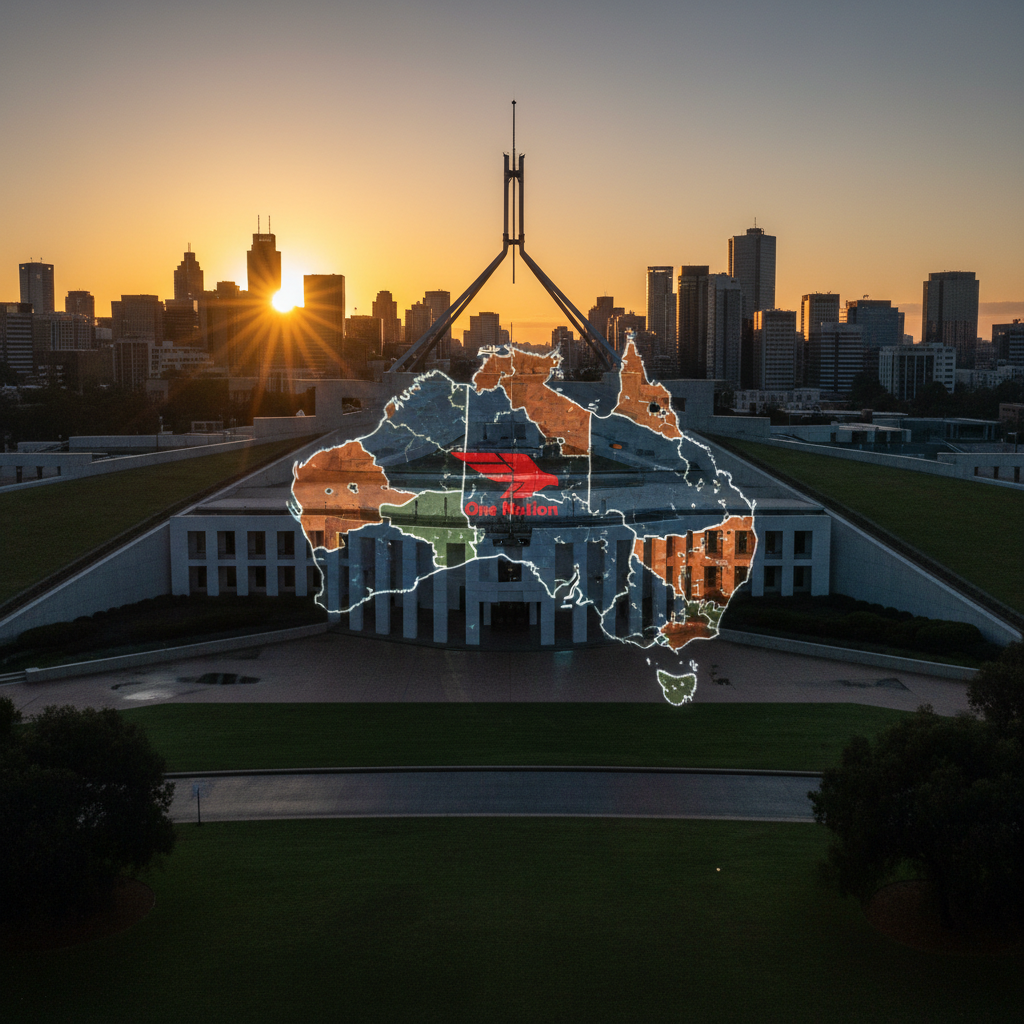
One Nation's Historic Victory: How Will Australia's Political Landscape Be Reshaped?
On May 9, 2026, according to a report by the British Broadcasting Corporation (BBC), Australia's political landscape underwent an unprecedented upheaval: Pauline Hanson's One Nation party achieved a historic victory in the general election, not only securing more seats in the Senate but also making breakthroughs in House of Representatives electorates that were traditionally Labor and Liberal strongholds. This result has shocked global observers and sparked profound discussions about Australia's future political direction.
The Causes of the Political Earthquake: Populism and Mainstream Disillusionment
One Nation's rise is not coincidental; it is the result of a long-term interplay of various socio-economic factors. In-depth market research shows that dissatisfaction with mainstream political parties has been growing in Australian society in recent years. According to data from the Australian Electoral Commission (AEC), over the past decade, the combined vote share of the two major parties – Labor and the Liberal-National Coalition – has been trending downwards, while support for minor parties and independent candidates has steadily risen. This reflects a crisis of trust among voters in the traditional political elite.
One Nation, with its distinct populist stance, successfully captured the sentiments of these voters. Its core propositions include:
- Anti-immigration policies: Calling for a significant reduction in immigration quotas, particularly for unskilled migrants, to alleviate urban pressures and job competition.
- Economic nationalism: Advocating for the protection of local industries and opposing free trade agreements, especially in the agricultural and manufacturing sectors.
- Critique of globalisation: Expressing scepticism on climate change issues, opposing carbon taxes and renewable energy projects, and emphasising the importance of traditional energy sources.
- Social conservatism: Adopting conservative positions on culture and values, emphasising "Australian identity."
These propositions resonated strongly in some remote areas and among working-class communities affected by globalisation and slow economic transformation. For example, in some mining towns in Queensland and Western Australia, and parts of regional New South Wales, One Nation's vote share surged, which is closely linked to unemployment and uncertainty brought about by local economic restructuring.
Impact on Mainstream Parties: Strategic Adjustments for Left and Right
One Nation's historic victory has undoubtedly placed immense pressure and challenges on Australia's two major political parties. Historical comparisons show that similar rises of minor parties (such as One Nation's own rise in the late 1990s, or far-right parties in Europe) often compel mainstream parties to move closer to them to win back lost votes.
- Impact on the Liberal-National Coalition: As a traditional right-wing party, the Coalition faces the risk of One Nation further eroding its conservative voter base. To win back these voters, the Coalition may adopt tougher stances on immigration policy, energy policy, and national security issues, and may even incorporate some of One Nation's policy proposals. However, moving too far to the right could alienate centrist voters and liberal supporters.
- Impact on Labor: Although One Nation primarily attracts right-wing voters, its appeal to working-class people also poses a threat to Labor. Many traditional Labor supporters, particularly blue-collar workers, are dissatisfied with the economic impact of globalisation and immigration, and they may turn to One Nation. Labor may need to re-examine its economic policies, focusing more on local jobs and industry protection, while avoiding being too radical on social issues, to gain broader support.
Future Predictions: Possible Directions for Australia's Political Landscape
One Nation's rise signals that Australian politics will enter a more fragmented and uncertain era. We can foresee several possible scenarios:
- Coalition or Minority Governments in a "New Normal": As the influence of One Nation and other minor parties grows, it may become harder for future Australian governments to secure an absolute majority. Coalition or minority governments will become the norm, making the policymaking process more complex, requiring more cross-party negotiation and compromise. This could lead to policy instability and a decrease in government efficiency.
- Mainstream Parties Becoming "One Nation-ised": To counter competition, mainstream parties may adopt One Nation's positions on certain key issues, such as tightening immigration policies and strengthening border control. This would shift Australia's overall political spectrum to the right and could trigger deeper societal debates about multiculturalism and national identity.
- Increased Social Polarisation: One Nation's success may encourage other extremist or populist groups to follow suit, leading to heightened divisions and conflicts between different social groups. Political debates may become more emotional, with less room for rational discussion.
Impact on Australian Society and Economy
This political shift will have profound implications for Australia's economic and social development. For example, if immigration policies are significantly tightened, it will directly affect Australia's labour supply, particularly in industries reliant on immigration such as construction, healthcare, and agriculture. This could lead to higher labour costs and, consequently, increased prices.
In the construction industry, if trade protectionism rises, tariffs on imported building materials (such as steel, timber) could increase, directly impacting construction costs. Furthermore, policy uncertainty could also reduce confidence among domestic and international investors in the Australian market, affecting economic growth.
Conclusion: Implications for Australian Households
One Nation's historic victory is a test of Australia's political maturity. For ordinary Australian households, this means that future policy directions may be more unpredictable, potentially affecting everything from housing affordability to the job market. Closely monitoring political developments and understanding the underlying economic and social drivers is crucial for making informed personal and household decisions.
In such a volatile era, seeking stable and efficient solutions becomes particularly important. For example, in the housing sector, prefabricated homes are increasingly gaining attention due to their cost-effectiveness and construction efficiency. They can effectively circumvent risks in traditional construction caused by labour shortages and fluctuating material prices, offering Australian households a more controllable and economical housing option. EASOVA, as a leading prefabricated home company in Sydney, is dedicated to providing high-quality, sustainable prefabricated home solutions for Australian families to navigate the ever-changing economic and market environment.
(News Source: BBC, May 9, 2026)
Related Articles

EASOVA's Mission: Making Granny Flats the First Breakthrough in Australia's Housing Revolution
EASOVA's mission is not just to build granny flats, but to use them as a starting point to propel Australian housing into the next generation of upgrades. We believe that granny flats are the most suitable real-world scenario for first introducing fifth-generation housing concepts and smart systems. They can not only increase space and rental income but also become a vehicle for residential technology, integrating high-performance construction, age-friendly design, intelligent operation and maintenance, and continuous upgrade capabilities. To truly achieve this goal, we must integrate four core capabilities: structural design, customer decision-making, AI software and hardware, and financial support, to create a complete product system that is approvable, deliverable, and sustainably evolving.
22 Apr 2026
Beware of Labor's New Tax Reforms: A Systematic Plunder of the Core Wealth Structure of Australia's Middle Class and Asset Owners
The Australian economy may enter a decade of medium to long-term stagnation!
9 May 2026
Australian Labor Budget: Can Cutting Red Tape Fix the Housing Crisis?
The Australian Labor Government's latest budget aims to revive the dream of home ownership by cutting red tape and adjusting investor tax concessions. This article delves into whether these measures can effectively alleviate Australia's escalating housing crisis.
8 May 2026