Microsoft's A$25 Billion AI Investment: Reshaping Australia's Jobs & Industry
Microsoft has announced a historic A$25 billion investment in Australia for data centre construction and AI development. This unprecedented investment is expected to have a profound impact on Australia's job market, economic structure, and technological innovation. Microsoft CEO Satya Nadella also warned of AI's potential impact on employment.
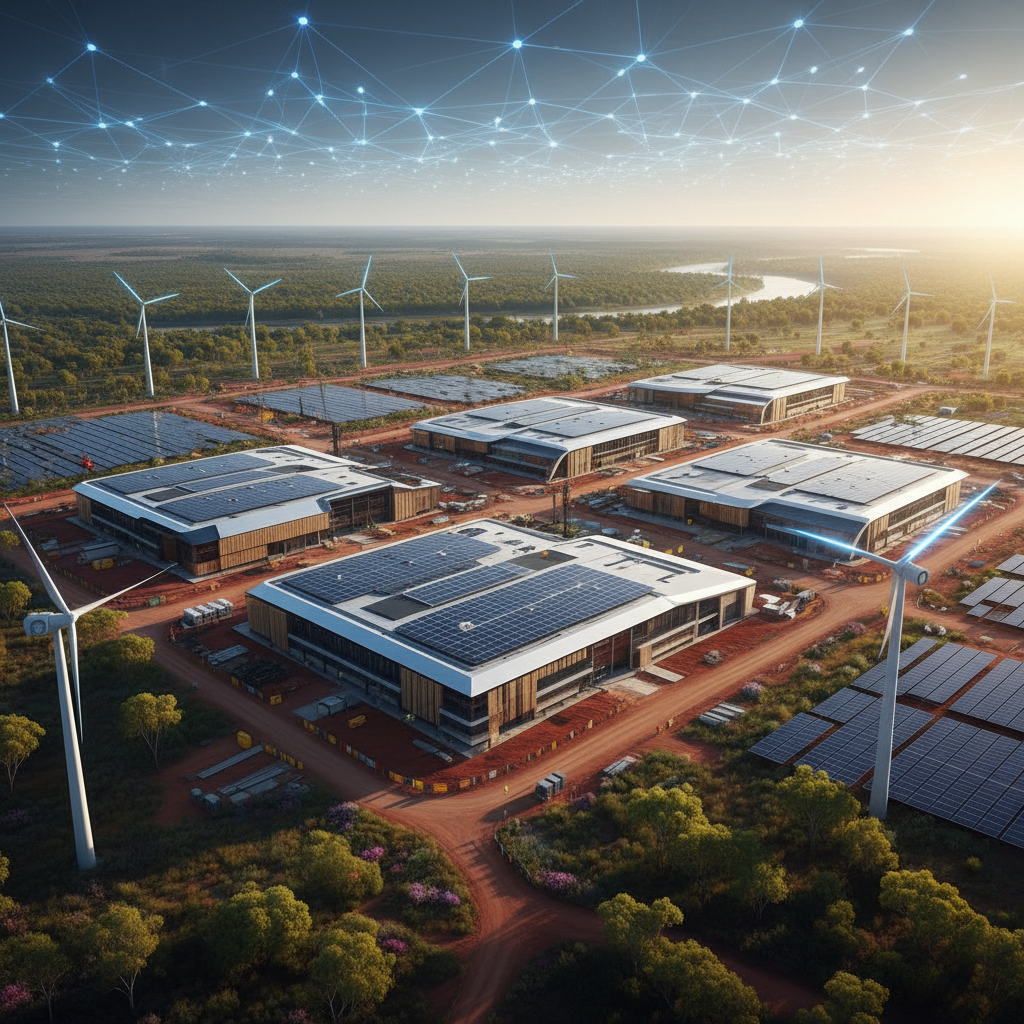
Microsoft's A$25 Billion AI Investment: How Will It Reshape Australia's Job Market and Industry Landscape?
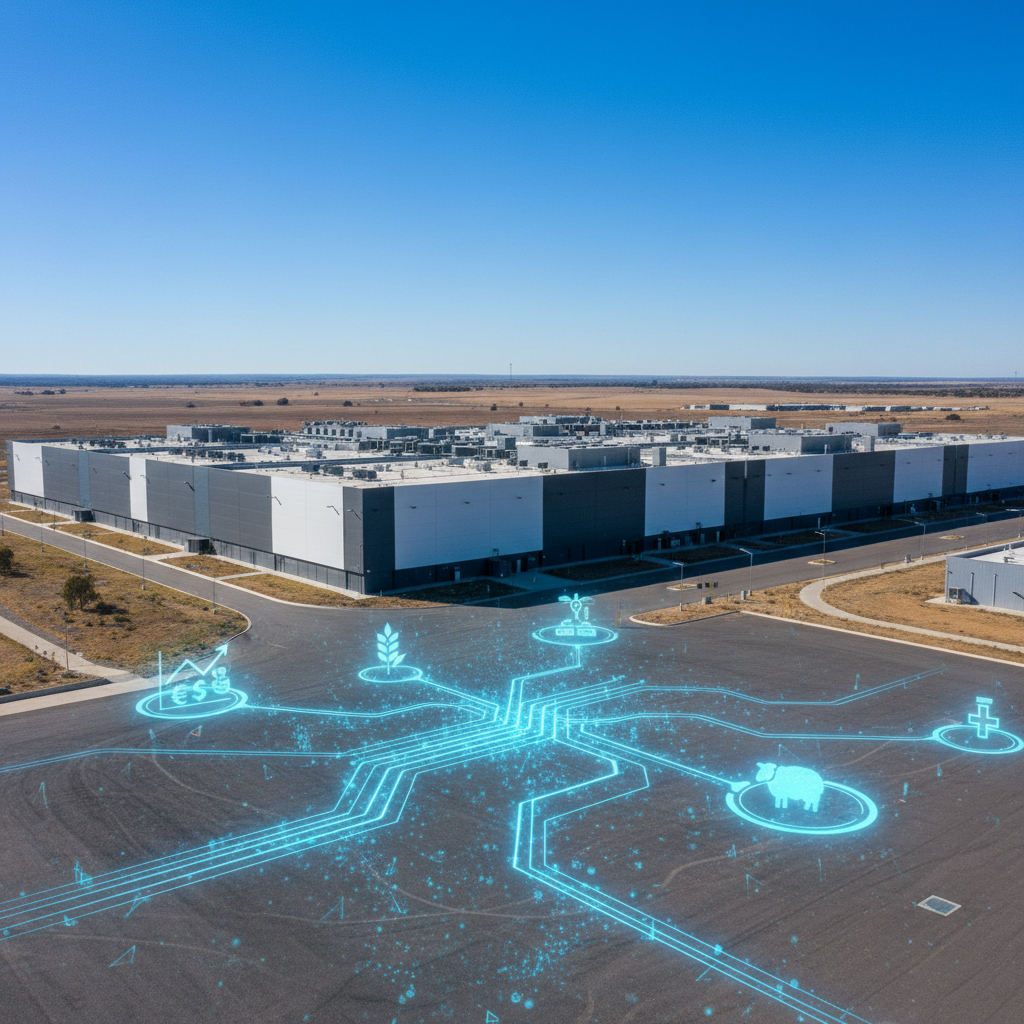
On April 22, 2026, global tech giant Microsoft dropped a bombshell: the company plans to invest up to A$25 billion in Australia for data centre construction and the comprehensive promotion of Artificial Intelligence (AI) technology. This unprecedented investment not only sets a new record for Microsoft's investment in Australia but also signals a profound AI-driven transformation for the Australian economy and job market. However, Microsoft CEO Satya Nadella, while announcing this news, frankly pointed out that the job disruption caused by AI is "inevitable," sounding an alarm for Australian society.
In-Depth Market Research: Strategic Considerations and Data Supporting the Investment
Microsoft's A$25 billion investment is not a coincidence; it is a direct result of the escalating global AI race and Australia's growing strategic importance as a data hub. According to a report by the Australian Financial Review on April 22, 2026, this massive funding will primarily be used for:
- Data Centre Infrastructure Expansion: Building and upgrading multiple hyperscale data centres to meet the explosive demand for AI model training, cloud computing services, and data storage. This is expected to multiply Microsoft's cloud computing capacity in Australia.
- AI Research and Talent Development: Investing in local AI research and development projects and collaborating with Australian universities and research institutions to cultivate AI professionals, addressing the widening skills gap.
- Industry AI Application Promotion: Driving the adoption of AI technology in key industries such as finance, healthcare, agriculture, and mining, thereby enhancing the overall intelligence level of Australian industries.
From a data perspective, Australia's digital economy has grown at an average annual rate of over 8% in the past five years, significantly outstripping national GDP growth. By 2030, the digital economy is projected to contribute nearly 20% of Australia's GDP. Microsoft's move undoubtedly capitalises on Australia's stable political environment, mature legal system, and growing digital demand in the Asia-Pacific region, aiming to establish it as a regional AI and cloud computing hub.
Impact Chain Analysis: How AI Investment Will Transmit to the Australian Economy
Microsoft's A$25 billion investment will profoundly impact the Australian economy through multiple channels:
-
Short-Term Effects: Infrastructure Construction Boost
- Construction Sector Boom: Data centre construction will directly drive demand in the building, engineering, and equipment manufacturing sectors, creating numerous short-term job opportunities. For example, each large data centre project typically requires thousands of construction workers and the procurement of substantial local materials.
- Supply Chain Upgrade: Demand for power, cooling systems, and network equipment will prompt related supply chains to undergo technological upgrades and capacity expansion.
-
Medium-Term Effects: Technology Ecosystem Building
- High-Tech Job Growth: Data centre operations, AI research and development, and data science will create a large number of high-skilled, high-paying job positions. Demand for AI and data professionals in Australia is expected to grow by over 50% in the next five years.
- Innovation Capability Enhancement: Microsoft's investment will attract more international technology companies and start-ups to Australia, fostering a vibrant technological innovation ecosystem and accelerating the commercialisation of technological achievements.
- Productivity Improvement: The application of AI across various industries will optimise production processes, enhance efficiency, and reduce costs, thereby improving the overall competitiveness of Australian businesses.
-
Long-Term Effects: Industrial Structure Transformation and Job Reshaping
- Emergence of New Industries: AI may spawn entirely new business models and industries, such as AI-driven personalised services and intelligent automation solutions.
- Transformation of Traditional Industries: Agriculture will benefit from precision agriculture and smart irrigation, healthcare will see breakthroughs in AI-assisted diagnostics and drug discovery, and the finance industry will achieve smarter risk control and customer service.
- Job Market Polarisation: Nadella's warning is not unfounded. The widespread adoption of AI will automate a large number of repetitive, low-skilled jobs, such as customer service, data entry, and some administrative functions. This could lead to increased unemployment in these areas and exacerbate structural imbalances in the labour market. Concurrently, demand for highly skilled AI specialists will remain strong, leading to a talent war.
Historical Comparison: Lessons from the Industrial and Information Revolutions
Looking back at history, every technological revolution has been accompanied by significant changes in the job market. The Industrial Revolution in the 18th century saw steam engines and mechanised production replace numerous artisans; the Information Revolution in the late 20th century, with the popularisation of computers and the internet, eliminated many clerical and operator positions. However, each revolution, while destroying old jobs, also created more numerous, complex, and valuable new jobs.
The AI revolution is characterised by its broader scope and faster pace. Unlike previous revolutions that primarily affected manual labour, AI's substitution effect on intellectual labour is more pronounced. The Australian government and educational institutions need to learn from history and plan ahead, implementing large-scale retraining and upskilling programs to help the workforce adapt to future employment demands.
Future Predictions: 2-3 Possible Scenarios
- Optimistic Scenario (AI-Driven Economic Boom): The Australian government and industry collaborate closely, successfully implementing large-scale workforce transition programs. AI investment attracts top global talent, and Australia becomes a leading AI innovation hub in the Asia-Pacific region. The economy achieves high growth, per capita income significantly increases, and the social welfare system effectively addresses structural unemployment, ultimately creating more high-value, high-paying "AI-collaborative" jobs.
- Neutral Scenario (Gradual Transition): AI gradually penetrates various Australian industries, leading to slow productivity gains. Some low-skilled jobs are replaced, but the number and quality of newly created jobs roughly balance out. Society's adaptation to AI is a longer process, and regional or industry-specific employment friction may occur, but overall economic growth remains stable, and unemployment rate fluctuations are manageable.
- Challenging Scenario (Increased Job Polarisation): The labour market fails to adapt promptly to the changes brought by AI, with insufficient or ineffective retraining programs. High-skilled AI talent is in short supply, while a large number of low- and mid-skilled workers face long-term unemployment risks. Social inequality widens, potentially leading to social discontent and structural economic problems, requiring the government to invest more resources in social security and employment assistance.
What Does This Mean for Australians?
For ordinary Australians, Microsoft's investment presents both opportunities and challenges. It means Australia will be at the forefront of global technology, potentially leading to more convenient lives, more efficient services, and more high-paying jobs. However, it also requires individuals to continuously learn new skills and adapt to technological advancements. The education system needs reform to cultivate critical thinking, problem-solving skills, and innovative spirit required for the future AI era.
Subtle Links to the Australian Property and Construction Market
While AI investment may seem unrelated to the construction industry, its profound impact will indirectly affect Australia's property and construction markets. Data centre construction itself involves large-scale engineering projects, which will directly drive demand for building materials (such as steel, cement), labour, and related equipment. As high-tech job positions increase, housing demand and rents in major technology hubs like Sydney and Melbourne may face upward pressure, especially in areas near data centres or technology parks. Furthermore, the application of AI in architectural design, construction management, and smart homes will also push the construction industry towards a more intelligent and efficient future.
As a company dedicated to providing efficient, high-quality prefabricated building solutions, EASOVA closely monitors these macroeconomic and technological trends. We believe that the application of AI and automation technology in the future construction industry will further enhance the efficiency, precision, and sustainability of prefabricated buildings, offering Australian residents smarter and more economical housing options. We look forward to embracing the opportunities and challenges brought by the AI era alongside Australia.
Related Articles

EASOVA's Mission: Making Granny Flats the First Breakthrough in Australia's Housing Revolution
EASOVA's mission is not just to build granny flats, but to use them as a starting point to propel Australian housing into the next generation of upgrades. We believe that granny flats are the most suitable real-world scenario for first introducing fifth-generation housing concepts and smart systems. They can not only increase space and rental income but also become a vehicle for residential technology, integrating high-performance construction, age-friendly design, intelligent operation and maintenance, and continuous upgrade capabilities. To truly achieve this goal, we must integrate four core capabilities: structural design, customer decision-making, AI software and hardware, and financial support, to create a complete product system that is approvable, deliverable, and sustainably evolving.
22 Apr 2026
Australian Billionaire's Urgent Warning: Housing Crisis Escalates, How Will Government Respond?
Australia's second-richest person has issued a dire warning, stating that Australia's housing crisis will worsen unless the government intervenes urgently. This article delves into the causes of the crisis, its potential impacts, and possible policy interventions.
30 Apr 2026
Australia's Two-Speed Property Market: WA Leads, Why Are Eastern States Lagging?
Recently, the Australian property market has shown a significant "two-speed" divergence, with Western Australia performing strongly while the eastern states face slowing growth. This article delves into the economic, demographic, and policy factors contributing to this phenomenon, and explores its profound implications for the national housing market and future trends.
30 Apr 2026