Melbourne Property: Affordability Crisis & Turning Point
Melbourne, a metropolis that has repeatedly been crowned the "world's most liveable city," has seen its property market struggle in recent years. This article delves into population growth, housing supply, and market dynamics to explore the emerging opportunities amidst the challenges facing Melbourne's property sector.

Melbourne Property Market: The Burden and Turning Point of the Most Liveable City

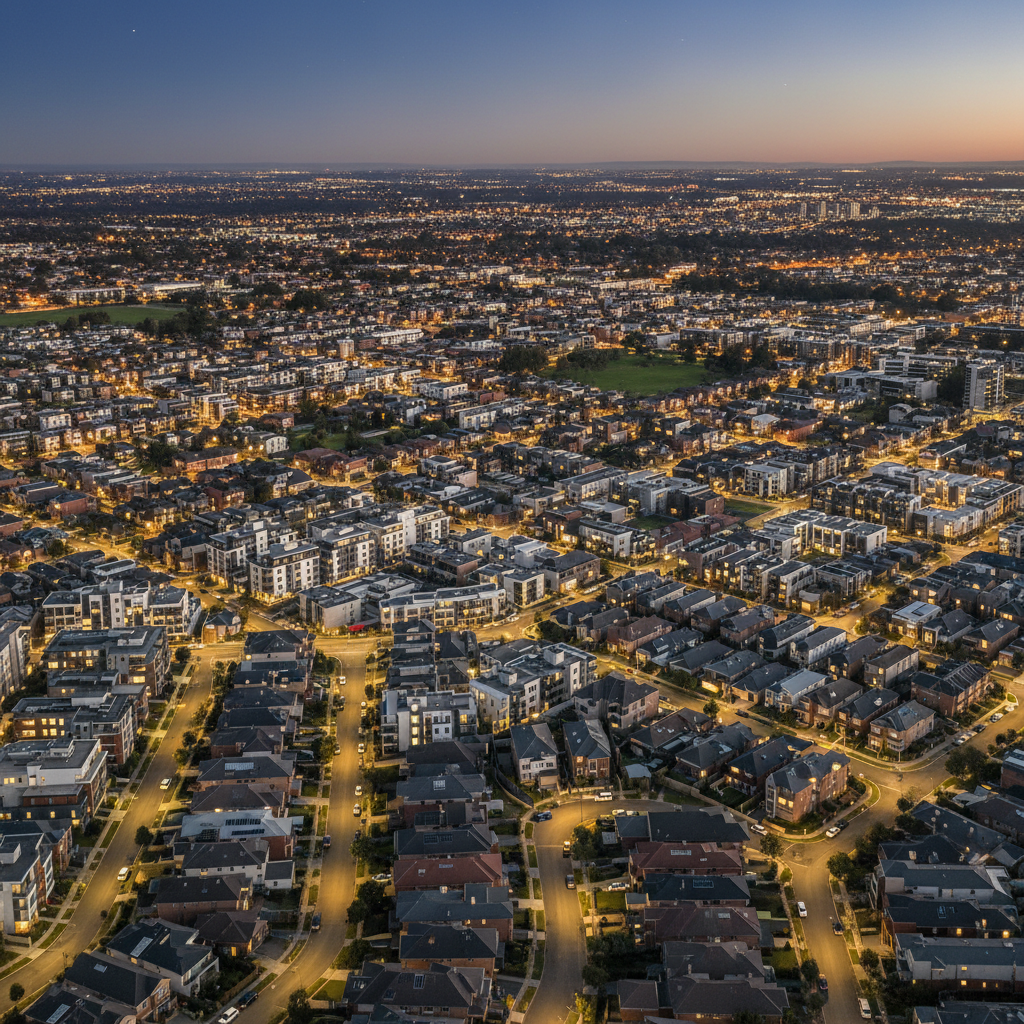
Melbourne, a city renowned globally for its multiculturalism, artistic atmosphere, and high quality of life, has been repeatedly voted the "World's Most Liveable City." However, beneath its liveable veneer, its real estate market faces unique challenges, particularly concerning affordability. In recent years, Melbourne's property market has shown some volatility, but the latest analysis suggests that population and supply trends may be bringing an unexpected turning point to the market.
According to an SBS report on 8 May 2026, titled "Is Melbourne's housing market crashing or turning a corner?", Melbourne's housing market has indeed experienced a difficult period over the past few years, but changes in supply and population trends may signal an imminent turning point. This has sparked widespread discussion: Is Melbourne's property market facing continued stagnation, or is it about to enter a new growth cycle?
In-depth Analysis: Challenges and Opportunities in Melbourne's Property Market
1. Historical Review and Current Predicament:
Looking back over the past decade, Melbourne's real estate market has experienced several cycles of boom and adjustment. In the mid-2010s, Melbourne house prices soared, attracting a large number of domestic and international investors. However, after peaking in 2017-2018, the market began to cool, especially during the pandemic when international border closures led to a sharp drop in population inflow, significantly impacting the rental market and apartment prices. While the detached housing market showed resilience amidst low interest rates, overall, Melbourne's housing affordability continued to worsen, deterring many first home buyers.
According to CoreLogic data, the median price for a detached house in Melbourne remained above A$1 million at the end of 2025, while the median apartment price hovered around A$600,000. Compared to Sydney, Melbourne's house price-to-income ratio is slightly lower, but the pressure to purchase a home remains immense for average families. Rising interest rates have further exacerbated this pressure, leading some homeowners to face repayment difficulties and impacting market confidence.
2. Population Growth: A Strong Potential Demand Engine
Melbourne's population growth has always been a core driver of its real estate market. Before the pandemic, Melbourne was Australia's fastest-growing city by population, attracting a large number of overseas and interstate migrants annually. Although population inflow was interrupted during the pandemic, this trend is rapidly recovering with the reopening of international borders.
Data from the Australian Bureau of Statistics (ABS) shows that Victoria's (of which Melbourne is the core) net overseas migration has returned to pre-pandemic levels in the 2024-2025 financial year, and has even surpassed them. Melbourne's population is expected to continue growing at an annual rate of 1.5% to 2% in the coming years, significantly exceeding the national average. This strong population growth implies sustained high demand for housing, both for rent and purchase.
3. Housing Supply: Lagging Construction Speed
In stark contrast to strong population growth, Melbourne's housing supply growth has failed to keep pace. Factors such as tight land supply, complex approval processes, rising construction costs, and labour shortages have collectively limited the speed of new home construction.
While the Victorian Government has introduced various policies aimed at accelerating housing construction, such as streamlining planning approvals and launching "affordable housing schemes," it typically takes several years from project initiation to completion. Currently, Melbourne's residential vacancy rate is at a historic low (below 1%), and the rental market is exceptionally competitive, with rents continuously rising. This indicates that the housing supply on the market is far from meeting the demands of existing and new populations.
4. Impact Chain Analysis and Future Predictions
- High Population Inflow + Low Housing Supply = Upward Pressure on House Prices and Rents: This is the most direct impact chain. As the population continues to pour in and new home construction fails to keep up, the imbalance between housing supply and demand will become increasingly prominent, pushing up house prices and rents.
- Worsening Affordability Crisis: Rising house prices and rents will further exacerbate Melbourne's housing affordability, potentially pushing more people out of the market or forcing them to live in more distant suburbs, increasing commuting costs and time.
- Potential for Policy Intervention: Faced with increasingly severe housing issues, the Victorian and Federal Governments may be compelled to adopt more proactive intervention measures, such as increasing land supply, providing home purchase subsidies, and restricting short-term rentals, to alleviate market pressure.
Future Predictions:
- Scenario One: Slow Recovery (Most Likely): Supported by population growth, Melbourne's property market will begin a slow recovery in the second half of 2026, with house prices and rents rising moderately. However, due to high interest rates and economic uncertainty, the extent of the increase may be limited.
- Scenario Two: Accelerated Growth: If the global economic environment improves, interest rates begin to fall, and the government fails to effectively increase housing supply, Melbourne's property market could experience faster growth, especially for detached houses and premium apartments close to the city.
- Scenario Three: Structural Adjustment: If the government vigorously promotes high-density development and invests in supporting transport and infrastructure, the market structure may change, with more affordable apartments and townhouses entering the market, alleviating some pressure.
Significance for Australian Households
For households in Melbourne and indeed across Australia, the direction of Melbourne's property market has profound implications. For first home buyers, a market turning point could mean fiercer competition and higher entry barriers. For investors, the mismatch between population and supply signals potential rental yields and capital growth opportunities. For renters, a persistently tight rental market will mean higher rental expenses and fewer choices.
In major cities like Sydney and Melbourne, housing affordability has become a national issue. Faced with rising construction costs and the pursuit of efficiency, prefabricated construction is gradually becoming an attractive solution. For example, companies like EASOVA offer prefabricated homes that, through factory production, can effectively shorten construction periods, control costs, and provide high-quality buildings, offering a new approach to solving some housing supply problems. This efficient construction method is expected to play a more significant role in Melbourne's future housing supply, providing more options for families seeking affordability and efficiency.
Ultimately, whether Melbourne can maintain its liveable charm while resolving the housing affordability crisis will depend on the synergistic efforts of government policies, market forces, and innovation within the construction industry.
Related Articles

Solving the Difficulty of Local Australian Banks Lending for Prefab/Modular Homes: The Core Lies in Breaking the Security Gap
Solving the difficulty of local Australian banks lending for Prefab/Modular Homes revolves around bridging the **“Security Gap”**. Because the main cost of prefab homes occurs at the factory stage rather than on the land site, traditional banks often refuse to issue progress payments as they cannot conduct on-site inspections and asset mortgages before the modules are installed on the land.
13 Apr 2026
Sydney Prefab Backyard Homes Market Research Report V2.0
Based on authoritative sources such as ABS trade data, NCC building codes, and HIA industry surveys, this analysis comprehensively examines the pre-fabricated granny flat market on the cusp of explosion and its breakthrough paths from eight dimensions: supply-side (AUD $278.5 million import value from Chinese factory capacity), demand-side (262,000 housing shortfall), regulatory-side (WaterMark/CodeMark/NATA certification barriers), design blind spots (wind loads/7-star energy efficiency), and the practical constraints of backyard construction in Sydney.
7 Apr 2026
Iran Conflict's Shadow: Global Economy & Australian Households Face Challenges
On April 24, 2026, Under30CEO reported that the conflict in Iran could trigger global economic instability, driving up prices and slowing growth. This article delves into the impact of Middle Eastern geopolitics on global oil prices, inflation, and supply chains, and explores the potential repercussions for the Australian economy and ordinary households.
25 Apr 2026