May Day General Strike: Global Labor Movement's Impact on Australia
On May 1, 2026, a nationwide general strike initiated by the "May Day Strong" organisation is brewing in the United States and other regions. This article provides an in-depth analysis of the background and demands of this global labour movement, and explores its potential profound impacts on Australia's economy, labour market, and social structure, including supply chain disruptions, inflationary pressures, and the evolution of industrial relations.
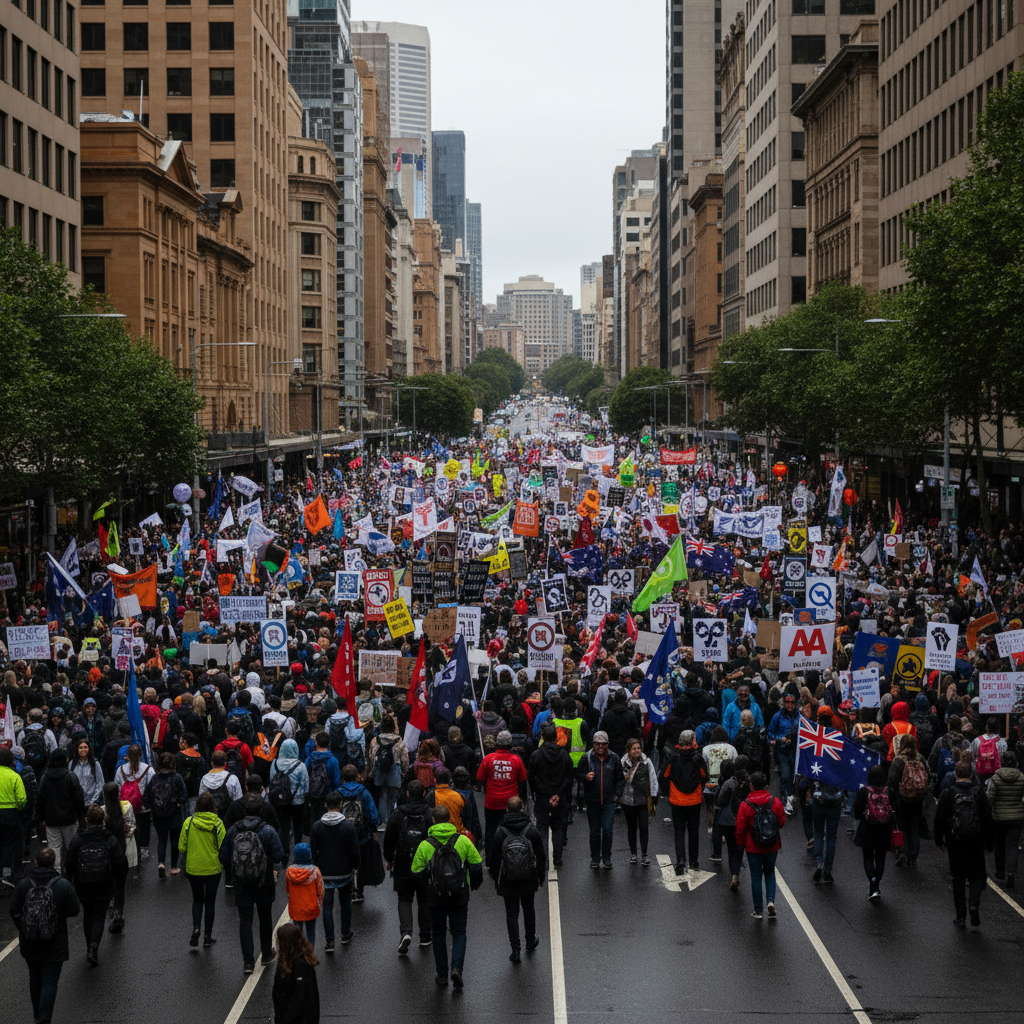
May Day Strike: Global Labour Movement's Impact on the Australian Economy and Society

On May 1, 2026, a highly anticipated "May Day Strike" will take place in multiple locations worldwide. According to a report by US media outlet Eagles Wire on May 1, 2026, the nationwide protest initiated by the "May Day Strong" organisation calls for "no work, no school, no shopping," aiming to express strong demands for workers' rights, social justice, and economic equality through collective action. This movement is not only attracting widespread attention within the United States, but its potential ripple effects could also reach Australia, far in the Southern Hemisphere, bringing significant impacts on Australia's economic and social structure.
Background and Core Demands of the Global Labour Movement
In recent years, shifts in the global economic landscape, the impact of technological advancements on the job market, and the exposure of labour rights issues during the COVID-19 pandemic have collectively spurred a new wave of labour movements. The core demands of the "May Day Strong" organisation, as reported by Eagles Wire, primarily focus on the following points:
- Increase Minimum Wage Standards: Under global inflationary pressures, minimum wage levels in many countries have failed to keep pace with the rising cost of living, making life increasingly difficult for low-income groups.
- Improve Working Conditions and Benefits: Including demands for safer working environments, more reasonable working hours, paid sick leave, and medical coverage.
- Oppose Corporate Monopolies and Wealth Inequality: Criticising the phenomenon of surging corporate profits while ordinary workers' wages stagnate, calling for a fairer wealth distribution mechanism.
- Support Union Rights and Collective Bargaining: Emphasising the right of workers to engage in collective bargaining through union organisations to strengthen their negotiating power in labour-management relations.
These demands reflect the common predicaments faced by global labour in the post-pandemic era and foreshadow a potentially more tense period in labour-management relations.
Potential Impact on the Australian Economy
Although this major strike is primarily concentrated in the United States, the close interconnectedness of the global economy means Australia cannot remain unaffected. The impact could manifest in several ways:
-
Supply Chain Disruptions and Inflationary Pressures:
- Historical Comparison: Recalling the global supply chain crisis of 2021-2022, port congestion and logistical disruptions led to soaring prices for imported goods in Australia, affecting building materials, electronics, and more. If large-scale shutdowns occur in major economies like the US this time, it could once again impact global shipping and logistics networks.
- Impact Chain Analysis: As a significant trading partner for Australia, production stoppages in the US would directly affect Australian imports from the US, particularly high-tech products and machinery. More broadly, if global supply chains are universally impacted, Australian exports (such as minerals and agricultural products) could also face challenges due to international demand or logistical disruptions. This would further push up Australia's import costs, exacerbate domestic inflation, and pose a threat to the purchasing power of Australian households.
-
Labour Market Sentiment and Local Industrial Relations:
- Impact Chain Analysis: The momentum of global labour movements could ignite Australian workers' concerns about their own rights. In Australia, the cost of living has been continuously rising in recent years, especially rents and food prices. If overseas strike movements achieve significant results, it could encourage Australian trade unions and labour groups to adopt a stronger stance, demanding higher wage increases and better working conditions.
- Data Support: According to the Australian Bureau of Statistics (ABS), Australia's Wage Price Index grew by 4.2% in 2023, but the Consumer Price Index (CPI) remained at a high level. If labour movements lead to further wage increases, it could temporarily increase business operating costs, particularly in labour-intensive industries.
-
Investor Confidence and Market Volatility:
- Large-scale labour actions are often accompanied by economic uncertainty. Shutdowns in major global economies could lead to volatility in international stock markets, affecting investor confidence. As part of the global economy, Australia's stock market (ASX) and the Australian dollar exchange rate could also come under pressure as a result.
Deeper Social Impacts on Australia
Beyond the economic sphere, global labour movements could also spark reflection and change at the societal level in Australia:
-
Discussion on Social Justice and Wealth Distribution:
- One of the core demands of international labour movements is wealth redistribution. In Australia, income inequality is also becoming increasingly prominent. This global movement could prompt a deeper discussion within Australian society on how to narrow the wealth gap, for example, through tax policies and social welfare reforms.
-
Resurgence of Union Power and Political Influence:
- Over the past few decades, the membership and influence of Australian trade unions have declined. However, against the backdrop of the cost-of-living crisis and global labour movements, unions may regain social attention and support, and their voice in political decision-making could strengthen. This could influence future labour law reforms and industrial policy formulation.
Future Predictions and Australia's Response Strategies
In the face of potential impacts from global labour movements, the Australian government, businesses, and individuals need to be prepared:
- Scenario One: Limited Impact. If the "May Day Strike" is confined to certain regions of the US and is short-lived, the impact on global supply chains will be temporary, and Australia's direct economic impact will be limited, primarily reflected in short-term market sentiment fluctuations.
- Scenario Two: Moderate Impact. If the strike expands in scope and duration, leading to significant bottlenecks in global supply chains, Australia will face higher import costs and inflationary pressures, and some sectors (such as manufacturing and retail) may experience significant disruption.
- Scenario Three: Profound Transformation. If global labour movements become a norm, triggering structural changes in international labour policies and industrial relations, Australia may need to re-evaluate its labour market policies, strengthen worker protection, and seek supply chain diversification to mitigate risks.
For Australian households, it is crucial to monitor global economic developments, plan household budgets wisely, and consider diversifying investments to hedge against potential risks. For Australia's construction and property market, any global supply chain disruption could lead to increased material costs, subsequently affecting the timeline and budget of construction projects. For example, fluctuations in the prices of bulk commodities like steel and timber would directly translate into construction costs.
Conclusion: Seeking Resilience Amidst Uncertainty
The "May Day Strike" of 2026 is not just a labour protest; it is a concentrated outburst of deep-seated global economic and social contradictions. For us in Sydney, this movement serves as a reminder that in a globalised world, any significant upheaval in a major economy can trigger a chain reaction. Australia needs to enhance its economic resilience, optimise supply chains, and continuously focus on workers' rights and social justice to address future challenges.
(News Source: Eagles Wire, May 1, 2026)
Related Articles

EASOVA's Mission: Making Granny Flats the First Breakthrough in Australia's Housing Revolution
EASOVA's mission is not just to build granny flats, but to use them as a starting point to propel Australian housing into the next generation of upgrades. We believe that granny flats are the most suitable real-world scenario for first introducing fifth-generation housing concepts and smart systems. They can not only increase space and rental income but also become a vehicle for residential technology, integrating high-performance construction, age-friendly design, intelligent operation and maintenance, and continuous upgrade capabilities. To truly achieve this goal, we must integrate four core capabilities: structural design, customer decision-making, AI software and hardware, and financial support, to create a complete product system that is approvable, deliverable, and sustainably evolving.
22 Apr 2026
2026 Australia Electric Pickup Market Outlook: Tech Innovation & Mobility Shift
Australia's electric vehicle market is poised for a major transformation as Mazda considers introducing several electric pickups, including the Deepal E07. This article provides an in-depth analysis of the technical trends and market competitive landscape for electric pickups in 2026, and their impact on Australia's future mobility, logistics, and construction sectors.
2 May 2026
Australia's Budget Luck Runs Out: How Structural Issues Impact Your Wealth
Australia's national debt appears to be falling, but experts warn this is not a good sign. news.com.au reports that Australia's "budget luck" is rapidly running out, and deep structural issues urgently need addressing. This article will delve into the economic logic behind this phenomenon and its potential impact on the wealth of ordinary households.
30 Apr 2026