Lithium Price Rebound: Australia's New Energy Revival & Global Impact
With the strong rebound in lithium prices, Australian lithium miner Core Lithium has restarted its Finniss Project, marking a turning point for the global new energy materials market. This article delves into the driving factors behind lithium price fluctuations, their profound impact on the Australian economy, and future investment opportunities.
Lithium Price Rebound: Australia's New Energy Sector Recovery and Global Impact
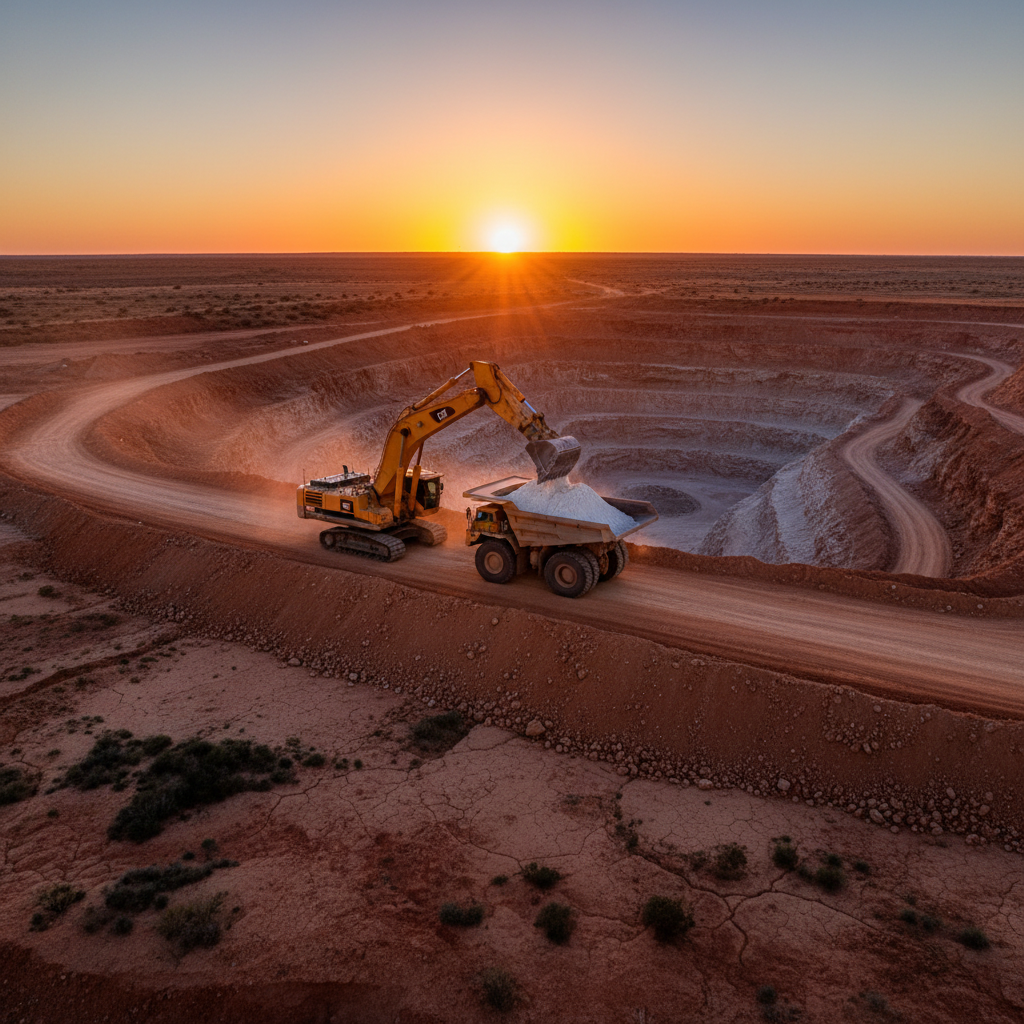
On May 19, 2026, a significant signal emerged in the global new energy materials market: Australian lithium mining company Core Lithium Ltd. announced the resumption of mining operations at its Finniss Project in the Northern Territory, amidst a strong rebound in lithium prices. This news, reported by Bloomberg on May 19, 2026, indicates that lithium mining projects previously idled due to low prices are gradually recovering, and foreshadows potential new changes in the global electric vehicle and energy storage industry supply chains.
Lithium Price Volatility: Market Logic Behind the Rollercoaster Ride
Over the past few years, lithium prices have experienced a "rollercoaster" ride. From a trough in late 2020, to a historic surge in 2022, followed by a sharp correction in 2023, and then a recent bottoming out and rebound, the dramatic fluctuations in lithium prices reflect the complex interplay of supply and demand, macroeconomic factors, and geopolitical influences.
1. Price Surge (2021-2022):
- Explosive EV Demand: Governments worldwide pushed for electrification, and consumer acceptance of electric vehicles increased, leading to exponential growth in demand for battery-grade lithium.
- Supply Chain Bottlenecks: The pandemic caused supply chain disruptions, and new mine projects have long development cycles, making it difficult for supply to keep up with demand in the short term.
- Speculative Factors: Optimistic market expectations for future demand attracted significant speculative capital, further driving up prices.
2. Price Correction (2023):
- Slowing Demand Growth: EV sales growth in some regions fell short of expectations, especially after subsidies were reduced.
- Inventory Accumulation: Downstream companies in the supply chain stockpiled large inventories when prices were high, leading to a temporary decline in demand.
- New Supply Release: Several new lithium mining projects began production, easing the tight supply situation in the market.
3. Bottoming Out and Rebound (2024 to Present):
- Inventory Depletion: After a year-long destocking cycle, inventory pressure in the supply chain eased, and replenishment demand emerged.
- Demand Recovery: After a brief adjustment, the global EV market once again showed strong growth momentum in sales data, particularly in China, Europe, and North America.
- Cost Support: Many lithium mining projects were unprofitable at low prices, leading to the withdrawal or reduction of some production capacity. This contraction in supply provided support for the price rebound.
Australia's Unique Position and Recovery in the Lithium Mining Industry
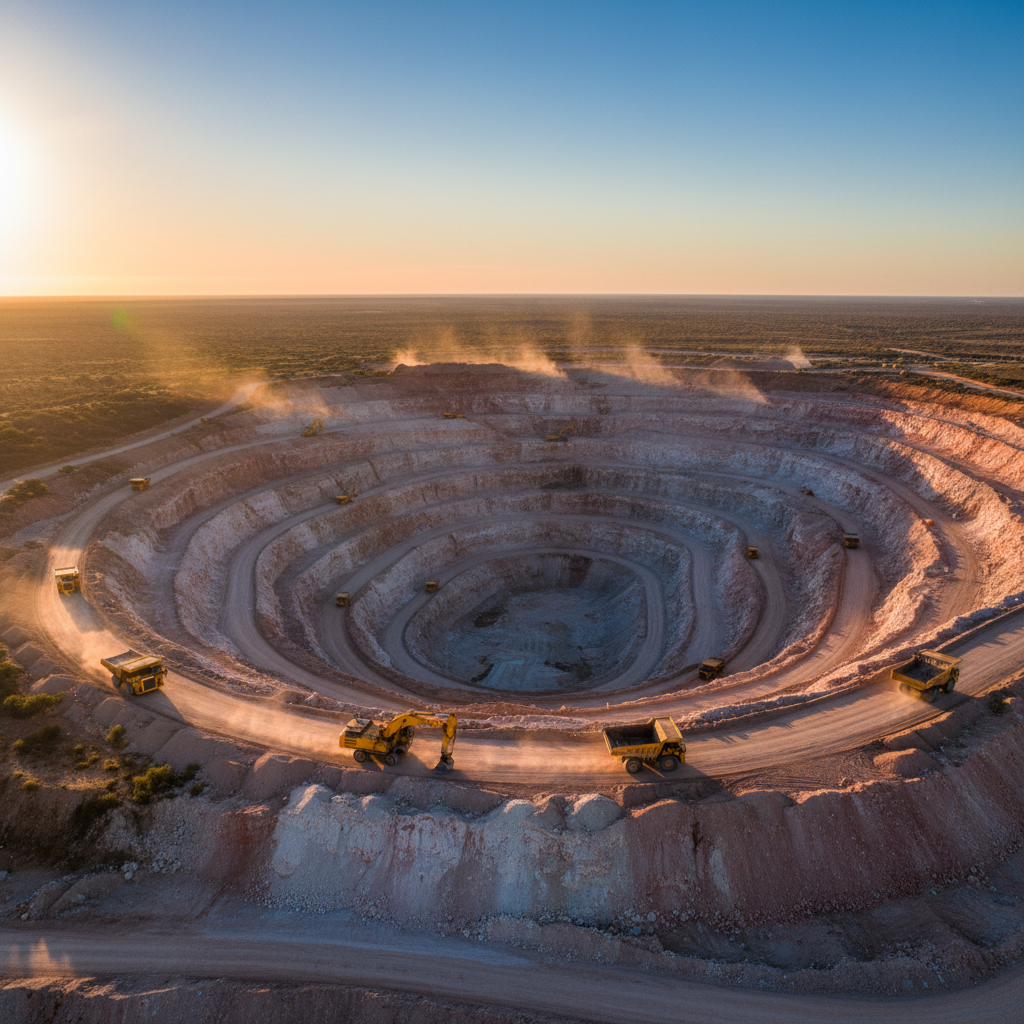
Australia is one of the world's largest lithium producers, with abundant hard-rock spodumene resources. Large-scale lithium projects such as Greenbushes and Pilgangoora in Western Australia play a crucial role in the global lithium supply chain. The restart of Core Lithium's Finniss Project is a testament to the resilience and market sensitivity of Australia's lithium mining industry.
Historical Comparison: Similar price cycles are not uncommon in commodity markets. For example, the iron ore "supercycle" in the early 2000s and subsequent adjustments, as well as multiple significant fluctuations in crude oil prices, demonstrate how commodity prices are driven by macroeconomics, geopolitics, and technological change. Lithium, as "white oil," also experiences price fluctuations that profoundly impact the global energy transition process.
Impact Chain Analysis: Lithium price rebound → Improved profitability for lithium mining companies → Mine restarts/expansions → Increased Australian export revenue → Potential support for the Australian dollar exchange rate → Increased Australian government revenue → Enhanced confidence in new energy infrastructure investment.
Future Forecast and Investment Opportunities
Looking ahead, the lithium market remains full of variables, but the overall trend is positive.
Scenario 1: Steady Growth. As global EV penetration continues to increase, and energy storage technologies are widely applied in grid-scale and residential sectors, lithium demand will maintain long-term growth. Price volatility may flatten out but will remain within a reasonable profit margin, attracting sustained investment.
Scenario 2: Technological Breakthroughs. If new battery technologies such as sodium-ion batteries and solid-state batteries achieve significant breakthroughs and large-scale commercialisation, they could partially replace lithium-ion batteries, thereby impacting lithium demand and prices. However, lithium-ion batteries will remain dominant in the short term.
Scenario 3: Geopolitical Impact. The uneven distribution of lithium resources, changes in trade policies and environmental regulations among major producing and processing countries, and potential geopolitical conflicts could all affect the stability and price of the lithium supply chain.
Implications for Australia: As a major lithium resource country, Australia should seize this recovery opportunity not only to strengthen upstream mining but also to actively develop mid-to-downstream lithium refining and battery material production capabilities. This will increase value-added in the supply chain and reduce reliance on exporting raw materials. The government should implement policies to encourage technological innovation and local production, attracting international investment.
Impact on Australian Households and the Economy
The rebound in lithium prices has multiple impacts on the Australian economy:
- Increased Export Revenue: Australia is one of the world's largest lithium exporters, and rising lithium prices will directly boost national export revenue and trade surplus.
- Employment Opportunities: The restart and expansion of mining projects will create more employment opportunities in mining regions such as the Northern Territory and Western Australia, stimulating local economic development.
- Australian Dollar Exchange Rate: Rising commodity prices typically support the Australian dollar exchange rate, which could affect the price of imported goods.
- New Energy Investment: The improved outlook for the lithium industry will attract more domestic and international capital into Australia's new energy sector, including battery manufacturing and renewable energy projects, further accelerating Australia's energy transition.
For average Australian households, while lithium price fluctuations do not directly impact daily expenses, in the long term, the development of Australia's new energy industry will lead to a cleaner energy structure, more stable power supply, and may indirectly influence the adoption rate and cost of electric vehicles. For investment-minded households, lithium-related stocks and new energy funds could be options worth considering.
Indirect Links to the Construction and Property Market
While lithium prices do not have a direct link to Australia's construction and property market, their indirect impacts are noteworthy. The booming new energy industry will attract more highly skilled talent and investment, potentially driving economic growth and population influx in relevant regions. This, in turn, could support local housing demand and commercial property. For example, the housing rental market in towns near mining areas may benefit. Furthermore, with the global emphasis on sustainable development, prefabricated buildings are increasingly favoured in new energy facility support structures (such as mine site worker accommodation, charging station ancillary facilities) due to their energy-efficient, high-efficiency, and environmentally friendly characteristics. EASOVA, as a local Australian prefabricated housing company, also monitors how these macroeconomic trends guide the future direction of the Australian construction industry, striving to provide more environmentally friendly and efficient building solutions to adapt to the evolving economic and industrial landscape.
Related Articles

EASOVA's Mission: Making Granny Flats the First Breakthrough in Australia's Housing Revolution
EASOVA's mission is not just to build granny flats, but to use them as a starting point to propel Australian housing into the next generation of upgrades. We believe that granny flats are the most suitable real-world scenario for first introducing fifth-generation housing concepts and smart systems. They can not only increase space and rental income but also become a vehicle for residential technology, integrating high-performance construction, age-friendly design, intelligent operation and maintenance, and continuous upgrade capabilities. To truly achieve this goal, we must integrate four core capabilities: structural design, customer decision-making, AI software and hardware, and financial support, to create a complete product system that is approvable, deliverable, and sustainably evolving.
22 Apr 2026
US Ambassador to Australia: New Directions in US-Australia Relations and Geopolitical Impact
The nomination of David Brat as the US Ambassador to Australia is not merely a personnel appointment; it signals a potential new phase in the US-Australia alliance. This article delves into his background and the potential implications for bilateral trade, security cooperation, and regional stability.
20 May 2026
Australia's $7.8B Submarine Upgrade: Reshaping the Economy
Australia's A$7.8 billion Collins-class submarine life extension program is not only a critical step in national security strategy but will also have a profound impact on the Australian economy. This article delves into how defence spending drives employment, technological innovation, and industrial transformation, and explores its potential ripple effects on the real estate market.
20 May 2026