Japan Warship Deal: Reshaping Australia's Defense & Regional Security
Australia's warship deal with Japan is not only a milestone in defence cooperation but also foreshadows profound changes in the regional security landscape. This article deeply analyses the far-reaching implications of this agreement for Australia's economy, technological innovation, and geopolitics.

Japan Naval Vessel Deal: A New Chapter Reshaping Australia's Defence Industry and Regional Security Landscape
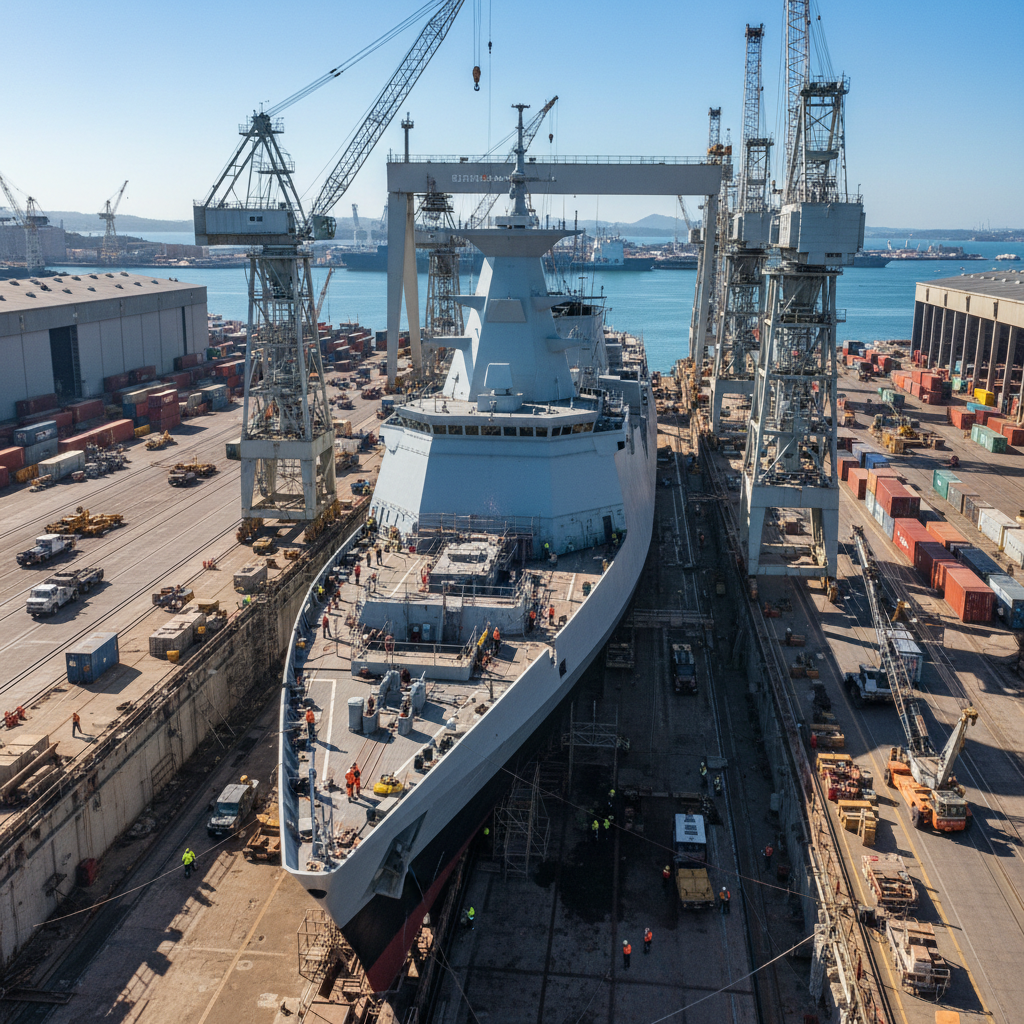
On April 26, 2026, the Australian Broadcasting Corporation (ABC) reported via MSN on a landmark defence agreement: Australia and Japan have reached a multi-billion dollar future naval vessel deal. This agreement not only sets a precedent for Japan's rapid expansion of defence exports to other Asian countries but also marks a new era for Australia's defence industry and the Indo-Pacific regional security landscape.
Agreement Background and Strategic Significance
This naval vessel deal is not an isolated event; it is a concentrated reflection of the deepening strategic partnership between Australia and Japan in recent years. In an increasingly complex and uncertain Indo-Pacific region, both countries face the common challenge of maintaining regional stability and freedom of navigation. Through this naval cooperation, Australia aims to enhance its naval capabilities, ensure the security of maritime routes, and boost its strategic influence in the region. For Japan, this deal represents a significant breakthrough following the relaxation of its defence export policy, helping it secure a foothold in the global arms market and further solidify relations with key allies.
Profound Impact on Australia's Defence Industry
This deal will have a multifaceted impact on Australia's defence industry:
- Technology Transfer and Localised Production: While specific details have not been fully disclosed, the agreement is expected to include technology transfer provisions, promoting the development of Australia's domestic shipbuilding industry. This means Australian workers will have the opportunity to access advanced Japanese shipbuilding technologies and processes, enhancing the nation's capabilities in high-tech manufacturing. This could include knowledge sharing in areas such as composite materials, sensor technology, and stealth design.
- Job Growth and Economic Stimulation: Large-scale defence projects typically create thousands of direct and indirect jobs, covering engineers, skilled tradespeople, and project management personnel. This will provide a significant economic boost for Australia, particularly for states with major shipbuilding facilities, such as South Australia and Western Australia. According to previous data released by the Australian Department of Defence, large defence projects often generate several times their value in related industry output.
- Supply Chain Integration and Upgrading: To support the construction and maintenance of naval vessels, Australia's domestic supply chain will be integrated and upgraded. This will stimulate demand for high-precision components, specialised services, and raw materials, thereby driving the development of related manufacturing and service industries. For example, demand for special steels, electronic components, and precision machinery may increase.
Evolution of the Regional Security Landscape
The impact of the Australia-Japan naval vessel deal on the Indo-Pacific regional security landscape cannot be underestimated:
- Strengthening Regional Alliances: This agreement is another example of deepening defence cooperation among member states of the "Quad" (Quadrilateral Security Dialogue) mechanism. It sends a clear signal to other countries in the region that like-minded nations are enhancing collaboration to jointly address regional challenges. This may prompt other countries to reassess their defence strategies and partnerships.
- Enhancing Deterrence Capabilities: Australia's acquisition of more advanced naval vessels will significantly enhance its maritime power projection and deterrence capabilities in the region. This helps uphold international law and freedom of navigation, especially in disputed waters such as the South China Sea.
- Template for Japanese Defence Exports: As reported by ABC, this deal could become a "template" for Japan to export defence equipment to other Asian countries. If successful, Japan may provide more military technology and equipment to countries like the Philippines and Vietnam in the coming years, thereby altering the regional military balance and power dynamics.
Historical Comparison and Future Predictions
Historically, Australia's defence procurement projects have often been accompanied by significant economic and social impacts. For example, the Collins-class submarine project in the 1980s and the recent AUKUS agreement both sparked extensive discussions about technology transfer, cost control, and local industrial capability. This cooperation with Japan is expected to draw on past experiences, focusing more on localisation and long-term benefits.
Future Predictions:
- Scenario One: Success Story. The agreement progresses smoothly, technology transfer is efficient, Australia's shipbuilding industry achieves leapfrog development, Japan's defence export market share significantly increases, and regional security cooperation becomes closer.
- Scenario Two: Challenges Abound. Potential issues include cost overruns, difficulties in technology integration, and project delays, affecting project benefits and public confidence. These are not uncommon in large defence projects.
- Scenario Three: Escalating Geopolitics. Other major powers in the region may react to this agreement, leading to further escalation of geopolitical tensions, and potentially accelerating the arms race.
Impact on Australia's Economy and Construction Market
While the defence industry and the construction market may seem unrelated, investment in large defence projects typically brings macroeconomic effects and indirectly influences the property and construction sectors.
Firstly, the expansion of the defence industry and job growth, particularly in specific regions (such as Adelaide, Perth), will increase local residents' disposable income and population inflow, thereby stimulating housing demand. New job opportunities may attract more people to these cities, pushing up rents and property prices.
Secondly, the demand for infrastructure from defence projects, such as port upgrades and road improvements, will also drive the development of civil engineering and commercial construction. These large infrastructure projects consume significant construction materials and labour, potentially affecting the supply and demand balance of the entire construction market.
Furthermore, while the government's massive defence spending may not directly flow into residential construction in the short term, in the long run, a stronger and more secure Australia will boost investor confidence and attract more overseas investment, thereby indirectly benefiting all asset classes, including property.
EASOVA, as an Australian company dedicated to providing high-quality prefabricated housing solutions, also closely monitors these macroeconomic trends. While our core business focuses on efficient, sustainable residential construction, the economic vitality and population movement brought by the defence industry will undoubtedly create new opportunities and challenges for Australia's entire housing market. We believe that through innovative and efficient construction methods, we can better meet the growing housing demand of the future.
Source: ABC (Australian Broadcasting Corporation) on MSN, April 26, 2026
Related Articles

EASOVA's Mission: Making Granny Flats the First Breakthrough in Australia's Housing Revolution
EASOVA's mission is not just to build granny flats, but to use them as a starting point to propel Australian housing into the next generation of upgrades. We believe that granny flats are the most suitable real-world scenario for first introducing fifth-generation housing concepts and smart systems. They can not only increase space and rental income but also become a vehicle for residential technology, integrating high-performance construction, age-friendly design, intelligent operation and maintenance, and continuous upgrade capabilities. To truly achieve this goal, we must integrate four core capabilities: structural design, customer decision-making, AI software and hardware, and financial support, to create a complete product system that is approvable, deliverable, and sustainably evolving.
22 Apr 2026
Canavan's Anti-Immigration Rally: Australia's Population Debate
Recent anti-immigration rallies initiated by Senator Matt Canavan have once again pushed Australia's population policy into the spotlight. This article deeply analyses the economic and social drivers behind these rallies, and explores their profound impact on Australia's future demographic structure, economic development, and social cohesion.
27 Apr 2026
Neighborhood Heroes in Fire: Community Aid & Home Safety
Recent fire incidents in Sydney have highlighted the powerful role of community assistance and the critical importance of residential safety measures. This article delves into fire risks, community response mechanisms, and how to enhance home safety in daily life to protect lives and property.
27 Apr 2026