Iran Conflict's Shadow: Global Economy & Australian Households Face Challenges
On April 24, 2026, Under30CEO reported that the conflict in Iran could trigger global economic instability, driving up prices and slowing growth. This article delves into the impact of Middle Eastern geopolitics on global oil prices, inflation, and supply chains, and explores the potential repercussions for the Australian economy and ordinary households.

Shadow of Iran Conflict: Global Economic and Australian Household Challenges
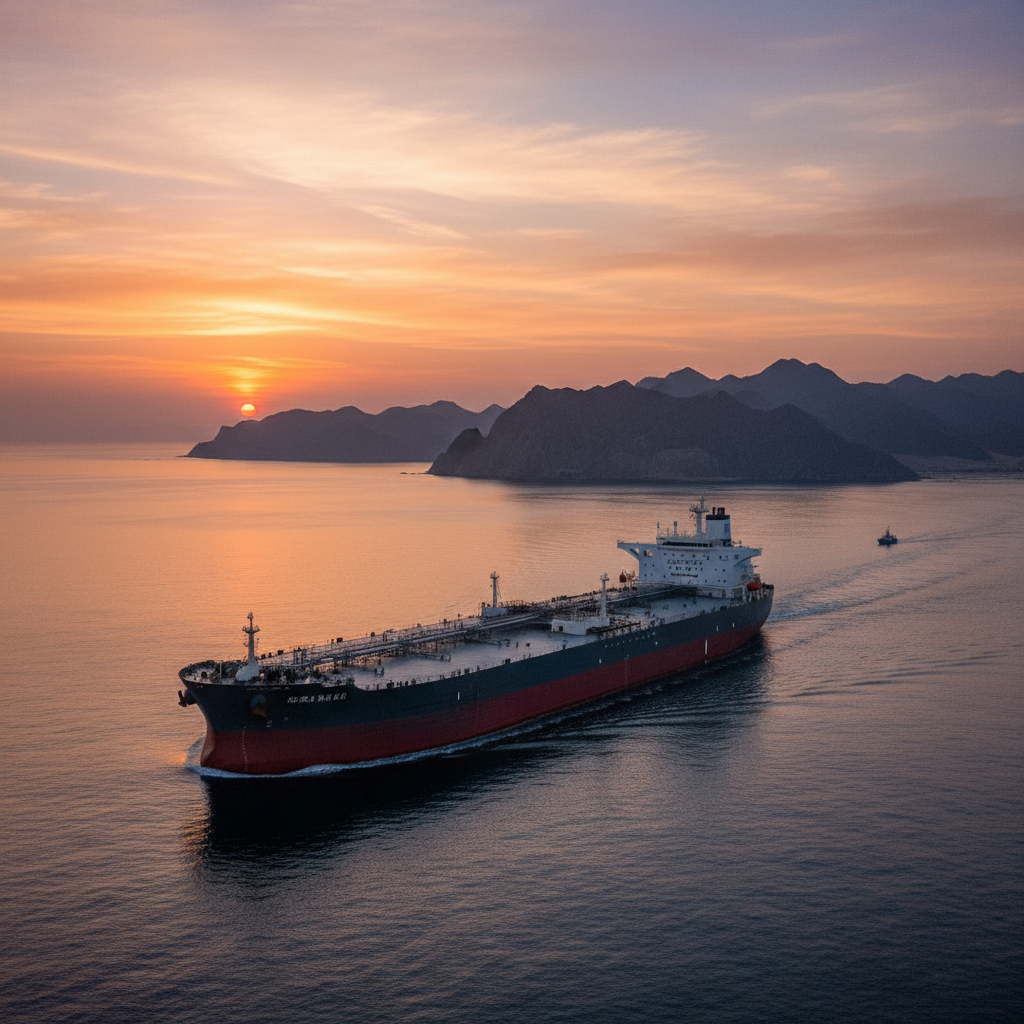
A report published by Under30CEO on MSN on April 24, 2026 (Source: Under30CEO on MSN, 2026-04-24) warned that a conflict involving Iran, even if quickly resolved, could severely impact the US and global economies, leading to rising prices and slower economic growth. Economists widely fear that inflationary pressures will intensify and global economic growth will be weakened. This warning, amidst increasing global geopolitical tensions, undoubtedly casts a shadow over an already fragile economic recovery.
I. Potential Impact Chain of Conflict: Oil Prices, Inflation, and Supply Chains
The Middle East, particularly Iran, plays a pivotal role in global energy supply. Any military conflict involving Iran will have its most direct and profound impact on the global oil market.
- Surging Crude Oil Prices: Iran is a key member of OPEC (Organization of the Petroleum Exporting Countries) and controls the Strait of Hormuz, a critical global oil shipping chokepoint. Should a conflict erupt, market fears of crude oil supply disruptions will immediately drive up oil prices. Historical data shows that international oil prices often experience sharp fluctuations during periods of tension in the Middle East. For example, the first oil crisis in 1973, the Gulf War in 1990, and the Iraq War in 2003 all led to significant short-term increases in oil prices, subsequently triggering global economic recessions or stagflation. If a conflict were to occur this time, Brent crude oil prices breaking above US$100 per barrel or even higher is not impossible.
- Exacerbated Global Inflation: Oil prices are the "blood" of the global economy. Rising crude oil prices will directly push up transportation costs, which will then be passed on to the prices of almost all goods and services. From food to manufactured goods, from electricity to air travel, consumers will face widespread price increases. Furthermore, increased energy costs will raise businesses' production costs, further squeezing profit margins, and potentially even leading to the closure of some businesses or layoffs, exacerbating unemployment.
- Supply Chain Disruptions and Restructuring: The Middle East is not only an energy hub but also a vital part of global trade routes. Conflict could lead to soaring shipping insurance costs, blocked or even disrupted shipping routes, further disrupting global supply chains already fragile due to the pandemic and geopolitical tensions. This would not only cause product shortages but also extend delivery times and further drive up prices. For countries reliant on international trade, such as Australia, import costs would significantly increase.
II. Potential Impact on the Australian Economy
As an open economy highly integrated into the global economy, Australia, though far from the Middle East battlefield, has its economic development closely linked to the global macroeconomic environment. The global economic shock from an Iran conflict will affect Australia through multiple channels.
- Rising Energy and Transport Costs: Australia is a major energy exporter, but its domestic fuel prices are closely tied to international oil prices. Soaring oil prices will directly increase Australian households' transport costs and push up logistics and transport costs, ultimately reflected in supermarket prices. For the construction industry, diesel, petrol, and other fuels are critical inputs for heavy machinery and transport, and their price increases will directly add to construction project costs.
- Inflationary Pressure and Interest Rate Policy: The transmission of global inflation will put greater pressure on the Reserve Bank of Australia (RBA). To curb inflation, the RBA may be forced to maintain a high official cash rate, or even further raise interest rates. This will directly impact Australian households' mortgage repayments, increase the cost of living burden, and potentially suppress consumption and investment.
- Export Market Uncertainty: While Australia is a major exporter of energy and minerals, high oil prices might temporarily benefit its energy export revenues. However, slowing global economic growth will weaken demand for commodities, especially from key trading partners (such as China). This could lead to price pressure on Australia's main export commodities (e.g., iron ore, coal), subsequently affecting national income and employment.
- Australian Dollar Exchange Rate Volatility: When global risk aversion increases, capital may flow to traditional safe-haven assets like the US dollar, causing the Australian dollar to depreciate. While a weaker Australian dollar benefits exports, it makes imported goods more expensive, further exacerbating inflation.
III. Historical Comparison and Future Forecast
Looking back, geopolitical conflicts impacting the global economy are not isolated incidents. The oil crises of the 1970s not only led to global "stagflation" but also prompted countries to re-evaluate energy security and economic structures. If the current Iran conflict escalates, its impact might share similarities with historical events, but the global economy's interdependence is higher, and supply chains are more complex, so the breadth and depth of the shock could be greater.
Future Forecast:
- Scenario 1: Short-term conflict, quickly resolved. Oil prices briefly surge to US$100-110/barrel, global inflation moderately increases, and central banks may maintain existing high interest rates. Australian economic growth slightly slows, and household cost of living pressures increase.
- Scenario 2: Medium-to-long-term stalemate, localized escalation. Oil prices could remain above US$120/barrel for an extended period, global inflation stays high, and central banks may be forced to further raise interest rates. The global economy faces recession risk, Australian economic growth significantly slows, unemployment rises, and the property market may face downward pressure.
- Scenario 3: Full-scale conflict, severe energy supply disruption. This is the worst-case scenario. Oil prices could break historical highs, the global economy plunges into a deep recession, and inflation spirals out of control. The Australian economy will suffer severe impacts, with households and businesses facing immense challenges.
IV. Impact on the Australian Property and Construction Industry
Economic uncertainty arising from geopolitical conflict will affect Australia's property and construction markets through multiple channels.
Firstly, increased financing costs. If central banks maintain high interest rates or further raise them due to inflationary pressures, mortgage rates will remain elevated. This will directly impact homebuyers' affordability, suppress property demand, and potentially lead to downward pressure on property prices. For developers, project financing costs will also increase.
Secondly, rising construction costs. Increased oil prices will directly push up the transport costs of construction materials such as steel, cement, and glass. Simultaneously, global supply chain disruptions could lead to shortages of certain critical building materials, further driving up material prices. For instance, if steel imports are hindered or prices surge, the cost of steel structures for prefabricated homes will significantly increase. This means both traditional construction and prefabricated construction face upward cost pressures.
In this economic environment filled with uncertainty, seeking cost-effective and efficient construction solutions becomes particularly important. Prefabricated construction, with its factory production, standardized processes, and more controllable cost structure, can, to some extent, withstand some market fluctuations. For example, EASOVA, a local Sydney prefabricated home company, strives to provide customers with more stable and cost-effective housing solutions amidst market volatility by optimising supply chains and production efficiency.
Conclusion
The potential impact of an Iran conflict is far-reaching and complex. It concerns not only the geopolitical landscape but also affects the nerves of every economy globally, including Australia, far in the Southern Hemisphere. For Australian households and businesses, closely monitoring international developments, prudently planning finances, and preparing for potential economic challenges are crucial tasks at hand.
Related Articles

Solving the Difficulty of Local Australian Banks Lending for Prefab/Modular Homes: The Core Lies in Breaking the Security Gap
Solving the difficulty of local Australian banks lending for Prefab/Modular Homes revolves around bridging the **“Security Gap”**. Because the main cost of prefab homes occurs at the factory stage rather than on the land site, traditional banks often refuse to issue progress payments as they cannot conduct on-site inspections and asset mortgages before the modules are installed on the land.
13 Apr 2026
Sydney Prefab Backyard Homes Market Research Report V2.0
Based on authoritative sources such as ABS trade data, NCC building codes, and HIA industry surveys, this analysis comprehensively examines the pre-fabricated granny flat market on the cusp of explosion and its breakthrough paths from eight dimensions: supply-side (AUD $278.5 million import value from Chinese factory capacity), demand-side (262,000 housing shortfall), regulatory-side (WaterMark/CodeMark/NATA certification barriers), design blind spots (wind loads/7-star energy efficiency), and the practical constraints of backyard construction in Sydney.
7 Apr 2026
WA Bond Reforms: New Deadlines & Risks for Investors
The recent bond reforms announced by the Western Australian government, particularly the new deadline for secured loans, are having a profound impact on financial markets and investors. This article provides an in-depth analysis of the reform's background, key contents, its impact on various types of investors, and potential market risks.
20 Apr 2026