Electric Pickup Market Heats Up: Australia's EV Tech Outlook
As the global electric pickup truck market competition intensifies, Australia, as a significant automotive consumer market, is ushering in a new wave of new energy vehicle technology. This article will delve into this trend, exploring its profound impact on the Australian economy, consumers, and the future of transportation.
Electric Pickup Truck Market Heats Up: Australia's New Energy Vehicle Technology Outlook
The global automotive industry is undergoing an unprecedented transformation, with the electrification wave sweeping across the sector. Within this, the electric pickup truck market is particularly intensifying, with major manufacturers entering the fray to seize an early advantage in this emerging segment. Australia, as a major consumer of pickup trucks globally, is undoubtedly becoming a crucial battleground in this electrification race. According to a drive.com.au report on April 10, 2026, the Australian market is witnessing fierce competition in the electric pickup truck sector, signaling the rapid development and popularisation of new energy vehicle technology locally.
Global Electric Pickup Truck Market Landscape and Australia's Uniqueness
Traditionally, pickup trucks have dominated the Australian market. Whether for farm work, construction, or recreational travel, pickups are the preferred choice for many households and businesses. This preference for pickups presents unique challenges and opportunities for Australia in the transition to electrification. Globally, models such as the Tesla Cybertruck, Ford F-150 Lightning, Rivian R1T, and General Motors Chevrolet Silverado EV have either been unveiled or launched. These vehicles not only rival internal combustion engine (ICE) pickups in terms of range, payload capacity, and towing ability but also demonstrate significant advantages in intelligence, acceleration performance, and lower operating costs.
The potential demand for electric pickup trucks in the Australian market is enormous. According to data from the Australian Bureau of Statistics (ABS), sales of light commercial vehicles (of which pickups account for a large proportion) consistently remain high. However, due to limited early supply of electric pickups, insufficient charging infrastructure, and relatively high prices, their adoption rate was once constrained. But with improvements in the global supply chain and technological advancements, more electric pickup truck models are entering Australia, and competition is intensifying.
Technological Innovation: Range, Charging, and Intelligence
The core of electric pickup truck competition lies in technological innovation. Consumers are most concerned about driving range and charging speed. The range of mainstream electric pickup trucks generally falls between 400-600 kilometers, sufficient for most daily use cases. The development of fast-charging technology has also significantly reduced charging times; for example, some models can charge from 10% to 80% in 30 minutes.
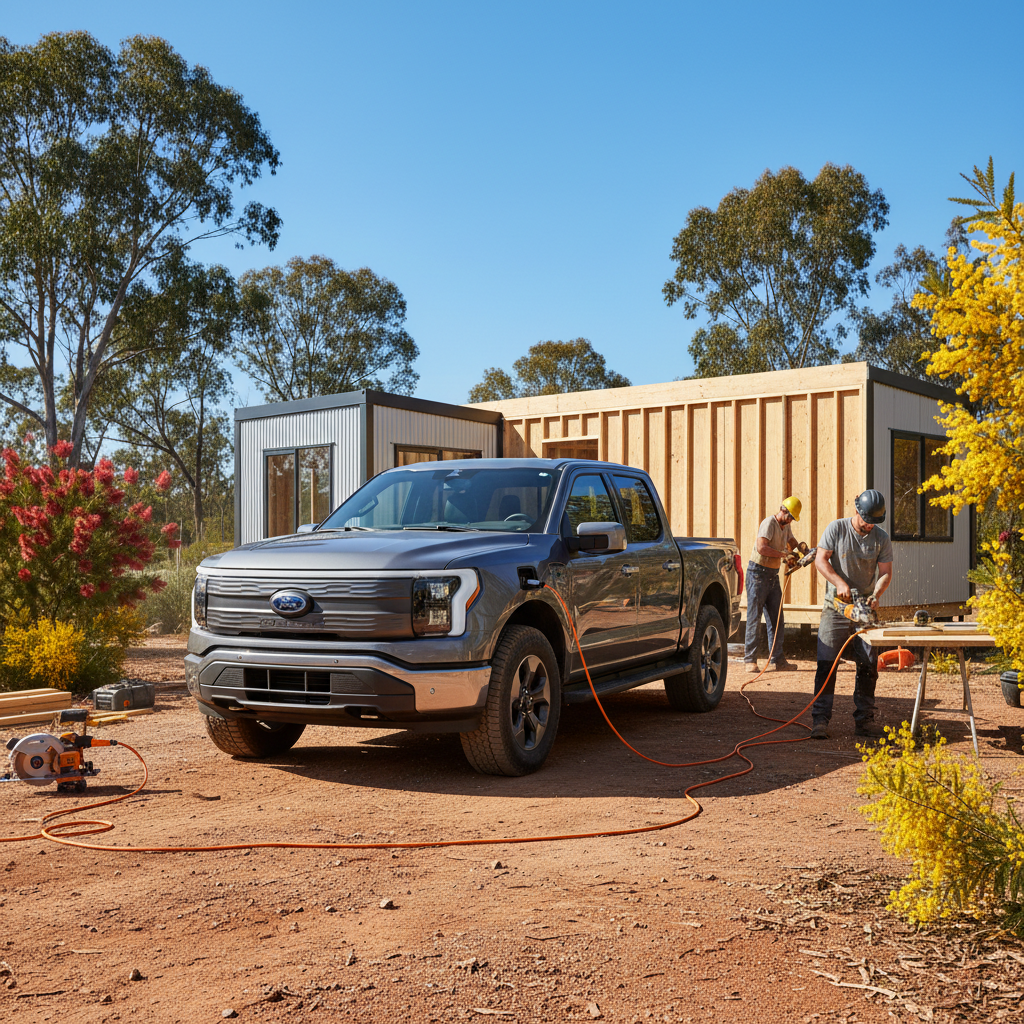
Furthermore, intelligence is another major highlight of electric pickup trucks. Advanced driver-assistance systems, V2L (Vehicle-to-Load) reverse power supply functionality, in-car infotainment systems, and over-the-air (OTA) software updates greatly enhance the vehicle's practicality and comfort. The V2L function, in particular, means that for Australian outdoor enthusiasts or construction workers, the pickup can transform into a mobile power source, supplying electricity to tools or camping equipment, undoubtedly increasing the appeal of electric pickups.
Market Data and Price Trends
Although the adoption of electric pickup trucks in Australia is still in its early stages, the growth momentum is strong. For example, the Ford F-150 Lightning has performed exceptionally well in the North American market, and its introduction to Australia is highly anticipated. Chinese brands such as the LDV eT60 have already entered the Australian market, attracting consumers with more competitive pricing and practicality. According to industry analysis, the market share of electric pickup trucks in Australia is expected to rapidly grow from less than 1% currently to 5-10% or even higher within the next five years. This is attributed to government incentives for electric vehicles, the expansion of charging networks, and the continuous decrease in battery costs.
Regarding pricing, early electric pickup trucks generally had high price tags; for instance, the Tesla Cybertruck's starting price could be over AUD 80,000. However, with more brands entering the market and scaled production, it is expected that the prices of electric pickup trucks will gradually decrease in the coming years, narrowing the price gap with ICE pickups, and even offering greater advantages in long-term operating costs.
Historical Comparison and Future Predictions
Looking back at automotive industrial history, from the replacement of steam cars by ICE vehicles to the rise of hybrid cars, every technological innovation has been accompanied by fierce market competition and shifts in consumer habits. The electric pickup truck boom shares similarities with the popularisation of the Ford Model T in the early 20th century and the global popularity of SUV models in the late 20th century. It represents not just a change in powertrain but an upgrade in lifestyle and work patterns.
Looking ahead, the Australian electric pickup truck market could see the following scenarios:
- Accelerated Adoption Scenario: Sustained government purchase subsidies, faster development of charging infrastructure, and breakthroughs in battery technology leading to cost reductions and range improvements will see electric pickups rapidly replace ICE pickups to become mainstream.
- Steady Growth Scenario: Technological progress and infrastructure development proceed methodically, market acceptance gradually increases, and electric pickup market share grows steadily, though ICE pickups still retain a certain market presence.
- Challenging Scenario: If charging network development is slow, electricity prices fluctuate sharply, or technological bottlenecks prove difficult to overcome, electric pickup adoption will face resistance, and growth will slow down.
Impact on Australian Households and the Construction Industry
The popularisation of electric pickup trucks will have a profound impact on Australian households and the construction industry. For households, electric pickups mean lower fuel costs, a quieter driving experience, and more environmentally friendly transportation. For the construction and engineering industries, electric pickups not only reduce operating costs (electricity is cheaper than fuel) but also offer powerful torque and V2L functionality to provide power for on-site tools, improving work efficiency and reducing reliance on traditional generators. This aligns perfectly with the Australian construction industry's pursuit of sustainability and efficiency improvements.
Conclusion
The white-hot competition in the electric pickup truck market is a microcosm of the development of new energy vehicle technology in Australia. It not only drives the transformation of the automotive industry but also brings new opportunities for Australia's economy, environment, and consumers. As a local construction services provider in Australia, EASOVA closely monitors these macroeconomic and technological trends, understanding their potential impact on construction material costs, transportation efficiency, and even future living patterns, committed to providing clients with more efficient and environmentally friendly solutions.
Reference: drive.com.au, April 10, 2026.
Related Articles

EASOVA's Mission: Making Granny Flats the First Breakthrough in Australia's Housing Revolution
EASOVA's mission is not just to build granny flats, but to use them as a starting point to propel Australian housing into the next generation of upgrades. We believe that granny flats are the most suitable real-world scenario for first introducing fifth-generation housing concepts and smart systems. They can not only increase space and rental income but also become a vehicle for residential technology, integrating high-performance construction, age-friendly design, intelligent operation and maintenance, and continuous upgrade capabilities. To truly achieve this goal, we must integrate four core capabilities: structural design, customer decision-making, AI software and hardware, and financial support, to create a complete product system that is approvable, deliverable, and sustainably evolving.
22 Apr 2026
Australia's Budget Season: Political Fundraising's "Oscars" and Democratic Challenges
Australia's budget season is not only a time for national financial planning but is increasingly becoming the "Oscars" of political fundraising. This article delves into this phenomenon, exploring its profound impact on democratic fairness, public policy, and Australia's socio-economic landscape.
3 May 2026
Sydney Family Tragedy: Deep Dive into Community Safety & Neighborly Support
A recent family tragedy in Sydney has once again brought community safety, mental health support, and the importance of neighbourly assistance into the public spotlight. This article delves into the social causes behind such incidents and analyses how we can collectively build a safer, more resilient social environment by strengthening community ties and early intervention mechanisms.
3 May 2026