Coalition's New Immigration Policy: Australia's Demographics & Property Market Future
The Australian Coalition has recently unveiled its new immigration strategy, aiming to significantly reduce net overseas migration and prioritise highly skilled individuals. This article will delve into the economic considerations behind this policy, its long-term impact on Australia's demographic structure, and how it is set to reshape the property market landscape in Sydney and across Australia.
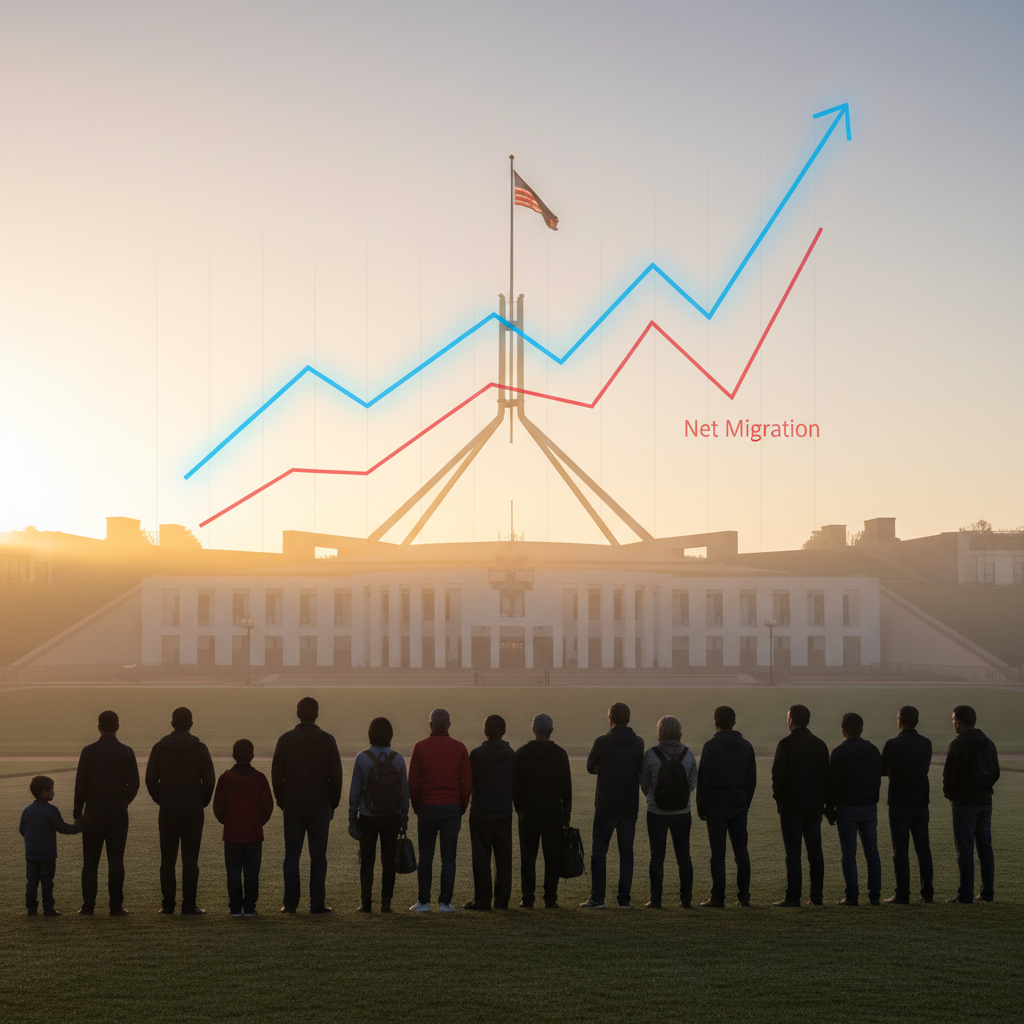
Coalition's New Immigration Policy: Australia's Demographics and Future Property Market
April 18, 2026 – According to a Facebook news source, the Australian Liberal-National Coalition has unveiled its latest immigration strategy, centring on a significant reduction in net overseas migration and prioritising highly skilled talent. This policy adjustment not only reflects a response to current socio-economic pressures but also foreshadows profound changes that Australia's future demographic structure and property market may face.
Policy Core and Background Analysis
The Coalition's new immigration policy primarily aims to reduce the annual net overseas migration figure from its current historical high (e.g., projected to exceed 500,000 in FY 2023-2024) to a more sustainable level. Specific measures may include:
- Raising visa application thresholds: Particularly for low-skilled or non-critical industry migrants.
- Tightening international student visa regulations: Limiting student work hours and potentially increasing English language requirements.
- Prioritising highly skilled migrants: Allocating more quotas to talent in critical sectors such as healthcare, engineering, and IT.
This policy comes against a backdrop of Australia's recent housing affordability crisis, infrastructure strain, and community concerns about the pace of population growth. In major cities like Sydney, house prices and rents have continued to soar, while traffic congestion and pressure on public services have intensified, all serving as key drivers for immigration policy adjustments.
Long-Term Impact on Australia's Demographics
If the Coalition's new policy is implemented, Australia's population growth pattern will undergo significant changes. For decades, immigration has been the primary driver of Australia's population growth, contributing approximately two-thirds of the increase. Reducing immigration numbers will directly lead to:
- Accelerated population ageing: A decrease in young migrants will raise Australia's average age, placing greater pressure on the healthcare and social security systems.
- Labour market structural adjustment: Industries reliant on migrant labour (e.g., construction, hospitality, agriculture) may face labour shortages, driving up wage costs.
- Exacerbated skill shortages: While the policy aims to attract highly skilled talent, an overall reduction in immigration numbers may still make it difficult to fill skill gaps in specific areas.
Historically, Australia's economic growth has been closely linked to population growth. For example, large-scale immigration programs helped Australia's economy recover rapidly after the 2008 global financial crisis. This policy adjustment undoubtedly poses a significant challenge to this traditional growth model.
Profound Impact on the Property Market
There is a direct and complex link between immigration policy and the property market. A reduction in net overseas migration will fundamentally impact housing demand, especially in major gateway cities like Sydney and Melbourne.
-
Easing rental market pressure: In the short term, a decrease in international students and temporary visa holders will directly reduce rental demand, particularly in areas around universities and city centres. Over the past year, Sydney's rental increases reached 15-20%, and the new policy is expected to ease this pressure, leading to a flattening of rental growth, or even a correction in some areas.
-
Slower growth in home buying demand: In the long term, slower growth in the number of permanent residents and citizens will lead to fewer first-home buyers and investors. According to the Australian Bureau of Statistics (ABS) data, migrants have contributed approximately 20% of housing demand growth over the past decade. If this contribution significantly declines, the impetus for house price increases will weaken.
-
Increased regional market differentiation: The policy prioritising highly skilled migrants may mean housing demand remains strong in certain specific areas (e.g., near technology parks, medical centres), while demand in other areas, particularly those reliant on low-skilled labour or international student populations, may significantly decrease.
-
Construction industry challenges: Reduced immigration not only affects housing demand but may also exacerbate labour shortages in the construction industry, driving up construction costs and subsequently impacting new housing supply. This could create a paradox: demand falls, but supply costs rise, limiting the downward potential for house prices.
Historical comparison: During the COVID-19 pandemic in 2020-2021, border closures led to a temporary negative net overseas migration. The rental markets in Sydney and Melbourne briefly cooled but quickly rebounded due to local demand and low-interest rates. The impact of this policy adjustment will be structural, not temporary.
Future Outlook and Australian Household Responses
The Coalition's new immigration strategy paints a new chapter for Australia's future population and economic landscape. We can foresee several possible scenarios:
- Scenario One: Smooth transition. If the policy is implemented effectively, and the introduction of highly skilled migrants can effectively fill labour gaps while housing supply gradually keeps pace, the property market will experience a moderate adjustment period, achieving a soft landing.
- Scenario Two: Slowed economic growth. If immigration is cut too quickly, leading to labour shortages and decreased consumer demand, it could drag down overall economic growth, subsequently impacting employment and household incomes, causing a greater shock to the property market.
- Scenario Three: Structural imbalance. Some industries and regions experience severe labour shortages, while others face housing oversupply, leading to unbalanced economic development.
For Australian households, understanding these changes is crucial. Investors may need to re-evaluate their investment strategies, focusing more on regions with stable demographics and diversified economies. First-home buyers may see an easing of market pressure but should also be wary of new home prices being supported by rising construction costs.
Conclusion: Adapting to the New Normal
The Coalition's new immigration policy is a significant strategic adjustment for Australia in response to global challenges and domestic pressures. It will reshape Australia's demographic landscape and economic structure, and profoundly impact the property market. For property market participants in Sydney and across Australia, adapting to this "new normal" will be key to success in the coming years. By thoroughly analysing data, understanding policy intentions, and flexibly adjusting strategies, opportunities can be seized in an ever-changing market.
It is worth noting that in such a market environment, construction methods with higher demands for cost control and efficiency, such as Prefabricated Construction, may demonstrate their unique advantages. EASOVA, an Australian-based prefabricated housing company, is dedicated to providing efficient, high-quality construction solutions to meet the future market demand for sustainable and economical housing.
Related Articles

EASOVA's Mission: Making Granny Flats the First Breakthrough in Australia's Housing Revolution
EASOVA's mission is not just to build granny flats, but to use them as a starting point to propel Australian housing into the next generation of upgrades. We believe that granny flats are the most suitable real-world scenario for first introducing fifth-generation housing concepts and smart systems. They can not only increase space and rental income but also become a vehicle for residential technology, integrating high-performance construction, age-friendly design, intelligent operation and maintenance, and continuous upgrade capabilities. To truly achieve this goal, we must integrate four core capabilities: structural design, customer decision-making, AI software and hardware, and financial support, to create a complete product system that is approvable, deliverable, and sustainably evolving.
22 Apr 2026
Australian Billionaire's Urgent Warning: Housing Crisis Escalates, How Will Government Respond?
Australia's second-richest person has issued a dire warning, stating that Australia's housing crisis will worsen unless the government intervenes urgently. This article delves into the causes of the crisis, its potential impacts, and possible policy interventions.
30 Apr 2026
Australia's Two-Speed Property Market: WA Leads, Why Are Eastern States Lagging?
Recently, the Australian property market has shown a significant "two-speed" divergence, with Western Australia performing strongly while the eastern states face slowing growth. This article delves into the economic, demographic, and policy factors contributing to this phenomenon, and explores its profound implications for the national housing market and future trends.
30 Apr 2026