Australia's Rental Crisis Deepens: 70% Income on Rent, What's the Solution?
Australia's rental market is facing unprecedented pressure. Latest data reveals that some tenants are spending nearly 70% of their weekly income on rent, raising deep concerns about the cost of living and housing affordability. This article will delve into the causes, impacts, and potential solutions to this crisis.
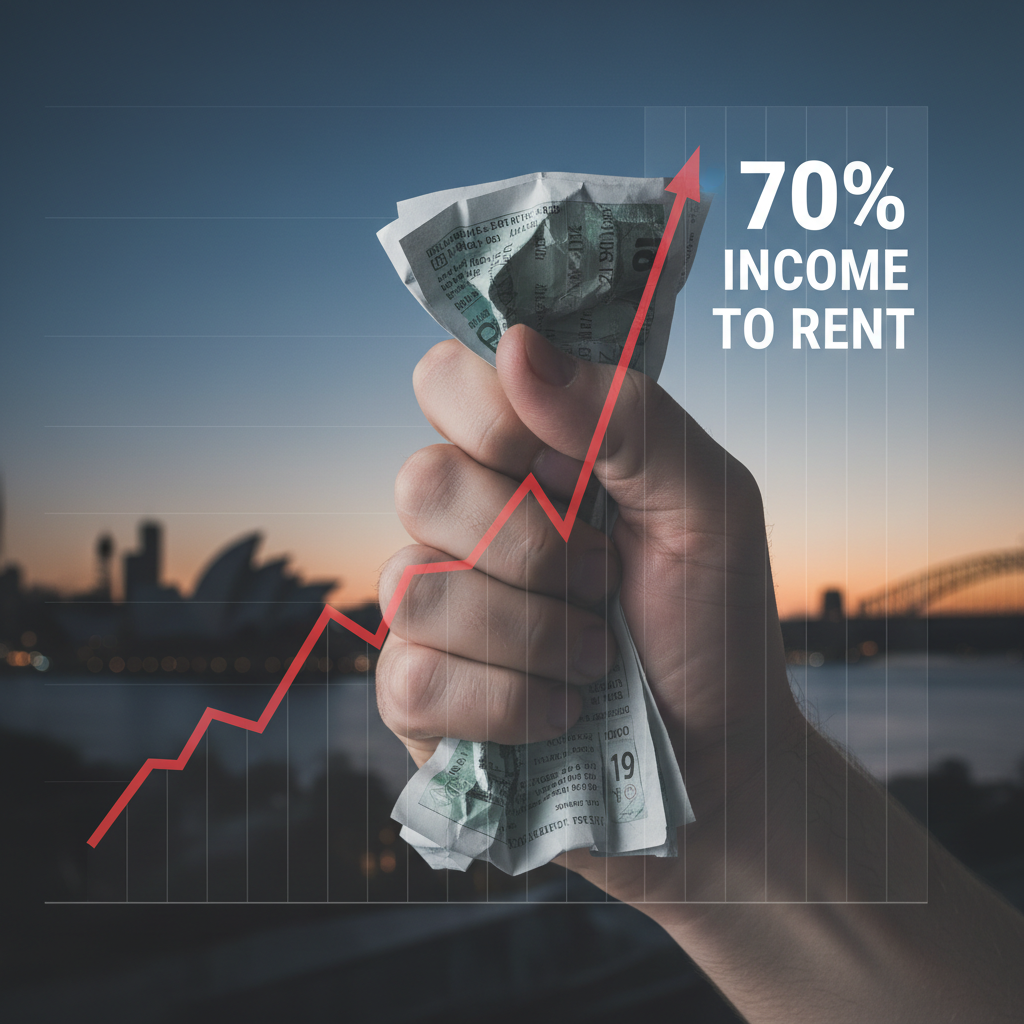
Australia's Rental Crisis Worsens: Nearly 70% of Income Spent on Rent, How Can We Break Free?


Australia, a land renowned for its liveability and high standard of living, is facing an increasingly severe rental crisis. The latest market data reveals that tenants are enduring unprecedented financial pressure, with some forced to spend nearly 70% of their weekly income on rent. This alarming trend not only rings alarm bells but also prompts us to delve into the deep-seated causes, widespread impacts, and potential strategies for addressing this crisis.
According to a report published by news.com.au on MSN on May 13, 2026, Australian tenants are feeling unprecedented pressure, with some dedicating close to 70% of their weekly income to housing expenses. This is not merely a statistic but a true reflection of the struggles faced by countless families and individuals in their daily lives.
In-depth Market Research: The Stark Reality Revealed by Data
In recent years, rental increases in Australia have far outstripped wage growth. CoreLogic data shows that over the past three years, the national average rent has surged by over 30%, while wage growth over the same period was only around 10%. Particularly in major cities like Sydney and Melbourne, median rents have reached historic highs. For instance, the median weekly rent for a detached house in Sydney has exceeded $900, with apartments nearing $750. For an average working family with a weekly income of approximately $1200-$1500, a 70% rent-to-income ratio means only $360-$450 is left weekly for all other expenses such as food, transport, utilities, healthcare, and education – a situation that is almost unsustainable.
This extreme rent-to-income ratio far exceeds the internationally recognised 30% affordability threshold, pushing millions of Australians to the brink of financial collapse. It not only erodes savings but also limits spending power, posing a threat to overall economic health.
Historical Comparison: The Crisis Is Not New, But Its Severity Is Unprecedented
Australia's housing affordability issues are long-standing, but the intensity of the current rental crisis is unprecedented. In the early 2000s, with population growth and economic prosperity, rents also experienced rapid increases. However, wage growth and inflation levels were relatively balanced at the time, and interest rates were low, keeping tenant pressure within a manageable range. Compared to the downturn following the 2008 Global Financial Crisis, the current market exhibits a starkly different supply-demand imbalance. Back then, despite economic challenges, rent increases slowed, and even declined in some areas.
Today, we are experiencing a period of high inflation and high interest rates, which increases landlords' holding costs, with some of these costs being passed on to tenants. Simultaneously, the post-pandemic migration boom has accelerated population growth, but new housing construction has failed to keep pace, leading to an unprecedented acute supply-demand imbalance.
Impact Chain Analysis: From Rent to Every Aspect of Life
High rental expenditures trigger a series of ripple effects:
- Decreased Quality of Life: Tenants are forced to cut back on other expenses, affecting basic needs such as food, healthcare, and education, even leading to "rental poverty."
- Impaired Savings Capacity: Difficulty in accumulating a deposit, delaying homeownership plans, exacerbating intergenerational wealth inequality.
- Restricted Labour Mobility: People may be unable to relocate to cities or regions with better job opportunities due to unaffordable rents, impacting the efficiency of the labour market.
- Exacerbated Social Issues: The number of homeless people may increase, mental health problems become more prominent, and social cohesion is challenged.
- Slower Economic Growth: Reduced consumer spending affects business revenues, potentially dragging down economic growth in the long term.
Future Outlook: Possible Scenarios and Responses
- Persistent High-Pressure Scenario: If new housing supply fails to increase significantly and immigration remains high, rents will continue to rise, further increasing tenant pressure. The government may be forced to intervene, implementing stricter rent controls or providing more rental subsidies.
- Market Adjustment Scenario: As interest rates remain high, some investors may choose to sell properties, increasing market supply. Simultaneously, if an economic slowdown leads to rising unemployment, rental demand may decrease, thereby alleviating some pressure. However, this could be accompanied by other economic challenges.
- Effective Policy Intervention Scenario: The government effectively increases supply through measures such as accelerating approval processes, encouraging developers to build more affordable housing, and reforming land planning policies. Additionally, considering stricter regulation of the short-term rental market (e.g., Airbnb) could reintroduce more properties into the long-term rental market.
What Does This Mean for Australians?
For the vast majority of Australian tenants, this means needing to plan finances more meticulously and exploring options for shared accommodation or relocating to areas with relatively lower rents. For potential homebuyers, high rents make saving for a deposit even more challenging, potentially requiring a longer time to enter the property market.
For investors, while rental yields have improved, high interest rates and potential policy risks also need to be considered. For society as a whole, resolving the rental crisis has become an urgent priority, as it concerns Australia's social equity and economic resilience.
From a construction and housing market perspective, this crisis highlights the urgent need to increase housing supply. Traditional construction methods are often time-consuming and costly, making it difficult to respond quickly to market demand. Prefabricated construction, as an efficient and cost-effective solution, is gaining increasing attention. By completing most of the construction work in a factory, prefabricated construction can significantly shorten construction periods, reduce on-site construction costs, and improve building quality and sustainability. In addressing rapidly growing housing demand, prefabricated construction, including modular homes and granny flats, can provide more economical and faster housing options, offering a viable path to alleviate current rental pressures. EASOVA, an Australian prefabricated housing company in Sydney, is dedicated to providing efficient, high-quality prefabricated construction solutions to meet the growing housing demand and contribute to housing affordability in Australia.
Related Articles

EASOVA's Mission: Making Granny Flats the First Breakthrough in Australia's Housing Revolution
EASOVA's mission is not just to build granny flats, but to use them as a starting point to propel Australian housing into the next generation of upgrades. We believe that granny flats are the most suitable real-world scenario for first introducing fifth-generation housing concepts and smart systems. They can not only increase space and rental income but also become a vehicle for residential technology, integrating high-performance construction, age-friendly design, intelligent operation and maintenance, and continuous upgrade capabilities. To truly achieve this goal, we must integrate four core capabilities: structural design, customer decision-making, AI software and hardware, and financial support, to create a complete product system that is approvable, deliverable, and sustainably evolving.
22 Apr 2026
Honda Suspends Canada EV Plant: Global Manufacturing Challenges?
Japanese automotive giant Honda has indefinitely suspended its plans to build a multi-billion dollar electric vehicle factory in Canada. This event is not only a major tremor in the automotive industry but also reflects the complex challenges currently facing global manufacturing. This article delves into the underlying economic, geopolitical, and market factors.
14 May 2026
US-China Thaw: Global Economy & Australia Investment Opportunities
The International Monetary Fund's (IMF) positive assessment of the dialogue between the leaders of the United States and China has injected a strong boost of confidence into the global economy. This article will delve into the profound impact of the easing US-China relations on global trade, supply chains, and the Australian economy, and explore potential investment opportunities.
14 May 2026