Australia's Fuel Crisis: Accelerating EV Adoption & Your Driving Costs
As global fuel price volatility intensifies, Australia is undergoing an energy transition. This article deeply analyses how the fuel crisis is driving the adoption of electric vehicles in Australia and predicts how this wave will reshape the travel cost structure for average households. From petrol pumps to charging stations, a transformation is underway.

How the Fuel Crisis is Accelerating EV Adoption in Australia: How Your Travel Costs Will Change
The global energy market is in flux, and the continuous volatility of fuel prices not only affects international political and economic nerves but also profoundly impacts the daily lives of ordinary people. In Australia, a country highly dependent on car travel, the shadow of the fuel crisis is accelerating the adoption of electric vehicles (EVs) and foreshadowing a significant shift in future travel costs. According to a report by the Australian Financial Review (AFR) on April 6, 2026, rising global fuel prices have prompted more Australian consumers to consider switching to EVs to avoid increasingly high petrol costs.
The Fuel Crisis: From International Oil Prices to Australian Petrol Pumps
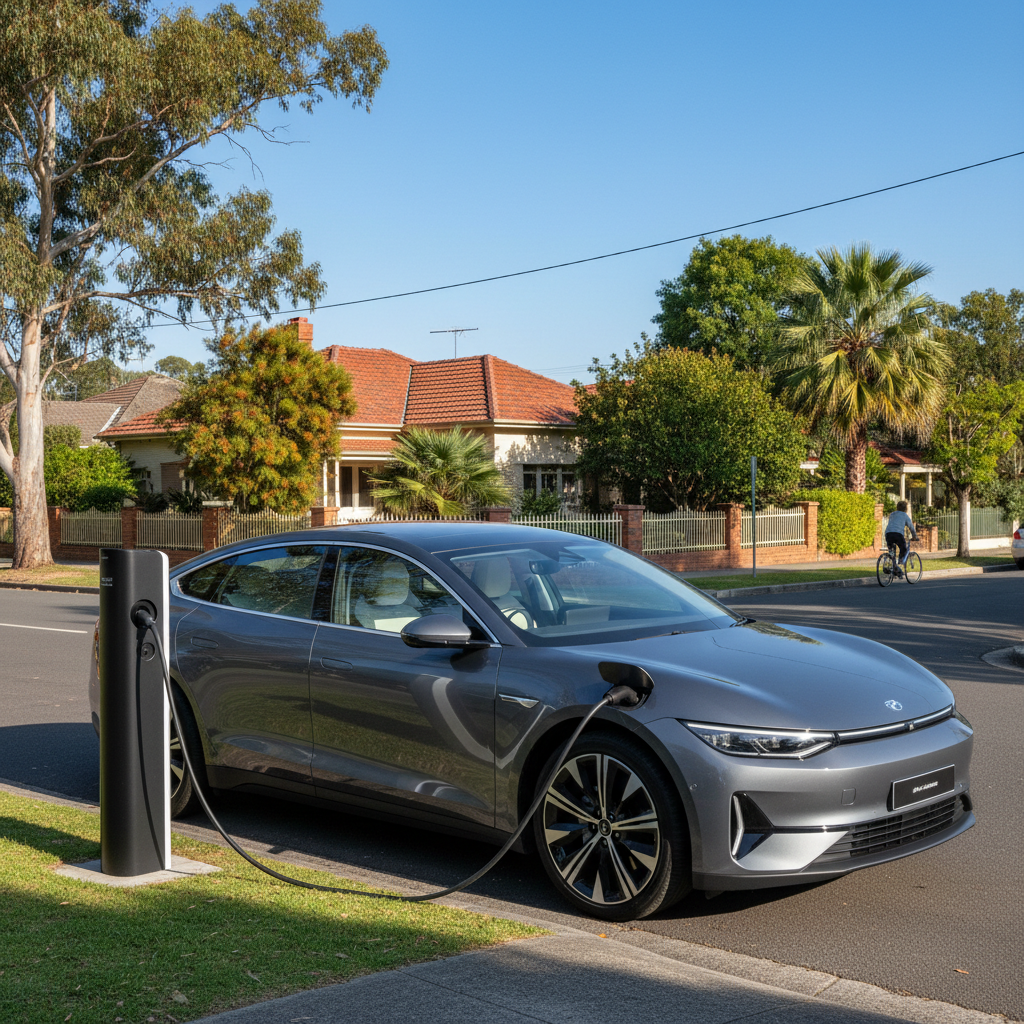
In recent years, geopolitical conflicts, supply chain disruptions, and OPEC+ production cuts have converged, leading to sustained high volatility in international crude oil prices. For Australia, which relies on imports for most of its fuel, any fluctuation in international oil prices quickly translates to domestic petrol pumps. For example, over the past two years, petrol prices in Sydney and Melbourne have repeatedly exceeded AUD 2.50 per litre, far above historical averages. This high fuel cost directly erodes household budgets, significantly increasing expenses for daily commuting and long-distance travel.
Historical data shows that on the eve of the 2008 global financial crisis, oil prices once soared, but EV technology was then immature, and market choices were limited. Today, facing similar oil price pressures, EV technology has advanced significantly, with breakthroughs in range, charging speed, and model variety, offering consumers a viable alternative.
The "Catalytic" Effect of EV Adoption
The fuel crisis is undoubtedly the strongest catalyst for accelerating EV adoption in Australia. When the operating costs of traditional internal combustion engine vehicles become unbearable, the economic advantages of electric vehicles become apparent.
1. Significant Reduction in Operating Costs
The main advantage of electric vehicles lies in their lower "fuel" costs. According to data from the Australian Automobile Association (AAA), the average "fuel" cost (electricity) for driving an EV is typically only 1/3 to 1/4 that of a petrol car. For example, for an average household driving 15,000 km per year, if petrol costs AUD 2.20/litre and fuel consumption is 8 litres/100 km, the annual fuel cost would be approximately AUD 2,640. For an EV covering the same distance, assuming an electricity price of AUD 0.30/kWh and electricity consumption of 15 kWh/100 km, the annual electricity cost would be around AUD 675, representing a saving of over 70%.
2. Driving Force of Government Incentive Policies
To encourage EV adoption, the Australian Federal and State governments have also introduced a series of incentives, including purchase subsidies, stamp duty exemptions, registration fee concessions, and investments in charging infrastructure. For example, New South Wales (NSW) previously offered EV purchase subsidies of up to AUD 3,000 and exempted stamp duty for some EVs. These policies further reduce the initial purchase cost of EVs, making them more attractive to consumers.
3. Technological Advancement and Diverse Models
In recent years, global car manufacturers have significantly increased their R&D investment in EVs, leading to a surge of electric models across various price points and types (sedans, SUVs, pick-up trucks). From Tesla to BYD, from Hyundai to MG, consumers have an unprecedented range of choices. Advances in battery technology have also continuously increased the range of EVs, with some models now easily exceeding 500 km, effectively alleviating "range anxiety."
Future Predictions for Australian Household Travel Costs
As EV adoption rates increase, the structure of Australian household travel costs will undergo fundamental changes.
Scenario 1: EVs Become Mainstream
If EVs become mainstream within the next 5-10 years, most households will shift from fuel expenses to electricity expenses. This could mean:
- More Stable Daily Expenses: While electricity prices can also fluctuate, they are generally more stable than fuel prices, and can be partially self-sufficient through solar panels, reducing reliance on external energy markets.
- Lower Maintenance Costs: EVs have a relatively simpler structure with fewer parts, so maintenance costs are typically lower than for petrol cars.
- Shorter Initial Investment Payback Period: As EV prices decrease and fuel costs rise, the initial investment payback period for EVs will further shorten.
Scenario 2: Charging Infrastructure Challenges
Despite the accelerated adoption of EVs, the development of charging infrastructure still needs to keep pace. Currently, the number and distribution of public charging stations still need improvement, especially in regional areas. If the charging network development lags, it may, to some extent, limit the convenience of EVs and affect the speed of their widespread adoption.
Scenario 3: Energy Structure Transformation
Large-scale EV adoption will place higher demands on Australia's electricity supply system, accelerating the development of renewable energy (such as solar and wind power) and the application of energy storage technologies. This will be a long-term energy structure transformation process, helping Australia achieve its carbon emission targets.
Impact on the Australian Property and Construction Market (Subtle Connection)
The widespread adoption of electric vehicles also brings some subtle impacts to Australia's property and construction market. Newly developed residential projects, especially apartments and townhouses, are increasingly tending to include EV charging facilities, which has become a significant selling point for homebuyers. For existing detached houses, the installation of home charging stations is also becoming increasingly common, even becoming part of home upgrades. At the construction level, the demand for power load management, smart grid compatibility, and the integration of solar and energy storage systems will increase, driving the construction industry towards a more sustainable and intelligent direction.
EASOVA, a prefabricated housing company based in Sydney, is also paying attention to this energy transition trend. We are committed to providing efficient and environmentally friendly construction solutions. The standardized production and rapid construction model of prefabricated houses make it easier to integrate advanced energy management systems and EV charging infrastructure, supporting future green lifestyles. This forward-thinking design not only helps owners save long-term operating costs but also aligns with modern society's pursuit of sustainable development.
Conclusion
The fuel crisis is not merely an economic challenge; it is a catalyst for profound social change. In Australia, it is accelerating the adoption of electric vehicles, reshaping people's travel patterns and cost structures. For consumers, understanding and adapting to this trend will be key to making informed travel choices in the coming years. In the long run, this concerns not only individual economic interests but also Australia's and even the world's energy future and environmental sustainability.
Related Articles

EASOVA's Mission: Making Granny Flats the First Breakthrough in Australia's Housing Revolution
EASOVA's mission is not just to build granny flats, but to use them as a starting point to propel Australian housing into the next generation of upgrades. We believe that granny flats are the most suitable real-world scenario for first introducing fifth-generation housing concepts and smart systems. They can not only increase space and rental income but also become a vehicle for residential technology, integrating high-performance construction, age-friendly design, intelligent operation and maintenance, and continuous upgrade capabilities. To truly achieve this goal, we must integrate four core capabilities: structural design, customer decision-making, AI software and hardware, and financial support, to create a complete product system that is approvable, deliverable, and sustainably evolving.
22 Apr 2026
Australian Billionaire's Urgent Warning: Housing Crisis Escalates, How Will Government Respond?
Australia's second-richest person has issued a dire warning, stating that Australia's housing crisis will worsen unless the government intervenes urgently. This article delves into the causes of the crisis, its potential impacts, and possible policy interventions.
30 Apr 2026
Australia's Two-Speed Property Market: WA Leads, Why Are Eastern States Lagging?
Recently, the Australian property market has shown a significant "two-speed" divergence, with Western Australia performing strongly while the eastern states face slowing growth. This article delves into the economic, demographic, and policy factors contributing to this phenomenon, and explores its profound implications for the national housing market and future trends.
30 Apr 2026