Australia's Budget Season: Political Fundraising's "Oscars" and Democratic Challenges
Australia's budget season is not only a time for national financial planning but is increasingly becoming the "Oscars" of political fundraising. This article delves into this phenomenon, exploring its profound impact on democratic fairness, public policy, and Australia's socio-economic landscape.
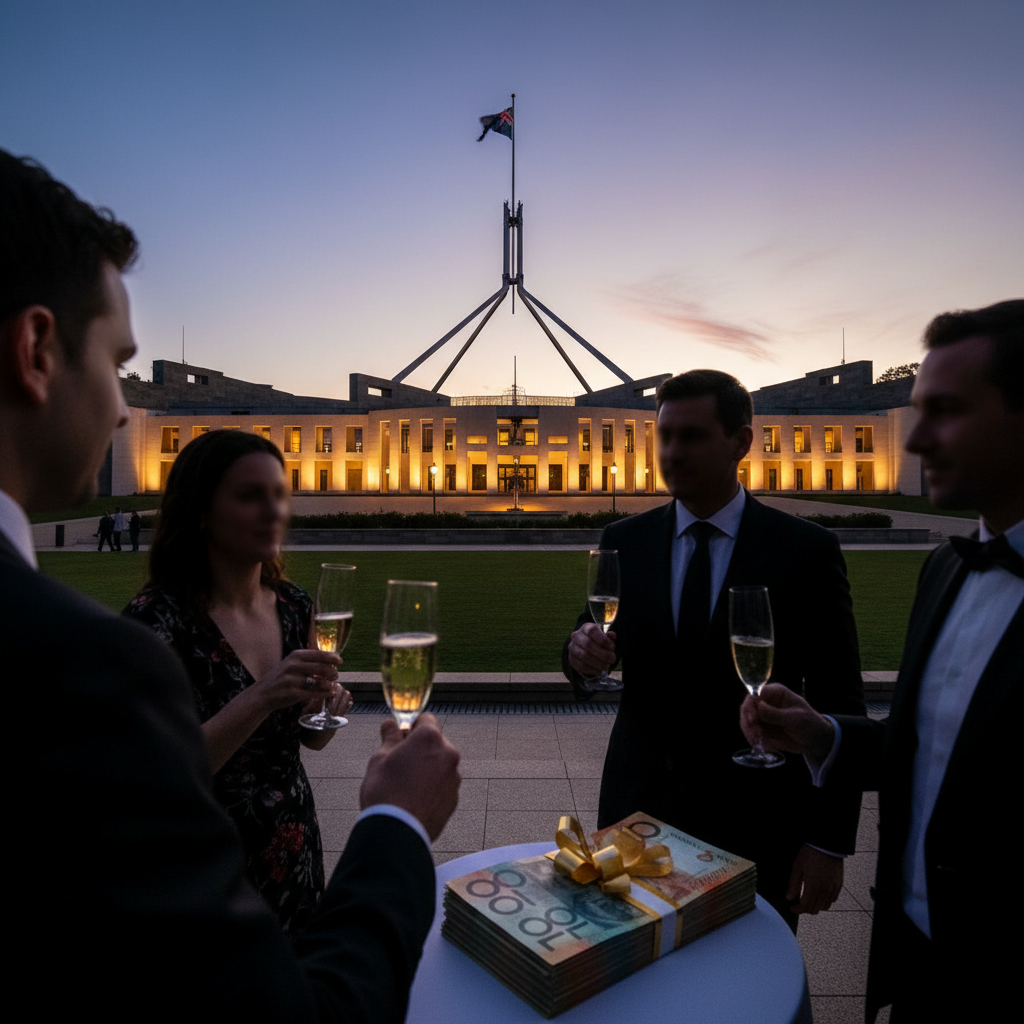
Australian Budget Season: The 'Oscars' of Political Fundraising and the Challenges to Democracy


Every May, Canberra, Australia, ushers in Budget Season. This is not only a crucial time for the government to release its financial blueprint and plan the nation's future, but it has also increasingly transformed into a controversial "feast" of political fundraising. As reported by The Guardian on May 3, 2026, major political parties are once again selling tickets to budget night events for thousands of Australian dollars each, sparking discontent among some parliamentarians regarding these "lavish social galas."
Budget Season: From Fiscal Planning to Political Fundraising
Traditionally, Budget Night is a solemn occasion in the Australian political calendar, where the Prime Minister and Treasurer announce the financial budget for the upcoming fiscal year to the nation. However, in recent years, the commercialisation of this event has become increasingly evident. Political parties leverage the attention generated by Budget Season to host various high-priced dinners, breakfast meetings, and private briefings, inviting business executives, industry representatives, and wealthy donors. Ticket prices for these events range from hundreds to thousands of Australian dollars, raising substantial funds for the parties.
This phenomenon is not accidental. As election campaign costs continue to escalate, political parties' demand for funding also grows. Budget Season provides an excellent platform for parties to directly engage with stakeholders who have significant interests in government policies. For donors, these events are not only social opportunities but also potential channels to influence policy-making and express their demands.
In-depth Analysis: The Impact of Political Fundraising on Democratic Fairness
While this "Budget Oscars" fundraising model provides necessary funds for political parties, it also raises profound concerns about democratic fairness. Its chain of impact can be analysed from the following aspects:
-
Policy Bias and Undermining Public Interest: When political parties heavily rely on donations from corporations or wealthy individuals, public policy formulation may subtly lean towards the interests of donors, rather than the broader public interest. For example, if a particular industry is a major donor, the government's decisions on related industrial policies, tax incentives, or environmental regulations might be influenced, leading to policies that do not fully consider overall societal benefits.
-
Inequality in Political Participation: The high ticket prices for events and the private nature of interactions make it difficult for ordinary citizens to participate in such high-level political dialogues. This exacerbates inequality in political participation, giving economically powerful groups greater voice and influence in the political process, while the voices of ordinary people may be marginalised.
-
Challenges to Transparency and Accountability: Although Australia has political donation disclosure regulations, the source, amount, and specific interactions between donors and parties for many fundraising activities surrounding Budget Season often lack sufficient transparency. This makes it difficult for the public to effectively monitor the influence of political donations on policy decisions, weakening government accountability.
-
Erosion of Public Trust: When the public generally believes that political decisions are influenced by money rather than public opinion, trust in the political system declines. This crisis of trust can lead to political apathy and even trigger social discontent.
Historical Comparison and International Perspective
The controversy over political fundraising is not unique to Australia. In the United States, the rise of Super PACs has seen large amounts of "dark money" flow into elections, sparking widespread debate about democratic fairness. In the UK, political parties have also faced accusations of "cash for influence" due to accepting donations from wealthy individuals.
Historically, Australia legislated to limit political donations in the early 20th century to ensure electoral fairness. However, over time and with the evolution of laws, these restrictions have been circumvented or weakened to some extent. For example, donations made through trust funds or non-profit organisations can sometimes be difficult to trace to their ultimate source.
Future Predictions and Countermeasures
Facing the challenges posed by political fundraising, the following scenarios may emerge in the future:
- Continuation of the Status Quo: Without strong reform measures, the Budget Season fundraising model may persist and potentially intensify with further increases in campaign costs, continuing to erode democratic fairness.
- Incremental Reforms: Under public pressure and media scrutiny, the government may introduce some moderate reform measures, such as increasing donation transparency, strengthening disclosure requirements, or imposing stricter limits on specific types of donations. For example, consideration could be given to emulating countries like Canada and the UK by setting stricter caps on, or even prohibiting, political donations from corporations and trade unions.
- Fundamental Change: A few countries (such as Germany) implement systems of public funding for political parties to reduce their reliance on private donations. If public dissatisfaction with the current model in Australia reaches a tipping point, there might be calls for more fundamental reforms to the political fundraising system, such as substantially increasing public funding and strictly limiting private donations.
Impact on Australia's Socio-Economic Landscape
The model of political fundraising will ultimately also indirectly affect Australia's socio-economic landscape. For example, if policies favour specific industries, it could lead to an uneven distribution of resources, impacting the fairness of market competition. In the property and construction industry, if developers or related interest groups gain policy advantages through donations, it could influence land planning, approval processes, or building regulations, thereby affecting housing affordability and market health.
For instance, in major cities like Sydney, land supply and development approvals are key factors affecting property prices. If political donations lead to planning decisions deviating from the public interest, it could exacerbate housing shortages or drive up construction costs, ultimately impacting the living costs and quality of life for ordinary families. For a prefabricated housing company like EASOVA, a fair and transparent policy environment is crucial, ensuring all market participants compete on equal terms to provide more economical and efficient housing solutions for Australian families. A healthy democratic system and transparent policy-making process are fundamental to ensuring fair market competition and promoting sustainable development.
Ultimately, balancing the fundraising needs of political parties with democratic fairness is a major issue that Australian society needs to continuously discuss and resolve. This concerns not only the health of the political system but also the well-being of every Australian citizen and the nation's future development.