Australia's Budget Boosts Infrastructure by $2 Billion: New Engine for Urban Development?
On May 10, 2026, the Australian government announced an additional A$2 billion investment in infrastructure construction in its latest budget. This article provides an in-depth analysis of how this substantial investment will reshape Australia's urban landscape, exploring its profound impact on economic growth, population mobility, and the real estate market, from transport and energy to housing.

A$2 Billion Infrastructure Boost in Australian Budget: A New Engine for Future Urban Development?
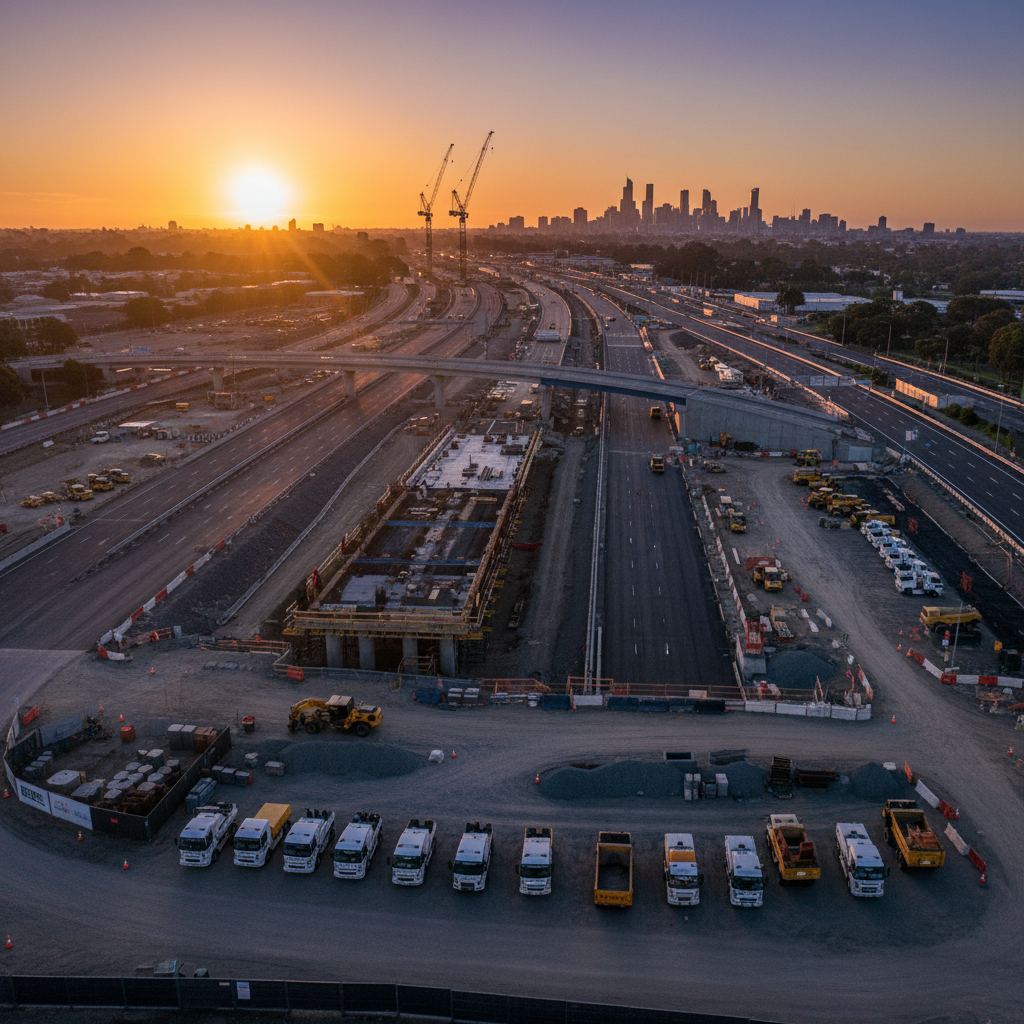
On May 10, 2026, as reported by The Guardian, the Australian government announced a significant initiative in its latest budget: an additional A$2 billion allocation for infrastructure projects nationwide. This substantial investment is not merely a numerical increase; it signals a major adjustment in Australia's future urban development direction, promising to inject new vitality into economic growth and profoundly impact people's daily lives.
In-depth Analysis: The Strategic Significance of the A$2 Billion Investment
This A$2 billion infrastructure investment is not randomly allocated but is a carefully considered strategic deployment. It primarily focuses on several key areas:
- Critical Transport Corridor Upgrades: Aimed at alleviating traffic congestion in major cities and improving logistics efficiency, such as the expansion of freeways around Sydney and Melbourne, and the modernisation of public transport networks (e.g., intercity rail).
- Energy Transition Infrastructure: Investment in grid upgrades to support renewable energy projects (e.g., wind and solar farms), and the development of electric vehicle charging networks, to propel Australia towards its net-zero emissions target.
- Regional Development Projects: Addressing infrastructure shortcomings in remote areas, such as improving regional roads, communication networks, and water facilities, with the goal of promoting regional economic diversification and attracting population return.
- Digital Connectivity: Accelerating the rollout of 5G networks and fibre broadband, particularly in peri-urban and remote areas, to support the growth of remote work and the digital economy.
The injection of these funds is a crucial step for the Australian government to address current economic challenges, stimulate domestic demand, and lay the foundation for long-term sustainable development. It not only creates job opportunities but, more importantly, enhances Australia's competitiveness in the global economy by boosting national productivity.
Historical Comparison: The Link Between Infrastructure Investment and Economic Cycles
Historically, Australia's major infrastructure investments have often been closely linked to economic cycles and population growth. For instance, the Snowy Mountains Scheme in the 1950s not only provided abundant electricity but also spurred growth in related industries and population. After the 2008 global financial crisis, the Australian government also stimulated the economy through large-scale infrastructure projects, successfully averting a recession.
Currently, the global economy faces uncertainty, and inflationary pressures persist. Increasing infrastructure spending at this time aligns with historical counter-cyclical adjustment strategies. Data from the Australian Bureau of Statistics (ABS) shows that the construction industry is a significant employment driver in Australia. This A$2 billion investment is expected to directly or indirectly create tens of thousands of jobs, particularly in engineering, construction, and related service sectors.
Impact Chain Analysis: From Investment to Urban Transformation
This A$2 billion investment will trigger a series of chain reactions, profoundly affecting Australia's urban landscape and residents' lives:
- Improved Transport Efficiency: Better roads and public transport systems will shorten commuting times, reduce transport costs, and enhance residents' quality of life. For example, traffic bottlenecks in Western Sydney are expected to ease, further activating the region's economic potential.
- Optimised Energy Costs: With more renewable energy infrastructure in place, Australian households and businesses can expect energy costs to stabilise or even decrease in the long term, while also reducing carbon emissions.
- Regional Economic Rebalancing: Investment in remote areas will help narrow the urban-rural gap, encouraging more people to choose to live and work outside major metropolitan areas, thereby alleviating housing and transport pressures in large cities.
- Accelerated Digital Economy: Better digital infrastructure will support the development of emerging industries, foster innovation, and make remote work, online education, and healthcare services more widespread.
Future Predictions: 2-3 Possible Scenarios
- Optimistic Scenario: Investment projects are implemented efficiently as planned, driving strong growth in the construction sector, a thriving job market, and effective infrastructure upgrades that boost national productivity, attract more overseas investment and skilled migration, leading to high-quality economic development for Australia. Urban zoning becomes more rational, and liveability significantly improves.
- Neutral Scenario: Some projects may face challenges such as labour shortages, rising material costs, or complex approval processes, leading to delays and cost overruns. Nevertheless, the overall infrastructure level will still improve, but the economic stimulus effect might be lower than anticipated. Urban development tends to be gradual rather than explosive.
- Challenging Scenario: The global economy continues to be sluggish, and inflationary pressures further intensify, leading to substantial cost increases for infrastructure projects, with some even being shelved. Furthermore, if labour and supply chain issues are not effectively resolved, the investment's impact will be greatly diminished, potentially even leading to new social and economic problems.
Impact on the Australian Property Market
For Australia's housing and construction markets, this infrastructure investment is undoubtedly a major positive. Firstly, improved transport accessibility will directly influence property values. For example, if a region's transport hub is upgraded, significantly shortening commuting times, the attractiveness of properties in that area will markedly increase, thereby pushing up house prices and rents.
Secondly, regional development projects will stimulate housing demand in remote areas. With improved job opportunities and living conveniences, more people will consider relocating to these regions, boosting the local property market. This helps alleviate the concentrated population pressure and high housing prices in major cities like Sydney and Melbourne.
Furthermore, the construction industry will directly benefit from the increase in projects. Demand for building materials and skilled tradespeople will rise, potentially increasing construction costs in the short term. However, in the long run, efficient infrastructure will lower logistics costs and facilitate the development of more housing projects in the future. Especially in the context of tight affordable housing supply, government infrastructure investment may also create more opportunities for new, efficient construction methods (such as prefabricated construction) to meet rapidly growing housing demand.
Conclusion: Laying the Foundation for Australia's Future
This A$2 billion infrastructure investment is a significant commitment by the Australian government to the nation's future development. It concerns not only economic figures but also the quality of life for Australians and the country's sustainable development. While various challenges may lie ahead, through careful planning and efficient execution, this investment is poised to become a powerful engine driving Australian cities towards a smarter, more liveable, and more prosperous future.
For prefabricated housing companies like EASOVA, improved infrastructure means lower transport costs and broader market reach, especially in areas where traditional construction costs are high due to poor accessibility. The efficiency and cost advantages of prefabricated construction will become even more pronounced, offering Australian families more high-quality, value-for-money housing options.
Related Articles

EASOVA's Mission: Making Granny Flats the First Breakthrough in Australia's Housing Revolution
EASOVA's mission is not just to build granny flats, but to use them as a starting point to propel Australian housing into the next generation of upgrades. We believe that granny flats are the most suitable real-world scenario for first introducing fifth-generation housing concepts and smart systems. They can not only increase space and rental income but also become a vehicle for residential technology, integrating high-performance construction, age-friendly design, intelligent operation and maintenance, and continuous upgrade capabilities. To truly achieve this goal, we must integrate four core capabilities: structural design, customer decision-making, AI software and hardware, and financial support, to create a complete product system that is approvable, deliverable, and sustainably evolving.
22 Apr 2026
Australia's Job Market: Navigating Economic Downturn & Layoffs
Australia's job market has recently faced severe challenges, with frequent reports of layoffs. This article provides an in-depth analysis of the current wave of redundancies amidst economic downturn, exploring its impact on various industries and forecasting future trends. Concurrently, we will examine how the Australian government and businesses are responding to these challenges, and the potential ripple effects this could have on ordinary households and the property market.
10 May 2026
Beware of Labor's New Tax Reforms: A Systematic Plunder of the Core Wealth Structure of Australia's Middle Class and Asset Owners
The Australian economy may enter a decade of medium to long-term stagnation!
9 May 2026