Australia CGT Reform Debate: Budget Fix vs. Market Shock
Australian Treasurer Jim Chalmers' proposed capital gains tax reforms aim to address structural budget deficits. A Deloitte report indicates that if reforms are limited to new investments, the budget repair process will be severely delayed. This article delves into the potential impacts of the reforms, historical experiences, and their profound implications for the Australian property market.

Australia's Capital Gains Tax Reform Debate: Budget Repair vs. Market Turmoil


Australia's fiscal policy has once again become a national focal point. Treasurer Jim Chalmers has clearly stated that the government is seeking a "transitional" capital gains tax reform package to address the nation's "structural deficit" budget issues. However, this move has sparked widespread controversy, particularly after a report by Deloitte indicated that if the reforms were limited to new investments, they would severely delay the budget repair process. This news, reported by The Guardian on April 30, 2026, reveals the complex situation facing Australia's current economic policy.
The Urgency of Budget Repair and Capital Gains Tax Considerations
The Australian federal government has long faced fiscal pressure, especially amidst increasing global economic uncertainty, an aging population, and growing demand for public services. Capital Gains Tax (CGT), as a crucial tax instrument that levies tax on profits from asset sales, is one potential avenue for the government to increase fiscal revenue.
Currently, Australia's capital gains tax system allows individual investors to enjoy a 50% discount if they hold an asset for more than 12 months. This means that if an investment yields a capital gain of A$100,000, the investor only needs to include A$50,000 in their taxable income. While this preferential policy aims to encourage long-term investment, it is often criticised for exacerbating wealth inequality and potentially contributing to an overheated property market.
Treasurer Chalmers' proposed reforms centre on how to effectively increase fiscal revenue without causing undue disruption to the economy. Deloitte's report emphasises that if the reforms only apply to future new investments, rather than retrospectively to existing assets, their positive impact on the budget will be slow to materialise over a long period. The report points out that such a "grandfathering clause" reform could take years or even decades to yield significant fiscal benefits, which contradicts the government's urgency in repairing the budget.
Historical Comparison: Challenges and Opportunities in Tax Reform
Historically, tax reform is a formidable task in any country, especially when it involves people's wealth and investment behaviour. For example, in the late 1980s, New Zealand undertook large-scale tax reforms, abolishing many tax concessions to simplify the tax system and broaden the tax base. Although it caused short-term market turmoil, in the long run, it was considered a crucial step in improving economic efficiency.
In Australia, the debate over capital gains tax is not new. In 1985, the Hawke government first introduced CGT, which also sparked significant controversy. However, it proved that this tax did not stifle investment as some predicted; instead, it became a significant source of government revenue. In 2000, the Howard government introduced the 50% CGT discount, which further stimulated property investment but also indirectly pushed up property prices.
Currently, the government faces the challenge of adjusting this sensitive tax without triggering market panic. Deloitte's analysis suggests that if the government wishes to quickly improve its fiscal position through CGT reform, extending the scope of reform to existing investments might be a more effective option, but this would undoubtedly face greater political resistance.
Impact Chain Analysis on the Australian Property Market
Any change to capital gains tax will have a profound impact on Australia's property market. Here is a possible impact chain:
- Reduced Investment Appetite: If the capital gains tax discount is reduced or the tax rate increases, the net return on property investment will decrease. This could lead some investors to re-evaluate their investment strategies and reduce their investment in property, especially in high-priced cities like Sydney and Melbourne.
- Supply and Demand Imbalance: A reduction in investors could lead to a decrease in rental housing supply, which, in an already tight rental market, could further push up rents. At the same time, if investment demand falls, property price growth may slow down, or even see adjustments in certain areas.
- Market Liquidity: If the reforms are applied retrospectively to existing investments, some investors might choose to sell assets before the policy takes effect to lock in existing tax benefits, potentially leading to a short-term increase in market supply and downward pressure on property prices. Conversely, if reforms are limited to new investments, existing investors might be more inclined to hold long-term, potentially reducing market liquidity.
- Construction Industry Impact: A reduction in property investment could also indirectly affect the construction industry. If developers anticipate lower sales profits, the initiation of new projects might slow down, impacting construction activity and employment. This could pose certain challenges for Australia's construction industry, including prefab construction.
Future Predictions and Australian Households' Response
Facing the uncertainty of capital gains tax reform, we might see several scenarios:
- Scenario One: Moderate Reform, Limited to New Investments. This is the Treasurer's current preferred option. It would have a minor impact on the existing market, but budget repair would be slow. The property market might experience a period of observation, and long-term investors' behaviour patterns would not change significantly.
- Scenario Two: Expanded Reform Scope, Partially Retrospective. If the government is pressured by fiscal constraints, it might consider adjustments to some existing investments. This would cause significant market volatility, potentially leading to a short-term wave of property sell-offs and downward pressure on property prices.
- Scenario Three: Reform Shelved or Significantly Compromised. Given the political sensitivity, the government might ultimately choose to shelve or significantly soften the reform proposal. The market would breathe a sigh of relief, but budget issues would persist.
For Australian households and investors, closely monitoring policy developments is crucial. In uncertain times, diversifying investment portfolios, prudently assessing risks, and seeking professional financial advice are wise choices. For households with homeownership or investment needs, understanding the market changes that policies might bring can help in making more informed decisions.
Conclusion: Finding Opportunities Amidst Uncertainty
Capital gains tax reform is an inevitable choice for the Australian government seeking fiscal balance in a complex economic environment. While reform may bring short-term market volatility and uncertainty, it could also foster a healthier and more sustainable market development. For Australian property investors and the construction industry, adapting to policy changes and seeking new investment opportunities will be key to future success.
For example, amidst market fluctuations, some efficient and cost-effective construction solutions, such as prefab homes, might demonstrate greater resilience in specific market environments due to their shorter construction periods and predictable costs. EASOVA, a Sydney-based company providing high-quality prefab home solutions, consistently monitors market dynamics and is committed to offering clients construction choices that adapt to future trends.
Related Articles

EASOVA's Mission: Making Granny Flats the First Breakthrough in Australia's Housing Revolution
EASOVA's mission is not just to build granny flats, but to use them as a starting point to propel Australian housing into the next generation of upgrades. We believe that granny flats are the most suitable real-world scenario for first introducing fifth-generation housing concepts and smart systems. They can not only increase space and rental income but also become a vehicle for residential technology, integrating high-performance construction, age-friendly design, intelligent operation and maintenance, and continuous upgrade capabilities. To truly achieve this goal, we must integrate four core capabilities: structural design, customer decision-making, AI software and hardware, and financial support, to create a complete product system that is approvable, deliverable, and sustainably evolving.
22 Apr 2026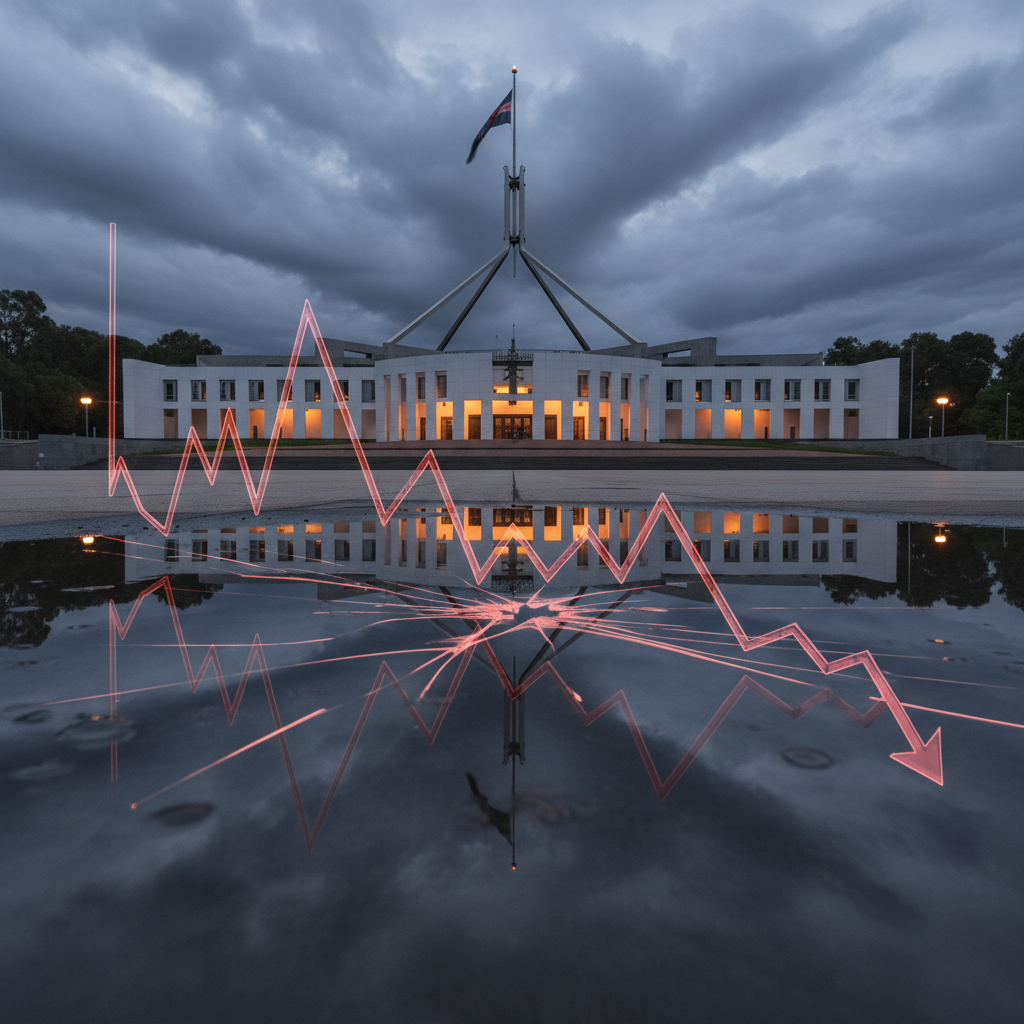
Australia's Budget Luck Runs Out: How Structural Issues Impact Your Wealth
Australia's national debt appears to be falling, but experts warn this is not a good sign. news.com.au reports that Australia's "budget luck" is rapidly running out, and deep structural issues urgently need addressing. This article will delve into the economic logic behind this phenomenon and its potential impact on the wealth of ordinary households.
30 Apr 2026
Australia's Demographic Shift: Indians Outnumber British, What's the Impact?
According to an AOL report on April 30, 2026, data from the Australian Bureau of Statistics shows that Indian-born migrants have for the first time surpassed British-born migrants to become Australia's largest overseas-born population group. This historic demographic shift is profoundly impacting Australia's economy, socio-cultural landscape, and housing market.
30 Apr 2026